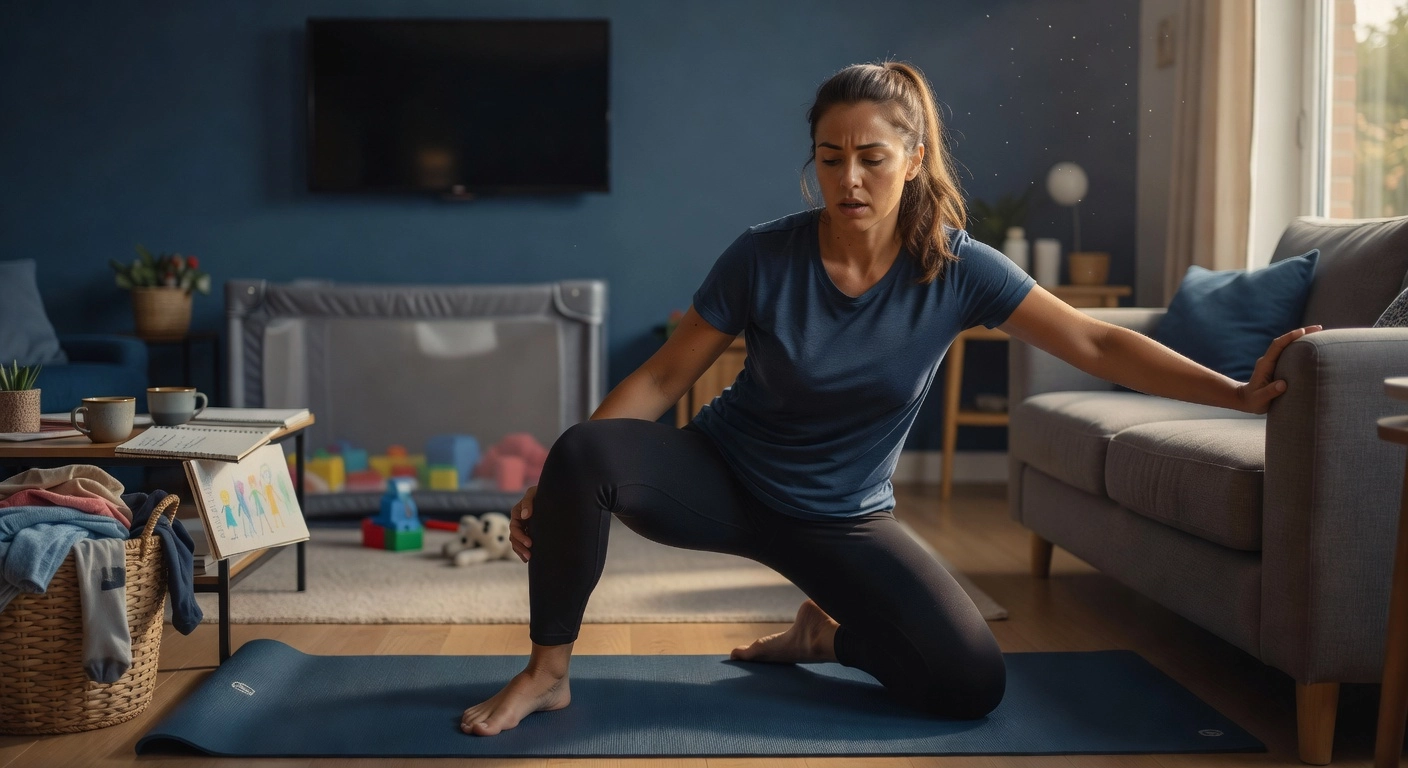

Let’s be honest. Between school pickups, grocery runs, and somehow keeping tiny humans alive, finding time to exercise feels practically impossible. And when you finally do get a free moment, the last thing you want is some complicated workout that requires a gym membership and an instruction manual.
Here’s the good news: staying active does not have to be that hard. These workout routines for busy moms were designed with one very important person in mind, and that person is you, the mom who is running on two hours of sleep and cold coffee.
In this list, you will find simple, realistic exercises that fit into your already packed schedule. No fancy equipment, no hour-long sessions, and absolutely no guilt if you can only squeeze in ten minutes. These routines meet you exactly where you are, whether that is your living room floor, your backyard, or the thirty seconds you have while the pasta is boiling.
Get ready to feel stronger, more energized, and maybe even a little proud of yourself. You deserve this, mama.
Why Short Workouts Are Not a Cop-Out (Science Says So)
Let’s get one thing straight: squeezing in a 15-minute workout while your kid watches their third episode of Bluey is not laziness. It is actually science.
Research from exercise physiologist Abbie Smith-Ryan, PhD at UNC Chapel Hill shows that shorter, consistent sessions can outperform longer, sporadic ones when it comes to real fitness gains. We are talking improvements in insulin sensitivity, fat loss, cardiorespiratory fitness, and energy, all from bouts as brief as 10 minutes of structured effort. The key word here is consistent. Showing up three times a week for 15 minutes beats one heroic 90-minute session you never repeat again.
Here is the part that should make every busy mom feel a little less personally attacked by the wellness industry: women are approximately 30% more likely than men to cite lack of time as a barrier to exercise. The deck is already stacked against us before we even factor in school pickups, dinner, and the emotional labor of remembering everyone’s dentist appointments.
Add PCOS to the mix and the plot thickens. Overtraining and chronic high-intensity exercise can spike cortisol, which is the last thing your hormones need. Elevated cortisol can actively worsen PCOS symptoms, including weight gain, fatigue, and cycle irregularities. Shorter sessions are not the lazy option; they are the strategic option.
As for that intimidating 150-minute weekly exercise target for PCOS management, let’s put it in perspective: 150 minutes is roughly two episodes of whatever you are currently binge-watching. Broken into small sessions across the week, it is genuinely doable.
Consider this your official permission slip to stop feeling guilty about short workouts. Consistency beats perfection, every single time, no exceptions.
What PCOS Actually Has to Do With Your Workout Routine
Here is something worth knowing before we get into the actual workout list: if you have been doing “everything right” and still feel like your body is working against you, there is a decent chance PCOS is part of the story. According to the World Health Organization, PCOS affects 10 to 13 percent of reproductive-aged women globally, and up to 70 percent of those women remain undiagnosed. So you might be out here blaming your willpower when your hormones have been quietly sabotaging you this whole time. Rude of them, honestly.
The sneaky villain at the center of PCOS weight gain and cravings is insulin resistance. When your cells do not respond well to insulin, your body pumps out more of it, which tells your body to store fat (especially around your middle) and makes cravings feel absolutely unhinged. Exercise helps fix this, not by burning calories, but by genuinely improving how your cells respond to insulin at a metabolic level.
This is exactly why strength training matters more than you might think. Building muscle improves how your body processes glucose, and that effect lasts long after the workout ends. A 25-minute strength circuit will do more for your PCOS than 60 minutes of steady treadmill trudging, according to recent research. Your treadmill is not offended. Probably.
Cortisol is the other piece of this puzzle. Women with PCOS already tend to have elevated stress responses, and hammering your body with intense daily workouts can actually spike cortisol and make things worse. This is not an excuse to do nothing; it is a legitimate reason why this list leans toward balanced, lower-stress movement options.
The whole reframe here is this: exercise for PCOS is not punishment for what you ate. It is metabolic support, hormonal maintenance, and honestly a little bit of self-defense against a condition that has been increasingly underrecognized for decades. That mindset shift changes everything about how sustainable this actually feels.
The 10-Minute Bodyweight Circuit (No Equipment, No Excuses)
Good news: this workout costs exactly zero dollars, requires zero equipment, and you can do it in whatever sad, spit-up-stained pajamas you are currently wearing. That is not a compromise. That is a feature.
The circuit is four moves: squats, push-ups, glute bridges, and plank holds. That is it. Together, they hit your quads, glutes, hamstrings, chest, shoulders, core, and lower back in one shot. Research on bodyweight circuits for busy moms confirms that these compound moves build functional strength without a single piece of equipment or a single step outside your front door.
Here is the structure: three rounds, four moves, 40 seconds on and 20 seconds off. Simple enough to remember on three hours of broken sleep, which, let’s be honest, is the only kind of sleep you are getting right now.
The strategic part, especially if you have PCOS, is that [full-body compound movements improve insulin sensitivity](https://pubmed.ncbi.nlm.nih.gov/35325125/) by increasing your muscles’ ability to absorb glucose. This is not just a quick workout squeezed in during cartoons. It is actually doing something useful for your hormones while your kid watches the same episode of Paw Patrol for the fourteenth time.
Beginner modification: Drop to two rounds and skip the push-ups entirely until you feel ready. Two rounds still counts. Showing up in your living room floor still counts. Starting imperfectly beats the perfect workout you have been planning since January.
The 20-Minute Dumbbell Strength Session for PCOS Wins
If the bodyweight circuit was your “I’m just getting started” move, consider this your upgrade. Strength training is consistently ranked as the top exercise recommendation for PCOS because building muscle does something genuinely useful for your hormones: it makes your cells more receptive to insulin. Think of muscle tissue as a metabolic sponge that soaks up glucose instead of leaving it floating around causing chaos. More muscle means a higher resting metabolic rate, which means your body burns more calories just existing. Honestly, that is the kind of passive effort this blog was built for.
Here is your entire equipment list: one pair of medium-weight dumbbells. That is it. Four moves cover almost everything your body has going on. Goblet squats hit your quads and glutes, Romanian deadlifts work your hamstrings and posterior chain, dumbbell rows take care of your back, and overhead press handles your shoulders. These compound movements are efficient, PCOS-friendly, and genuinely effective without requiring a gym membership or a babysitter.
The structure is simple: three sets of eight to twelve reps per move, with 60 seconds of rest between sets. That fills 20 minutes almost perfectly and leaves you feeling like you actually accomplished something instead of just survived the day.
Here is the part nobody talks about enough: regular strength training can reduce androgen levels over time, which means it may actually help with excess hair growth and hormonal acne. Your skin and your hairbrush might both thank you eventually.
No dumbbells yet? Resistance bands work for every single one of these moves. And yes, a soup can is a completely legitimate starting point. Nobody is judging you, least of all here.
HIIT Lite: Modified Interval Training That Won’t Wreck Your Hormones
Here is the thing about traditional HIIT: yes, it works, but excessive high-intensity training can spike cortisol in a way that is genuinely bad news for PCOS. Your body is already dealing with elevated stress hormones as a baseline, so throwing full beast mode at it five days a week is essentially pouring gasoline on a fire and then being surprised your house burned down.
The fix is HIIT Lite, which is interval training dialed back to about 70 to 80 percent effort. Not “I might actually die” effort. More like “I am breathing hard but could yell at my kid if necessary” effort.
What HIIT Lite Actually Looks Like
The format is beautifully simple: 30 seconds of movement followed by 30 seconds of rest. Jumping jacks, fast marching in place, bodyweight squats at a brisk pace, or even just aggressively speed-walking around your kitchen island. Repeat that for 15 to 20 minutes total. That is genuinely it. Put on a playlist that makes you feel like a different, more energetic person and the time flies faster than you expect.
Interval training at moderate intensity improves cardiovascular health, insulin sensitivity, and metabolic function without triggering the hormonal chaos that comes from going all-out every single session.
Knowing When You Have Gone Too Far
If you have PCOS, cap true high-intensity sessions at two per week maximum and fill the rest of your days with gentler movement from elsewhere on this list.
Watch for these signs that you are overdoing it:
- Increased fatigue that feels beyond normal tired
- Worsening cycle irregularity or new menstrual weirdness
- More intense cravings (your body sending a very loud distress signal)
- A general feeling that your body hates you specifically and is conspiring against all your efforts
If you are checking multiple boxes on that list, dial it back. More is not always more, especially with PCOS.
Interval Walking Is Underrated and You Should Probably Be Doing It
Forget everything you thought you knew about “real” cardio. Interval walking is out here quietly delivering cardiovascular and metabolic benefits that would make your gym membership blush, and it requires nothing but a pair of shoes and mild tolerance for being outside.
The format is embarrassingly simple. Walk briskly for two minutes, stroll easy for one minute, repeat. That’s it. You get improved insulin sensitivity, better blood pressure, increased calorie burn, and zero joint impact. Your knees will not be filing a complaint.
For PCOS specifically, interval walking is kind of a dream. It keeps cortisol low, which matters because chronically elevated cortisol makes PCOS symptoms significantly worse. Unlike higher-intensity sessions that sometimes require a recovery day, you can do this daily without your body staging a protest. It also works perfectly with a stroller, a reluctant toddler you are bribing with snacks, or a six-year-old who will absolutely stop to examine every rock on the footpath.
Three to four sessions of 20 to 30 minutes per week gets you meaningfully close to the 150-minute weekly movement target recommended for PCOS management, without it ever feeling like a workout you had to psych yourself up for.
Here is the laziest bonus: interval walking is exploding in popularity in 2026, with search interest growing by hundreds of percent as women managing hormonal conditions discover it actually works. You are not behind. You are ahead of the curve. And if you add a slightly longer route to your school drop-off or loop around an extra block during errands, you have officially stacked your workout onto something you were already doing. We see you, and we fully respect it.
5-Minute Micro-Workouts You Can Stack Into Your Actual Day
Turns out, “exercise snacks” are not just a cute Instagram concept. They are a legitimate, research-backed 2026 fitness trend, and a 2025 systematic review confirmed that short bouts of movement done at least twice daily actually improve cardiorespiratory fitness and muscular endurance in real, measurable ways. Your body does not require a full hour to show up for you. It just needs you to show up repeatedly.
Here is what this looks like in actual mom life:
- 10 squats while the coffee brews. Three sets if you are feeling ambitious. Zero sets if you are not. Both count.
- A two-minute wall sit during a phone call. Nobody on the other end knows. You look professional. You are also low-key suffering. It is fine.
- Calf raises while brushing your teeth. You are already standing there doing nothing for two minutes. Might as well.
- One song dance break. Your kids will either join you or stare at you with quiet, devastating judgment. Both outcomes are valid.
The reason this actually works long-term is habit stacking, pairing movement with things you already do every single day. No scheduling required, no separate workout window to protect, no guilt when the day explodes. The movement just exists inside your routine.
For PCOS specifically, this matters beyond fitness. Breaking up long stretches of sitting with short movement snacks helps blunt blood sugar spikes and supports insulin sensitivity throughout the day, which is exactly what a PCOS body needs from a metabolic standpoint.
And the most genuinely validating thing exercise science has ever produced: there is no amount of movement too small to matter. Ten squats is not nothing. It is actually something. Repeatedly.
Yoga and Mobility Work Is Actually Doing Something for Your PCOS
Here is the workout that your nervous system has literally been begging for, and the one most moms skip because it does not feel “hard enough” to count. It counts. Deeply.
Chronic stress and elevated cortisol are genuinely among the worst things for PCOS. Cortisol worsens insulin resistance, cranks up androgens, disrupts ovulation, and tanks your sleep, which then makes everything worse in a delightful little cycle. Yoga is one of the most well-researched tools for interrupting that cycle. One study found that mindful yoga reduced testosterone by 29% and improved anxiety scores significantly in women with PCOS. Another found that a single 30-minute gentle session meaningfully lowered cortisol, while power yoga showed zero reduction. So yes, the slow, “boring” version is actually the one doing the work.
The move here is a 20-minute evening flow focused on hip openers, gentle spinal twists, and breathing-based poses. This does double duty: it contributes to your weekly movement goal and it signals your nervous system to wind down before bed. That is two wins for roughly the effort of lying on the floor in interesting shapes.
Skip the intense Vinyasa flows for this purpose. Power yoga spikes cortisol back up and defeats the entire point.
You need zero equipment, zero gym membership, and a five-by-five-foot space, which is almost certainly smaller than your bathroom. Free beginner flows on YouTube are everywhere and several are specifically designed for stress and hormonal health.
The bonus nobody talks about enough: regular gentle yoga improves sleep quality, and better sleep independently improves PCOS symptoms, reduces cravings, and supports insulin sensitivity. Your laziest workout option is also quietly doing the most.
A Realistic Weekly Schedule That Actually Hits 150 Minutes
Now that you have met each individual workout type, here is how they actually stack together into a week that does not require you to sacrifice sleep, sanity, or a single school run.
Monday kicks things off with the 10-minute bodyweight circuit. Short, sharp, done before the morning chaos fully peaks. Wednesday brings in the 20-minute dumbbell strength session, which is your PCOS-specific power move for insulin sensitivity and muscle building. Friday closes out the structured days with a 20-minute HIIT lite session, keeping intensity manageable so your cortisol does not throw a tantrum over the weekend.
Tuesday, Thursday, and Saturday are your interval walk days, 20 to 25 minutes each, slotted around the school run or whatever errands already exist on your calendar. No extra time required. You were already going outside. Now you are just walking with slightly more purpose.
Daily micro-workout snacks layer in another 10 to 15 minutes of accumulated movement without any formal scheduling. Squats while the coffee brews. Lunges during the ad break. It adds up without feeling like it counts, which is honestly the best kind of exercise.
Sunday is a rest day, or a gentle 15-minute yoga flow if the week was a lot and your body needs to decompress rather than do nothing. Use your judgment. Or use the number of times someone asked you where their shoes are as your deciding metric.
The total lands at approximately 150 to 180 minutes per week, meeting the PCOS exercise guideline with zero gym visits, zero babysitters, and zero 5am alarms.
What You Eat After Your Workout Matters More With PCOS
Here is the part nobody talks about enough: you can do every workout on this list and still feel like garbage if you walk straight into a bowl of cereal afterward. With PCOS, what happens in the 30 to 60 minutes after your workout is genuinely just as important as the workout itself.
Your muscles are most receptive to absorbing glucose right after exercise, which is actually a good thing. It means your body is primed to use nutrients efficiently. But if you fill that window with something high-carb and low-protein, you can trigger an insulin spike that basically undoes the metabolic work you just put in. That is a cruel little irony that PCOS likes to pull on you.
The fix is not complicated. You want protein first, carbs second, and you want to keep it low-glycemic. Quick options that take zero effort include:
- Greek yogurt with berries (grab the one already in the fridge)
- A hard-boiled egg with a handful of nuts (takes 45 seconds if the eggs are pre-boiled)
- A protein shake blended with frozen fruit (one scoop, press blend, done)
- Cottage cheese with berries, or honestly whatever high-protein thing is already sitting there
Avoiding the crackers-and-juice situation is especially important here because rebound cravings after a workout are a classic PCOS experience, and they are largely insulin-driven. The workout was short. The snack should also be short. Check the high-protein recipe section on this site for lazy, under-five-minute PCOS-friendly snack ideas, because putting in the work and then accidentally sabotaging it with a blood sugar spike is simply not the vibe.
The Lazy Bottom Line on Workout Routines for Busy Moms
Here is your lazy, honest, no-fluff summary of everything that actually matters.
Done beats perfect every single time. A 10-minute workout you actually finish is worth ten 60-minute sessions you rescheduled for that mythical Tuesday when the kids are calm, the laundry is done, and Mercury is not in retrograde. That Tuesday is not coming. The 10 minutes are available right now.
Pick two or three routines from this list that feel the least terrible and rotate them for two weeks before you even think about adding anything new. Overwhelm is how good intentions go to die.
With PCOS, you do not need to work harder than everyone else. You need to work smarter. Shorter, hormone-aware sessions are not the lazy option; they are the clinically sensible one.
Stack movement into habits you already have, eat some protein after you exercise, and aggressively lower the bar for what counts as a win. A walk counts. Five squats count. Showing up in any form counts.
Consistency over three months will do more for your symptoms, energy, and weight than any perfect program you abandon after ten days. Build the boring habit first. The results follow.
Conclusion
You do not need a perfect schedule, expensive equipment, or unlimited energy to take care of your body. You just need a few minutes, a little consistency, and the willingness to start small. These workout routines for busy moms prove that fitness can be flexible, forgiving, and actually fit into real life.
Here is your reminder: ten minutes counts. Moving in your living room counts. A quick stretch during nap time counts. Progress is progress, no matter how small it looks.
Now pick one routine from this list and try it today. Not tomorrow, not next Monday. Today. Your body will thank you, your mind will feel clearer, and you will realize something powerful: you are not too busy to take care of yourself. You were just waiting for permission. Consider this your permission.
⚡ Simplify Your Daily Mom Fitness Routine
Staying consistent shouldn’t feel like another stressful chore on your calendar. Balance your physical strength and daily energy with these realistic, mom-tested guides and low-effort shortcuts:
📚 More Practical Fitness & Recovery Guides
- Postpartum Entry Point: Ready for a complete, structured timeline built for early recovery? Check out our Postpartum Workout Plan for Beginners.
- Gentle Low-Impact Movement: Rebuild your stamina and lower cortisol levels naturally with Walking for PCOS and Postpartum Health.
- Safe Ab Rehabilitation: Protect your core and learn how to manage muscle separation with Safe Exercises for Diastasis Recti: A Realistic Guide.
- The Low-Effort Core Shortcuts: Tight on time? Try these gentle movements you can do from the floor or bed: Lazy Girl Exercises for Diastasis Recti.
🛠️ Grab Your At-Home Routine Shortcuts & Checklists
Take the planning, guesswork, and mental fatigue completely out of your health journey with these ready-to-use digital tools:
- 🎁 Free Download: Reset your morning momentum and start building consistency with our free 3-Day Postpartum Fat Loss Kickstart.
- 🔄 The Complete Daily Tracker: Take absolute control of your schedule, movement, and wellness habits with The 30-Day Fatloss Routine For Busy Moms.
- ⏱️ The Quick Lifestyle Shift: Short on time and low on energy? Reset your baseline habits in just seven days with our 7-Day Lazy Lifestyle Reset Guide.
Leave a Reply