
If you are staring at the ceiling at midnight, typing how to lose weight fast into your phone while stress-eating whatever leftover snacks you can find in the pantry, please know that I have been exactly where you are. For years, I fell into that same exhausting loop. When you have PCOS, trying to figure out how to lose weight fast feels like playing a game where someone quietly changed all the rules on you, locked the door, and didn’t give you the instructions.
Here is the unfiltered truth: losing weight with PCOS is definitely harder, but it is absolutely not impossible. I am proof of that—I managed to lose 25kg in 6 months by completely abandoning the grueling gym routines and the miserable, restrictive crash diets that promised the world but left me utterly depleted. When your hormones, insulin levels, and metabolism are working differently, the generic fitness advice you find everywhere else just doesn’t cut it.
That is exactly why I put together this guide. If you want to know how to lose weight fast without destroying your sanity, you need a strategy tailored for busy moms who do not have hours to spend at the gym or the mental energy to meal prep seventeen identical plastic containers every Sunday. I am going to walk you through simple, practical, “lazy-approved” strategies that actually work with your biology, rather than against it. No complicated rules, no expensive supplements—just real, sustainable shifts you can start using today. Let’s get into it.
Also Check Out: PCOS Meals and Supplements: A Realistic Guide for the Busy, Tired Mom (2026)
Table of Contents
How to Lose Weight Fast with PCOS: Why it Hits Different for Busy Moms
Let’s be honest for a second. You’ve probably tried eating less. You’ve tried moving more. You’ve Googled “low-fat snacks” at 11 pm while simultaneously eating crackers from the box because the hunger was unreal. And somehow, the scale barely budged. Here’s the thing: you weren’t doing it wrong. Your body was just playing a completely different game than everyone else’s.
Your Body Is Literally Hoarding Fat (And It’s Not Your Fault)
Between 70 and 95% of women with PCOS have insulin resistance, which sounds clinical and boring until you understand what it actually means. Normally, insulin is like a polite little delivery driver that knocks on your cells’ doors and drops off glucose for energy. With insulin resistance, your cells ignore the knock. So your pancreas panics and sends more insulin, flooding your system. And here’s the fun part: chronically high insulin is basically a neon sign to your body that says “store all the fat, release none of it.” Your body isn’t broken. It’s just running a very aggressive savings account that you never asked to open.
Why Everything You’ve Been Told Backfires
The classic advice, eat less, move more, go low-fat, was not designed for a PCOS body. Low-fat, high-carb diets spike blood sugar repeatedly, which triggers more insulin, which locks fat in storage mode harder. It’s like trying to empty a bathtub while someone keeps turning the faucet back on. Extreme calorie cutting also raises cortisol, your stress hormone, which makes insulin resistance worse and parks even more fat around your belly specifically. You can be doing everything “right” by conventional standards and still feel like you’re pushing a boulder uphill in flip-flops.
The Cravings Are Not a Willpower Problem
The hormonal chaos of PCOS creates a perfect storm for uncontrollable cravings. High insulin drives androgen production, which worsens insulin resistance further in a feedback loop that nobody invited. On top of that, leptin resistance means your brain genuinely does not receive the “I’m full” signal properly. Blood sugar swings from insulin resistance trigger intense carb and sugar cravings because your body is desperately hunting for quick energy. This is biochemistry, not weakness. The brownie was never calling your name because you lack discipline; your hormones literally hijacked the conversation.
PCOS cravings adding up the extra pounds? READ: How to Control Cravings Without Giving Up Your Favorite Foods (Realistic Fat Loss for Busy Moms)
Redefining What “Fast” Actually Means Here
For a body actively working against fat loss, losing 0.5 to 1 pound per week is genuinely impressive progress, not slow failure. More importantly, losing just 5 to 10% of your body weight produces real, measurable improvements: more regular cycles, better ovulation, reduced acne and hair growth, and improved blood sugar markers. For a 200-pound person, that’s 10 to 20 pounds producing actual symptom relief. That’s not a consolation prize. That’s a legitimate win with clinical research behind it.
You are not lazy. You are not broken. You have a metabolic disorder that makes conventional weight loss advice work against your physiology. The frustration you feel after months of trying and barely seeing results is completely valid, and it makes total sense given what your body is up against. The goal from here isn’t to work harder at the wrong approach. It’s to work smarter with strategies that actually match how your PCOS body works.
The Lazy Protein Rule That Changes Everything
If there is one thing that will quietly revolutionize how you eat without making you track every morsel of food you’ve ever looked at, it’s this: eat more protein. Seriously. For women with PCOS, protein isn’t just a macronutrient. It’s basically a cheat code that the diet industry forgot to tell you about.
Here’s why it matters so much for PCOS specifically. Between 70 and 95% of women with PCOS deal with some level of insulin resistance, which is the sneaky little gremlin behind your cravings, energy crashes, and the weight that seems to appear out of nowhere and refuse to leave. Higher protein intake helps stabilize blood sugar by slowing digestion and blunting those glucose spikes that send your hunger hormones into full chaos mode. Research shows that women with PCOS following a higher protein diet achieve roughly 30% more fat loss compared to those eating a lower protein. That’s not a small difference. That’s your body actually cooperating for once.
Read: The Importance of Protein in Fat Loss: A Realistic Guide for Busy Moms
What “Enough Protein” Actually Looks Like
You don’t need to download a macro tracking app and weigh your chicken at every meal. The lazy shortcut is this: aim for 20 to 35 grams of protein per meal, and roughly 1.2 to 1.6 grams per kilogram of body weight across the day. For a 150-pound woman, that works out to somewhere around 82 to 109 grams daily. Sounds like a lot until you realize cottage cheese exists and a single cup covers almost 25 grams without you doing anything.
The No-Cook Protein Hall of Fame
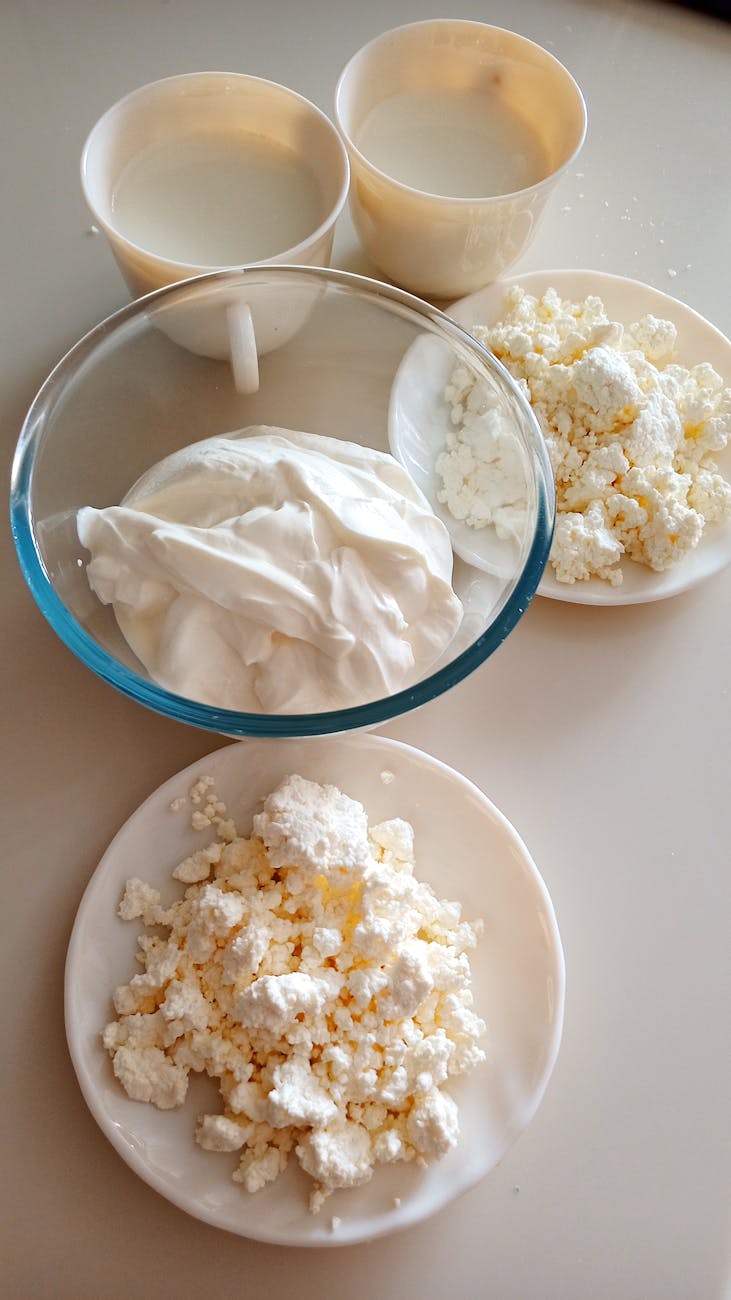
These are the laziest high-protein foods that belong permanently in your fridge and pantry:
- Rotisserie chicken: Pull it apart and throw it on anything. About 25 grams per serving.
- Greek yogurt (plain, unsweetened): 15 to 20 grams per cup. Add cinnamon and berries and call it breakfast.
- Cottage cheese: Criminally underrated. Around 20 to 25 grams per cup.
- Canned tuna: No cooking, no drama, 20 to 25 grams per can.
- Pre-boiled eggs: Grab a bag of them pre-done from the store. Six eggs, done.
- Protein smoothies: Blend powder with frozen fruit and Greek yogurt in under three minutes. You’re basically a chef now.
The Sunday Batch Prep That Saves Your Week
Once a week, brown a big batch of ground turkey and hard-boil a dozen eggs. That’s it. That’s the whole plan. Those two things alone cover lunches, quick dinners, grab-and-go snacks, and breakfast for the better part of four to five days. You’re not meal prepping like a fitness influencer with a ring light. You’re just cooking a pile of meat on a Sunday so Tuesday-you doesn’t completely fall apart.
Stop Skipping Protein at Breakfast
Here’s something worth knowing. Eating a high-protein breakfast doesn’t just help your morning, it actually sets your blood sugar trajectory for the entire day. Research shows that a protein-rich breakfast reduces glucose spikes not only after the morning meal but after lunch and dinner too. When you skip it in favor of toast or, honestly, nothing, you’re essentially setting yourself up for a blood sugar rollercoaster that ends with you standing in front of the pantry at 3pm wanting to eat everything in reach. With PCOS, that cycle is not just annoying. It’s working directly against your weight loss goals. A couple of eggs, some Greek yogurt, or a quick protein smoothie in the morning is less of a healthy habit and more of a damage control strategy for your hormones. And that framing, somehow, makes it easier to actually do it.
Fix Your Plate Before You Fix Your Life
Okay, so now that protein is your new best friend, let’s talk about what actually goes on your plate around it. Because eating more protein while still piling carbs on first and hoping for the best is like buying a really good sports bra and then never leaving the couch. The structure matters.
Here’s the PCOS plate framework, and it’s beautifully simple. Protein and fiber go on first, fat goes on next, and carbs take the smallest corner of the plate, always last. That order isn’t random. When you eat protein and fiber before carbs, your blood sugar rises more slowly, insulin doesn’t spike like a toddler on birthday cake, and your cravings stay manageable for actual hours. Half your plate goes to non-starchy vegetables, a quarter goes to protein, and whatever’s left is for your complex carbs.
The Low-GI Swaps You Can Actually Remember
You don’t need a nutrition degree, a food scale, or a laminated chart on your fridge. You just need a few easy swaps that your insulin will genuinely appreciate. Berries instead of juice. A handful of raspberries has fiber and won’t send your blood sugar sideways. Juice is basically sugar water with a wellness glow-up. Sweet potato instead of white potato. It tastes better anyway, honestly. Quinoa instead of white rice. It has protein built in, which is a bonus. And legumes absolutely everywhere, because chickpeas in a bowl, lentils in a soup, or black beans in basically anything are doing double duty as both your fiber and your protein. These low-GI principles genuinely support insulin sensitivity in PCOS, and the swaps are simple enough to remember at 6pm when three people are asking what’s for dinner simultaneously.
What Mediterranean Actually Looks Like on a Tuesday
Mediterranean eating is not a charcuterie board at a dinner party. On a random Tuesday with 20 minutes and a kitchen that looks like a small tornado came through, it looks like this: a skillet of salmon with broccoli and olive oil, served over a scoop of quinoa. Or shrimp tossed with cherry tomatoes, spinach, and a little pesto over legume pasta. Or honestly, a big bowl of chickpeas with leafy greens, avocado, and a drizzle of olive oil with lemon. One pan, minimal effort, done.
The anti-inflammatory pillars you want to gradually work in are avocado, olive oil, nuts, leafy greens, and fatty fish. You don’t have to add all of them tomorrow. Start by cooking in olive oil instead of whatever else you’ve been using. Add a handful of walnuts to your snack. Get salmon on the rotation once or twice a week. These foods actively support hormonal balance and reduce the inflammation that PCOS loves to stir up.
The Macro Target That Won’t Make You Cry
As a loose, non-obsessive guide, aim for roughly 75 to 100 grams of carbs per day from low-GI sources, and 100 grams or more of protein daily. That’s it. You’re not weighing your broccoli. You’re not logging every almond. You’re just roughly building your plate so protein is the biggest player and carbs are the supporting cast. If you hit those protein numbers across three meals with about 25 to 30 grams each, the carb portion almost manages itself because there’s simply less room for it.
It’s a framework, not a sentence. The goal is to make your plate work a little harder for your hormones without turning every meal into a math problem you didn’t sign up to solve.
Your Cravings Are Not a Willpower Problem
Let’s talk about something that has probably made you feel terrible about yourself for years. You’re doing great all day, eating your protein, drinking your water, being a whole responsible adult, and then 4pm hits and suddenly you would trade your left kidney for a sleeve of Oreos. That is not a character flaw. That is your hormones staging a coup.
Insulin resistance affects up to 95% of women with PCOS, and it turns your hunger signals into something genuinely unreliable. Here is what happens: you eat something, your blood sugar spikes, your body floods the system with insulin to deal with it, your cells ignore the insulin because PCOS, so your body sends even MORE insulin, and then your blood sugar crashes hard. Your brain registers that crash as a full-on emergency. It does not know you are sitting at a desk. It thinks you are starving. So it sends signals that feel absolutely non-negotiable, the kind that make you eat crackers over the sink at 3pm without even remembering walking to the kitchen. This is biology, not weakness.
Stop the Craving Before It Wins
The trick is not white-knuckling through the craving. The trick is intercepting the blood sugar crash before it happens. A few things that actually work with your PCOS biology instead of against it:
- Drink water first. Seriously, just try it. Thirst and hunger use overlapping signals and your body is terrible at telling them apart.
- Eat a protein or fat snack before the craving wins. A handful of almonds, a piece of cheese, a spoonful of peanut butter. Something with fat or protein that slows everything down.
- Never let yourself get truly hungry. Eating every 3 to 4 hours keeps blood sugar stable enough that the code-red craving signals never get a chance to fire.
Smarter Swaps That Actually Satisfy
You do not have to eat sad food. You just have to swap strategically. Dark chocolate instead of milk chocolate gives you the hit with less sugar and a slower blood sugar response. Full-fat Greek yogurt instead of reaching for low-fat ice cream gives you protein and fat that keep you full, plus the low-fat versions are usually loaded with added sugar anyway. Cheese and nuts instead of crackers means you get something genuinely satisfying instead of something that will have you hungry again in 20 minutes. These swaps work because they address what your body actually needs, not just what your craving is loudly requesting.
The 10pm Whole Bag Situation
Here is the mom-specific doom loop nobody talks about. You are stressed all day. Cortisol, your stress hormone, raises your blood sugar. That raises insulin. That spikes cravings. You white-knuckle through it because you were “being good.” Then the kids are finally in bed, your guard drops, and suddenly you are horizontal on the couch eating whatever was closest to the pantry door. This is not a willpower failure. This is cortisol plus insulin plus hours of undereating finally collecting their debt.
The fix is not more discipline. It is eating enough during the day so nighttime you is not running on fumes and desperation.
The Reality Check You Actually Need
You are not weak. You have a metabolic disorder that literally hijacks your hunger hormones and makes cravings feel like survival emergencies, because to your body, they are. The goal is not to suffer through it. The goal is to work with your biology. Eat the cheese. Just add some protein to it. Have the dark chocolate. Pair it with almonds. Stop treating every craving like a moral test you have to pass, and start treating it like a signal that your blood sugar needs some attention. That mindset shift, honestly, is half the battle.
The Laziest Movement That Actually Works
Good news: you do not have to become a gym person to lose weight with PCOS. You just have to move more than you currently do, and that bar is probably lower than you think.
The official recommendation is 150 minutes of moderate activity per week. Before your eyes glaze over, let’s break that down into something that actually makes sense for a real human life. That is 22 minutes a day. Or five 30-minute walks. Or three sessions where you put on a podcast and pace around your house like you’re solving a crime. You can split it up however you want because shorter bouts spread throughout the day still count toward the total.
Here’s where it gets fun though: a huge chunk of your movement doesn’t even have to look like exercise. NEAT, which stands for non-exercise activity thermogenesis, is basically all the calories your body burns just from existing and moving through your day. Parking at the back of the lot and doing a lap. Standing and pacing while you’re on hold with the insurance company (again). Walking slow circles during school pickup. Chasing your toddler up the stairs for the fourteenth time before noon. All of it counts. Research shows NEAT can vary by up to 2,000 calories per day between people of similar sizes, which means this stuff genuinely adds up.
Now, resistance training deserves a special mention if you have PCOS. Even just two sessions a week, think squats in your living room, resistance bands during nap time, or a 20-minute bodyweight routine, can meaningfully improve insulin sensitivity. Studies show it can lower androgen levels too, which matters because high androgens are part of what makes PCOS weight loss so frustrating. No gym required, no membership, no commute.
The most underrated move of all, though, is a 10-minute walk after dinner. It sounds almost too simple, but that short walk helps your muscles soak up glucose from your meal before your body has to pump out extra insulin to deal with it. That post-meal blood sugar spike is a core driver of PCOS-related weight gain, so blunting it consistently is genuinely useful, not just a nice idea.
And here is the honest truth: even modest lifestyle movement can drive the 5 to 10% weight loss that research links to real PCOS symptom improvement, including better cycles, lower androgens, and improved insulin function. You do not need a gym. You just need to keep showing up in small ways, consistently, in whatever form fits your actual life.
The PCOS Weight Loss Factor Nobody Warns You About
Here’s the thing nobody puts in the weight loss advice you find on Pinterest: you can eat perfectly and still stall completely if your cortisol is through the roof. And for busy moms with PCOS, chronic stress is basically a default setting.
Cortisol and Insulin Resistance Are a Terrible Team
Cortisol is your stress hormone. When it stays elevated because life is, well, a lot, it signals your body to release more glucose. That glucose spike demands more insulin. And if you already have insulin resistance from PCOS, that extra insulin hits harder and stores more fat, especially around your belly. It is a genuine hormonal feedback loop, not a personal failing. Chronic stress literally makes your PCOS symptoms worse at a biological level, worsening androgen production, disrupting your cycle, and making fat loss harder no matter how clean your eating is.
Your Bad Sleep Is Making You Hungrier (Science Says So)
When you sleep poorly, your body increases ghrelin (the hormone that screams “eat something”) and decreases leptin (the hormone that says “okay, you’re full now”). This is not you being weak or having no willpower. This is hormonal disruption happening at a measurable level, and for women with PCOS it compounds the insulin and hunger issues you are already managing. One bad night makes you hungrier, cravers, and significantly more likely to say yes to whatever carb is nearest to you.
The Minimum Viable Sleep Routine
You do not need a full spa evening ritual. You need two things: one consistent bedtime you actually stick to, and screens off 30 minutes before that time. That is it. No negotiating, no “just one more episode” loopholes. Blue light suppresses melatonin and delays sleep onset, which means your sleep quality tanks even if you technically get enough hours. Consistent sleep timing regulates your cortisol and hunger hormones overnight. This is not optional for weight loss with PCOS.
Two Stress Fixes That Take Under Five Minutes
Box breathing is your chaos survival tool. Inhale for four counts, hold for four, exhale for four, hold for four. Repeat a few times. You can do this in the car, during a toddler meltdown, or while staring blankly at the fridge. It directly calms your nervous system and lowers cortisol fast enough to matter.
A five-minute walk outside before making any food decision sounds almost too simple, but it works. Brief outdoor exposure lowers cortisol, resets your mood, and interrupts the stress-eating autopilot cycle. If you are stress-spiraling toward snacks, walk first. The craving will either pass or at least be a real hunger signal you can address properly.
How to Know If Cortisol Is Your Actual Problem
If your eating is genuinely solid but you are still gaining abdominal weight, craving sugar specifically when stressed, sleeping terribly, and feeling like your results are stuck behind a wall, cortisol deserves your attention before you cut more calories. Stress management is not a wellness luxury. It is a metabolic necessity, especially with PCOS.
What Actual Fast Progress Looks Like with PCOS
Let’s set some realistic expectations here, because if you go in thinking you’ll drop ten pounds in two weeks, week three is going to feel like a personal attack.
Weeks one and two are mostly water weight and habit-building. Your body is adjusting, glycogen stores are shifting, and you’re just getting your routines locked in. This is normal. This is not failure. Real, actual fat loss typically starts showing up around weeks three through six when your habits have compounded enough to start moving the needle on insulin resistance. PCOS slows the early stages down more than it would for someone without it, so if the scale barely moves those first two weeks, your body isn’t broken. It’s just operating on its own chaotic schedule.
Here’s the milestone worth aiming for: losing 5 to 10% of your body weight. That’s it. That’s the magic number research keeps pointing to for PCOS specifically. We’re talking improved ovulation, better energy, fewer cravings, and a meaningfully lower risk of type 2 diabetes. For a lot of women, this happens before dramatic scale changes even show up in photos.
And speaking of the scale, here’s permission to mostly ignore it. Track these instead:
- Energy levels (fewer 2 pm crashes is a win)
- Craving intensity (when the 9 pm chocolate urge gets quieter, insulin sensitivity is improving)
- Sleep quality
- Cycle regularity
- How do your clothes fit around your waist
Even losing 0.5 lb means your insulin resistance is starting to loosen its grip. That is genuinely significant. Small numbers represent internal metabolic shifts happening before your jeans even notice.
Set your mental horizon at 8 to 12 weeks, not two. Progress at week three often feels invisible but is absolutely happening beneath the surface.
Quick-Win Lazy Habits You Can Start Today
These are the small stuff that actually stack up. No gym membership required, no meal plan that costs more than your electric bill, no waking up at 5 am with the energy of someone who has never experienced a toddler or a hormonal crash. Just five genuinely lazy habits that work.
Drink Water Before Every Single Meal
Yes, this is real advice, and no, it is not a cop-out. Drinking a full glass of water, about 16 ounces, right before you sit down to eat has actual research behind it. One 12-week trial found that people who did this consistently lost more weight than people on the same diet who skipped the pre-meal water. It temporarily fills your stomach, takes the edge off hunger, and costs absolutely nothing. With PCOS driving your cravings harder than the average person, anything that quietly dials down appetite before you even start eating is worth ten seconds of your time.
Eat Protein Within 30 Minutes of Waking
Your blood sugar is going to do whatever it wants today. Your job is to give it a fighting chance from the start. Eating 20 to 35 grams of protein within 30 minutes of waking, think eggs, Greek yogurt, cottage cheese, or a quick protein shake, sets your glucose on a stable path and reduces how ravenous you feel by mid-morning. Studies show high-protein breakfasts can cut later-in-the-day snacking by up to a few hundred calories without you trying. That is not nothing.
One Hour of Batch Prep, Once a Week
You do not need to meal prep like a fitness influencer with a color-coded fridge and fourteen matching containers. You just need one hour, one day a week, to hard-boil some eggs, rinse your fruit, and cook a batch of chicken or ground turkey. That is it. When your future exhausted self opens the fridge at 6 pm on a Wednesday, she will silently thank you instead of ordering something that will spike her insulin and wreck her sleep.
Read these 15 Low Carb High Protein Meals for PCOS (No Fancy Ingredients Required)
Walk After Dinner, Even a Tiny One
A 10-minute walk after dinner measurably lowers your post-meal blood sugar spike, which matters enormously with PCOS and insulin resistance. You do not need a route or a playlist or athletic shoes. Walk to the end of your street and back. That is legitimate blood sugar management happening in real time, and it costs zero dollars and very little dignity.
Go to Sleep Before Midnight
Cortisol does not care that you are finally alone, and the house is quiet, and there are three episodes left. Late nights keep cortisol elevated, which promotes fat storage, tanks insulin sensitivity, and makes tomorrow’s cravings significantly worse. Short sleep is linked to a 41% higher obesity risk in large studies. Getting to bed before midnight is genuinely one of the laziest weight loss strategies available, because you are just lying down and doing nothing. The Netflix queue will still be there. Your cortisol levels, however, are not patient.
Your Hormones Are Not the Boss of You (Mostly)
Here’s the thing: you made it to the end of this post, which means you’re already doing something different than before. That matters.
Let’s bring it home. “Fast” with PCOS is not the same as fast without it. Women with PCOS can lose weight up to 50% slower than women without a metabolic condition, so if you’re hitting 0.5 to 1 pound per week consistently, you are genuinely beating the odds. That’s not a consolation prize. That’s actually winning.
Your body is not broken. It is just running different software than the generic diet culture was designed for. The “eat less, move more” advice was never built with insulin resistance, cortisol spikes, or PCOS hunger hormones in mind. You need a strategy that works with your biology, not one that keeps blaming you for the results.
The non-negotiables are simple: protein first, balanced plate, sleep like it’s your job, stress management, a little more movement, and more water. That’s the whole list. Nothing wild.
Now pick one habit from the quick-win section and do it tomorrow. Not Monday. Tomorrow.
And if you’re ready to go deeper, check out the lazy high-protein recipes and the PCOS cravings guide on the site. Your hormones are not fully the boss of you. Turns out, you are.
Conclusion
You showed up for yourself today, and that matters more than you know. Let’s quickly recap what we covered: managing insulin levels is the foundation of PCOS weight loss, small, consistent movement beats intense gym sessions every time, and eating in a way that supports your hormones does not have to be complicated or time-consuming. Most importantly, your body is not broken. It just needs a different approach.
Start with one change this week. Just one. Maybe it is swapping your afternoon snack or taking a ten-minute walk after dinner. Small steps add up faster than you think.
You are already juggling so much as a mom. Give yourself grace, trust the process, and remember that slow progress is still progress. You have got this, and I am rooting for you every single step of the way.
Ready to turn this reality check into action? You don’t have to figure this out alone. Whether you have two minutes to spare or you’re ready for a complete lifestyle shift, choose the “lazy-approved” system that fits your life today:
🎁 The Free Kickstart (Zero Cost, Zero Stress)
- The Free 3-Day PCOS Fat Loss Kickstart
- Best for: The completely exhausted mom who just wants a quick, gentle win.
- What you get: 3 days of ultra-simple, hormone-friendly meals and low-intensity movements to spark your metabolism without draining your battery.
🍱 The Kitchen Organizer
- The LazyFitMom PCOS Kitchen Reset System
- Best for: The mom who stands in front of a chaotic fridge at 6:00 PM, totally overwhelmed by what to cook.
- What you get: A simple framework to organize your kitchen, streamline grocery runs, and make low-carb, high-protein cooking your default setting.
🗓️ The One-Week Reset
- The 7-Day Lazy Fat Loss Reset
- Best for: Breaking through a weight loss plateau and building a solid, 7-day routine.
- What you get: A step-by-step, low-friction plan to stabilize your insulin levels, reclaim your morning energy, and build consistency.
🚀 The Full 30-Day Blueprint
- The 30-Day PCOS Routine Roadmap
- Best for: The mom ready to completely rebuild her habits from the ground up, the sustainable way.
- What you get: My comprehensive daily framework designed to protect your nervous system, support your hormones, and achieve lasting weight loss—without ever stepping foot in a gym.
Leave a Reply