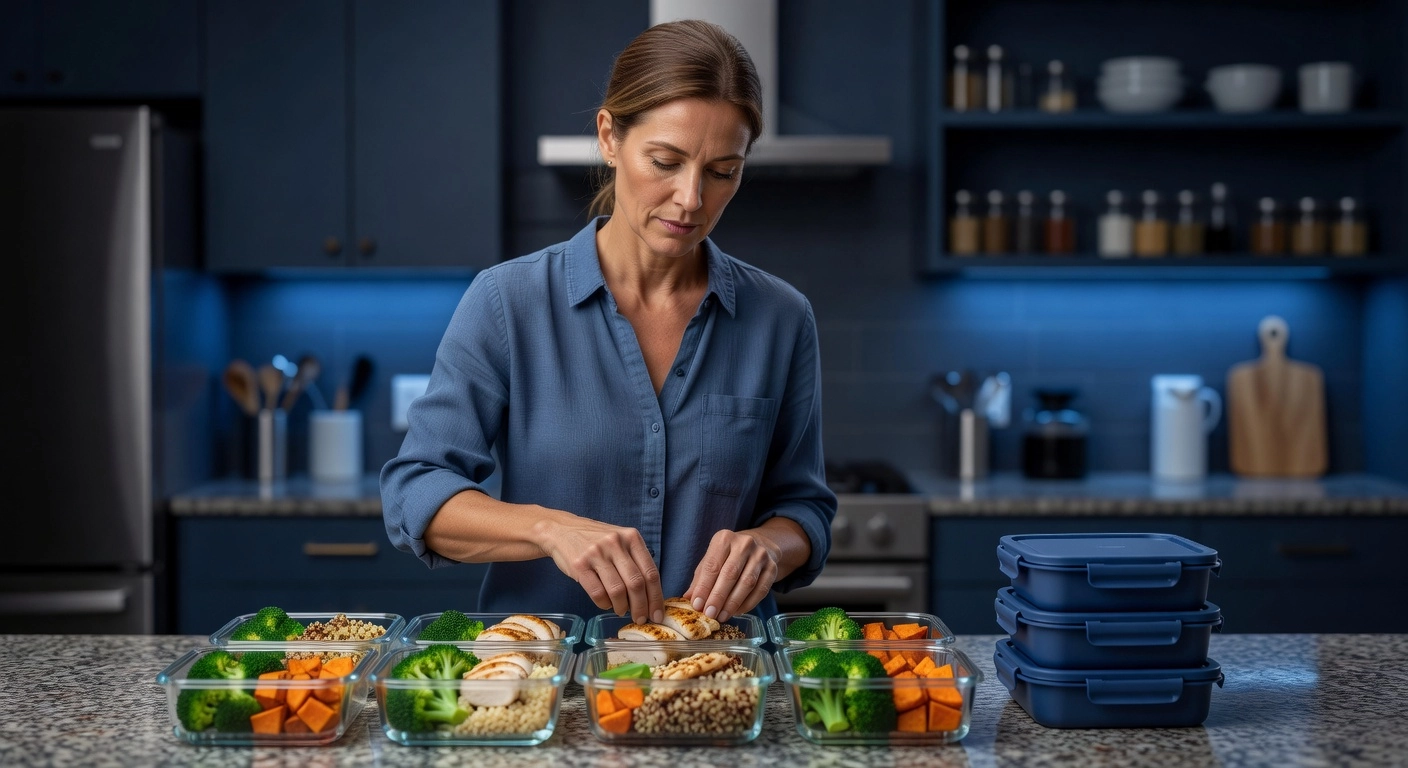
Finding a sustainable routine for lazy low calorie meal prep for moms shouldn’t feel like an impossible addition to your to-do list when you are already juggling school pickups, work deadlines, and managing stubborn PCOS symptoms. The absolute last thing you want to do at the end of an exhausting day is spend hours standing in the kitchen cooking elaborate health foods and washing a sink full of pots and pans. But here’s the reality: eating well and supporting your metabolic health doesn’t have to be complicated or time-consuming.
If you have been searching for a realistic way to feed yourself that actually works for your busy lifestyle, you are in exactly the right place. This guide isn’t about forcing yourself to follow a complicated, restrictive diet plan or sacrificing your entire Sunday to batch-cooking. Instead, it is about smart, simple, and truly “lazy-friendly” strategies that help you stay on track, keep your blood sugar stable, and drop the weight without adding any extra stress to your life. Let’s get into it!
PCOS can make weight management feel like an uphill battle, and we totally get that. The good news is that a little bit of planning goes a long way. With the right lazy low-calorie meal prep for moms routine ready to go in your fridge, you’ll spend less time stressing about what to eat and more time doing the things you love.
In this post, we’re sharing easy and practical low-calorie meal prep ideas designed specifically for busy moms like you, no fancy cooking skills required. Let’s dig in!
Table of Contents
Why Low-Calorie Meal Prep Actually Works for PCOS
If you have PCOS, your cravings are not a willpower problem. They are a biology problem, and that distinction changes everything about how you approach food.
Here is what is actually happening in your body: PCOS affects around 10-13% of reproductive-aged women globally, and a huge part of why it makes weight loss so hard is insulin resistance. When your cells do not respond well to insulin, your pancreas pumps out even more of it to compensate. That extra insulin triggers androgen production, disrupts your hormones, and sets off a blood sugar rollercoaster that can leave you desperately craving sugar and carbs by mid-afternoon. According to data published in The Lancet, managing these metabolic shifts is crucial, yet surveys suggest up to 99% of people with PCOS experience intense sugar cravings driven by blood sugar crashes, not weakness. Random eating, skipping meals, or just grabbing whatever is nearby makes every single one of those spikes and crashes worse.
This is exactly where low-calorie meal prep becomes your secret weapon. When you already have a balanced, portioned meal waiting in the fridge, you skip the decision fatigue, avoid the impulse grab, and keep your blood sugar steady throughout the day. Fewer chaotic food decisions also means lower cortisol, which matters because stress hormones directly worsen insulin resistance in PCOS. Consistent prep supports steadier energy, better mood, and fewer of those 3 pm crashes that tank your whole evening.
Dietitian-backed PCOS plans typically aim for around 1,700 to 1,800 calories daily, with 80 to 110 grams of protein and 30 to 45 grams of fiber. Those numbers are not random. Protein at each meal slows digestion and blunts blood sugar spikes, and fiber does the same while keeping you genuinely full.
Now, the lazy mom reality check: you do not need to cook every single day. Prepping once or twice a week is genuinely enough. Even prepping just two or three meals imperfectly is miles better than not prepping at all. The meals in this list are tools, not a perfect plan. Start messy, start small, and adjust as you go.
What Makes a Meal Prep Actually Lazy and Low Calorie
So now that you know why PCOS makes eating harder, let’s talk about what actually counts as a lazy, low-calorie meal prep around here, because this is not about elaborate Sunday cooking sessions or color-coded containers lined up like a magazine spread.
Here at LazyFitMom, a meal prep earns the “lazy” label if it hits a few simple checkpoints. Five ingredients or fewer whenever possible. Under 500 calories per serving. At least 20 to 30 grams of protein to keep you genuinely full. And minimal hands-on time, think 10 to 15 minutes of actual effort, with your oven or air fryer doing the rest. That’s it. These are the same realistic principles behind PCOS weight loss that actually work for busy moms without burning you out.
A big part of how these meals stay satisfying on lower calories comes down to a concept called volumetrics eating. In plain terms, it just means loading your plate with foods that are high in water and fiber, like roasted broccoli, cucumber, leafy greens, and broth-based soups. These foods physically fill your stomach without blowing your calorie budget. You eat more, feel fuller, and your brain stops sending the “still hungry” signal.
Protein and fiber work together to make this even more powerful for PCOS. Protein suppresses ghrelin, the hormone that triggers hunger, while fiber triggers your body’s natural GLP-1 response, the same satiety hormone that appetite medications target. Together, they quiet the cravings that PCOS amplifies. Dietitians in 2026 are calling this combination the core of sustainable weight management, and it shows up in every single recipe on this list.
The formats you will see throughout are sheet pan meals, mason jar preps, no-cook assemblies, air fryer shortcuts, and grab-and-go containers. And no, you do not need a food scale or a macro tracking app. Simple visual portions and repeatable recipes are more than enough to get started.
1. Overnight Oats and Chia Jars (No Cook, No Morning Brain Required)
If you are brand new to meal prep and feeling overwhelmed, this is your starting point. Overnight oats and chia jars are the most beginner-friendly low-calorie meal prep options out there because there is literally zero cooking involved. You just layer ingredients in a jar, stir, pop it in the fridge, and wake up to breakfast already done.
The Macros Are Actually Impressive
When you build your jar with Greek yogurt and a scoop of protein powder, you are looking at roughly 350 to 400 calories, 25 to 30 grams of protein, and 8 to 10 grams of fiber per jar. That is a genuinely filling breakfast that supports your weight loss goals without leaving you hungry by 9 am. These macro-friendly overnight oats prove that low-calorie does not have to mean unsatisfying.
The Laziest Sunday Night Task Ever
Make 4 to 5 jars on Sunday in under 10 minutes total, and you have grab-and-go breakfasts ready for the entire week with zero reheating needed. Just grab a jar straight from the fridge. These low-calorie overnight oats keep well for up to five days, making them perfect for busy mornings when your brain is not fully online yet.
Why This Is a PCOS Game Changer
Oats and chia seeds deliver slow-digesting carbs and soluble fiber that keep your blood sugar stable through the morning. For PCOS, that matters enormously because a morning blood sugar crash is often what triggers those intense mid-morning cravings that feel impossible to ignore.
Flavor Ideas That Feel Like a Treat
Try peanut butter banana, cinnamon apple, or chocolate berry variations. All three feel indulgent but stay within your calorie budget, especially when you use these high protein overnight oats as your base recipe framework.
2. Greek Yogurt Protein Bowls (5 Ingredients, 3 Minutes)
If overnight oats are your starter recipe, Greek yogurt protein bowls are your upgrade. Same lazy energy, more protein, even less work.
Here is what you are working with macro-wise: roughly 300 to 380 calories, 35 to 40g of protein, and 5 to 7g of fiber per bowl depending on your toppings. That is a genuinely filling meal in under 400 calories, which is exactly what low calorie meal prep should look like for PCOS.
The five ingredients you need:
- Plain nonfat Greek yogurt (your protein base)
- Berries, fresh or frozen (fiber, antioxidants, and natural sweetness)
- Hemp seeds or chia seeds (healthy fats and extra fiber)
- A small drizzle of honey or sugar-free syrup
- Optional: one scoop of protein powder stirred directly into the yogurt
These high-protein yogurt bowl combinations can hit 40g+ protein without protein powder, but stirring a scoop in is an easy boost if your macros need it.
The lazy tip that actually matters: spoon the yogurt base into containers, then pack your berries and seeds separately in a small snack bag tucked on top. Add toppings right before eating to keep everything fresh and not soggy. Total prep time is about three minutes per container.
For PCOS specifically, this bowl is a powerhouse. High protein directly suppresses ghrelin, your hunger hormone, and supports steadier insulin levels throughout the day. That combination is exactly what fights the intense, hormone-driven cravings that come with PCOS. A 2025 study on Greek yogurt and satiety confirmed it increases fullness significantly compared to lower-protein alternatives.
These bowls are also trending hard in PCOS weight-loss communities heading into 2026, showing up constantly as both breakfast and high-protein snack plates on TikTok and Instagram. They are satisfying, customizable, and genuinely take three minutes. That is the lazy meal prep dream.
3. Sheet Pan Chicken and Roasted Veggies (One Pan, One Hour, Five Days Done)
Welcome to the low calorie meal prep hall of fame. Sheet pan chicken and roasted veggies is the recipe that busy moms with PCOS keep coming back to week after week, and for very good reason.
Let’s talk numbers first. Each serving lands around 380 to 430 calories, with an impressive 35 to 40 grams of protein per container. When you pair your chicken with broccoli or Brussels sprouts, you are also pulling in 6 to 8 grams of fiber per serving, which matters enormously for PCOS blood sugar stability and keeping cravings quiet through the afternoon. That protein and fiber combo is basically your secret weapon against the 3pm snack spiral.
The execution is almost embarrassingly simple. Grab your chicken thighs or breasts, toss everything with one seasoning blend, spread it all on a sheet pan, and roast at 400 degrees for 25 to 30 minutes. The moment it comes out of the oven, portion it straight into four or five containers. Done. You just handled most of your week in under an hour. For a more detailed look at lazy meal prep strategies for PCOS specifically, there are some great frameworks worth bookmarking.
Sheet pan meals are the lazyfitmom gold standard because you have exactly one pan to wash, zero stovetop babysitting, and the oven handles literally everything. The chicken juices drip onto the veggies as everything roasts together, creating flavor without extra effort.
The real power move is using two sheet pans at the same time. Double the recipe in one single cook session and you have covered lunches and dinners for the entire week without cooking twice.
Finally, the trick that keeps this habit alive long-term is rotating your seasoning blend. Try lemon herb chicken with veggies one week, then switch to smoky paprika the next. Same method, completely different meal, and your taste buds never get bored enough to quit.

4. No-Cook Tuna and Chickpea Salad Jars (Zero Stove Time)
Let’s talk about the ultimate no-effort lunch that basically preps itself. Each jar comes in at roughly 350 calories, 30g of protein, and 10 to 12g of fiber, making this one of the highest-fiber options on this entire list. For PCOS, that fiber-protein combo is genuinely powerful because it slows down digestion, keeps blood sugar steady, and crushes those mid-afternoon cravings before they even start.
The ingredient list could not be simpler. You need canned tuna, canned chickpeas, diced cucumber, lemon juice, a drizzle of olive oil, and whatever herbs you actually have in the pantry. Dill, parsley, or even just salt and pepper work perfectly. Everything is a pantry staple, which means no special grocery run required.
Here is the lazy tip that makes this recipe genuinely effortless: dump everything into one large bowl, stir it together, and portion it into jars. That is the entire process. No stove, no oven, no reheating later. You open the jar and eat. Start to finish in under five minutes for the whole batch.
The chickpeas deserve a special mention here. One half-cup of canned chickpeas delivers around 6 to 8g of fiber with zero cooking involved, just rinse and toss them in. This perfectly bridges the 2026 fibermaxxing trend without any extra effort on your part.
This is your go-to lunch for school pickup days, back-to-back meetings, or any situation where reheating simply is not happening. Grab it cold, eat it straight from the jar, and move on with your day.

5. Egg Muffins or Mini Frittata Cups (Batch Once, Eat All Week)
If overnight oats and Greek yogurt bowls are your breakfast rotation, egg muffins are about to become your new favorite addition. These little protein-packed cups are genuinely one of the best low calorie meal prep wins for busy mornings because you make them once and breakfast is handled for the entire week.
The macros are solid. Two to three egg muffins land at roughly 250 to 300 calories total with 20 to 25 grams of protein, and that number goes up easily when you toss in extra veggies, a little cheese, or some diced turkey. That protein-to-calorie ratio is exactly what you want when you are managing PCOS hunger.
The execution could not be simpler. Whisk your eggs, throw in whatever chopped vegetables you have sitting in the fridge (spinach, bell peppers, broccoli, tomatoes, all work great), add a small handful of cheese, pour the mixture into a greased muffin tin, and bake at 375 degrees for 18 to 20 minutes. That is genuinely it.
Reheating takes 45 seconds from the fridge or about 2 minutes straight from frozen. That officially makes this a one-minute breakfast on your busiest mornings.
For PCOS specifically, eggs are a powerhouse ingredient. They deliver complete protein for steady energy and also contain choline, a nutrient that supports hormone metabolism and liver function. Pairing eggs with fiber-rich vegetables mixed directly into the cups helps keep blood sugar stable too, which directly targets that PCOS insulin resistance cycle.
The freezer tip that changes everything: make a double batch on your prep day, eat one batch fresh this week, and freeze the second batch individually. Week two breakfast is already handled with zero additional effort from you.
6. Ground Beef and Sweet Potato Bowls (The PCOS Comfort Bowl)
If you have been scrolling PCOS TikTok or Instagram lately, you have almost definitely seen this combo pop up in your feed. Ground beef and sweet potato bowls went genuinely viral in the PCOS weight-loss community for one simple reason: they work, and they work fast.
Let’s talk numbers first. Each bowl lands at roughly 420 to 450 calories, 35 to 40g of protein, and 5 to 7g of fiber. That protein and fiber combo is specifically why so many PCOS moms report that this meal actually eliminates that 3pm snack spiral that feels impossible to fight. You eat this at lunch, and you are simply not hungry again for hours.
The lazy execution is what makes this a repeat staple rather than a one-time experiment. Poke your sweet potato a few times with a fork, microwave it for 6 to 8 minutes, and while that is happening, brown your ground beef in a skillet with whatever seasoning you have nearby. Taco seasoning, garlic powder, salt, and pepper all work perfectly. Total time from fridge to containers: under 20 minutes.
Here is the PCOS-specific reason this combo is so powerful. Sweet potato digests slowly, which means your blood sugar rises gradually instead of spiking and crashing. For women with PCOS and insulin resistance, that steady release is genuinely game-changing for cravings. Meanwhile, beef delivers heme iron, the most absorbable form of iron, which matters because irregular periods common with PCOS can leave many women quietly iron-depleted.
Budget-wise, this is one of the most wallet-friendly high-protein meal preps you can make. Ground beef and sweet potatoes are grocery store staples available year-round, giving you serious nutritional value without a serious grocery bill.
7. Mason Jar Chickpea and Grain Bowls (Budget Friendly and Actually Filling)
Here is where your grocery budget gets a serious win. These bowls come in at roughly 390 to 420 calories, 18 to 22g of protein, and 12 to 15g of fiber per serving, making them one of the highest-fiber meals on this entire list. For PCOS, that fiber number matters a lot because it slows digestion, stabilizes blood sugar, and keeps those hormonal hunger spikes from derailing your afternoon.
The base formula is simple: cooked farro, quinoa, or brown rice on the bottom, a generous scoop of canned chickpeas, a handful of raw or roasted vegetables like cucumber, cherry tomatoes, or bell pepper, and a simple tahini or lemon vinaigrette dressing stored on the side. That is genuinely it.
The lazy tip that makes this work: skip cooking the grains entirely. Grab a microwaveable grain pouch, heat it for 90 seconds, and the entire jar assembles in about 4 minutes with zero stove use. No boiling water, no waiting, no dishes beyond a jar and a fork.
Dietitians are actually calling 2026 the “Year of the Bean” because beans and grains together form a cost-effective plant protein combination that rivals animal proteins at a fraction of the price. With grocery costs still climbing, this bowl genuinely stretches your budget further than almost anything else on this list.
To keep jars fresh for 4 to 5 days without getting soggy, layer the grains on the bottom, add chickpeas and sturdy veggies in the middle, and pour the dressing on top or store it completely separate. When everything is ready to eat, give it a shake or dump it into a bowl and toss. The grains act as a barrier that protects the vegetables and keeps the whole thing crisp all week.
8. Ground Turkey and Rice Bowls (The Lazy High-Protein Staple)
If you have been sleeping on ground turkey as your weekly protein base, this is your wake-up call. Each bowl lands at roughly 400 to 430 calories, 38 to 42g of protein, and 4 to 6g of fiber per serving, which makes this one of the highest-protein options in this entire list. Want to bump the fiber without changing much? Throw some steamed broccoli or edamame on the side and you are done. Easy win.
The lazy execution here is genuinely hard to beat. Brown one full pound of ground turkey in a single skillet, season it with a packet of taco seasoning or a splash of teriyaki sauce, and serve it over a pre-cooked microwave rice pouch. That is four servings in about 15 minutes, with one pan to wash. This is the kind of meal prep that actually fits a Tuesday night with kids underfoot and zero bandwidth left.
Ground turkey is also one of the most PCOS-friendly proteins you can use regularly. It is significantly lower in saturated fat than ground beef, which matters because high saturated fat intake can make insulin resistance worse, and insulin resistance is something most of us with PCOS are already fighting. The high protein content also helps preserve lean muscle while you are eating in a calorie deficit, so your body is burning fat instead of breaking down muscle.
The best part of this formula is the flavor rotation trick. The base never changes, but the seasoning does. Go Mediterranean one week with oregano and garlic, Mexican the next with cumin and chili powder, then Asian-inspired with ginger and soy. It feels like a completely different meal every time.
This batch also works beautifully for the whole family. Everyone builds their own bowl from the same pot, which means no separate cooking for the kids.
9. Salmon or Tinned Fish Snack Plates (5-Minute Assembly, No Cooking)
Let’s talk about the meal that requires zero cooking, zero prep, and zero brain power, because some days that is exactly what you need.
The macros on this one are genuinely impressive. A fully assembled salmon snack plate lands at roughly 350 to 400 calories, 35 to 40g of protein, and 4 to 6g of fiber depending on what sides you choose. That protein-to-calorie ratio is hard to beat, and most people find this plate keeps them full for hours despite feeling light and snacky rather than heavy.
If you have noticed tinned fish everywhere lately, you are not imagining it. Canned and pouched salmon and sardines are having a serious moment in 2026. Dietitians are actively recommending them as affordable, shelf-stable, omega-3-rich proteins that fit perfectly into busy, health-focused lifestyles. The convenience factor alone makes them a standout option.
Assembly is genuinely five minutes. Grab a salmon pouch, fan out some cucumber slices, add a handful of whole grain crackers, and scoop a small portion of hummus or avocado on the side. That is your plate. No stove, no oven, no real cleanup beyond rinsing a bowl if you even use one.
For PCOS specifically, the omega-3 fatty acids in salmon are worth paying attention to. Research suggests that EPA and DHA from fatty fish can help reduce the chronic inflammation associated with PCOS and may support better insulin sensitivity over time. Both of those things matter deeply for managing symptoms and cravings.
Lazy tip: Stock salmon pouches and whole grain crackers in your pantry right now. These are your backup plan for the days when nothing got prepped and decision fatigue is at an all-time high.
10. High Protein Snack Plates Under 500 Calories (The PCOS Hack That Went Viral)
You have seen this concept all over PCOS TikTok and Instagram for good reason. Instead of cooking a traditional meal, you simply assemble 4 to 6 small components on a plate or in a container, mixing high-protein items with fiber-rich foods and healthy fats. No recipes, no cooking techniques, no complicated steps. Just grab, portion, and go.
Here is a classic example that hits all the right numbers:
- 2 hard-boiled eggs
- 1 string cheese stick
- Half cup shelled edamame
- A handful of cherry tomatoes
- Small handful of almonds (about 15 to 18 pieces)
That combination lands at roughly 420 calories with 35 to 40g of protein, and it genuinely keeps you full for hours.
Here is why this format works so well specifically for PCOS. When you combine multiple protein sources alongside fiber-rich foods, your body digests everything more slowly, which keeps blood sugar steady instead of spiking and crashing. That crash is exactly what triggers those intense PCOS cravings and binge urges. Preventing it with a balanced snack plate is one of the simplest tools you have.
The lazy score on this one is basically perfect. Batch boil your eggs on Sunday, and everything else comes straight from the package into containers. Zero cooking required mid-week.
The bonus for busy moms is that storing components separately means they stay fresh much longer than a preassembled combined meal would. So even if your eating schedule is completely unpredictable on Tuesday, your snack plate is still ready whenever you finally get a minute to eat.
11. Chocolate Chia Pudding Bowls (Dessert That Fights PCOS Cravings)
Yes, we are ending this list with the good stuff: dessert that actually works for your body instead of against it.
The macros on this one are genuinely exciting. Each jar comes in at roughly 280 to 320 calories, 15 to 20g of protein when you stir Greek yogurt in, and 9 to 11g of fiber. And it tastes like chocolate pudding. Real, creamy, satisfying chocolate pudding. Not sad diet food. Actual dessert energy.
The recipe could not be simpler. Combine chia seeds, unsweetened cocoa powder, almond milk, and a splash of vanilla in a jar. Stir in a scoop of plain Greek yogurt for that protein boost and extra creaminess. Seal the jar and refrigerate overnight. By morning, or by dessert time that evening, you have a thick, pudding-style bowl ready to go. No cooking, no blending, no cleanup beyond a spoon.
For PCOS specifically, this matters a lot. The sugar-crash cycle is genuinely brutal when you have insulin resistance working against you. Satisfying a sweet craving with something this high in fiber and protein slows digestion, steadies your blood sugar, and keeps you from spiraling into a 10pm snack binge. You get the chocolate fix without the hormonal chaos afterward.
The lazy tip here is almost embarrassingly easy. Line up 5 jars, mix a big batch, divide it, and you are done in under 7 minutes. Dessert or evening snack sorted for the entire week.
Chia seeds are also a secret weapon for fibermaxxing, delivering around 10g of fiber per 2 tablespoons. That is one of the sneakiest high-fiber swaps in any meal prep rotation, hidden inside something that genuinely feels like a treat.
12. Lazy One-Pot Lentil or Chickpea Stew (Batch Cook and Forget It)
If sheet pan chicken is the hall of fame entry, this stew is the quiet MVP that never gets enough credit. Each serving lands at roughly 350 to 390 calories, 18 to 22g of protein, and 14 to 16g of fiber, which makes it one of the most filling options on this entire list calorie for calorie. The lentils do the heavy lifting here, delivering serious plant-based protein and fiber in every bowl without requiring anything fancy from you.
The execution could not be more beginner-friendly. Open a can of diced tomatoes, a can of lentils or chickpeas (drained and rinsed), pour in some low-sodium broth, and add a simple spice blend like cumin, paprika, garlic powder, and turmeric. Dump everything into a pot, bring it to a simmer, let it go for about 20 minutes, then portion it into containers. That is genuinely the whole process. Hands-on time is under 15 minutes, and it freezes beautifully if you want to batch double.
This is also where volumetrics eating really shines for PCOS. The broth and tomatoes create a high-water-content base, which means your bowl looks and feels enormous while staying well under 400 calories. For PCOS hunger management specifically, that physical fullness signal matters so much because it helps quiet those insulin-driven cravings before they spiral.
Budget-wise, lentils and chickpeas are among the cheapest protein sources available, making this one of the most cost-effective preps on the list. Dietitians consistently highlight pulses as a top recommendation for affordable, nutrient-dense eating in 2026.
For the family angle, simply serve the stew over rice or with warm pita for your kids or partner. You enjoy a standalone lower-calorie bowl while everyone else gets a heartier plate. One pot, zero extra cooking, everybody fed.
How to Set Up a Lazy Low Calorie Meal Prep Week Without Overwhelm
Now that you have twelve solid recipes to work with, let’s talk about how to actually put them together without losing your mind on a Sunday afternoon.
The Two-Session Method
Skip the all-day cooking marathon. Instead, try this: a focused 30 to 45 minute Sunday prep where you handle breakfasts and lunches only, plus a quick 15-minute Wednesday refresh for dinners. That’s it. Sunday, you might throw together overnight oats, portion your Greek yogurt bowls, and batch a protein. Wednesday, you quickly reheat, swap out a veggie, or pull together a simple dinner component. This split approach keeps food fresher, reduces the dreaded “I’m so sick of this” feeling by midweek, and completely eliminates the burnout that kills most beginner meal prep attempts before they even get started.
Build Your Lazy Pantry Foundation
You do not need a perfect prep week to eat well. Keep these five things stocked consistently: canned chickpeas, pouched proteins (tuna, salmon, or chicken), rice pouches, Greek yogurt, and eggs. With just these five items, you can throw together a solid low-calorie meal in under five minutes on any day, even the chaotic ones where prep did not happen at all. This pantry strategy is genuinely your backup plan, and it works.
The Container and Batch Anchor Setup
You need exactly 5 containers for lunches and 5 for breakfasts, nothing fancy. Match them so lids are easy to find, because small friction kills habits. For your batch cooking anchor, pick one protein, one grain, and one vegetable per week, then mix them into different combinations using different sauces and spices. Same chicken, totally different meals. That is the lazy formula.
Progress Over Perfection Always
Here is the most important thing: prepping two or three meals from this list counts as a genuinely successful week. This is not an all-or-nothing system. Smaller, consistent preps still improve your protein intake, stabilize your blood sugar, and move the needle on PCOS weight loss in a real and meaningful way. Start small, stay consistent, and let the habit build itself.
Your Lazy Low Calorie Meal Prep Starting Point
Here is the truth about meal prep: the best version is the one that actually gets done. Every single recipe on this list was built for the days when you are exhausted, touched out, and running on caffeine and good intentions. No elaborate prep sessions, no fancy equipment, just real food that fits into your real life.
For your PCOS specifically, these meals are doing something really important behind the scenes. More protein and fiber means fewer cravings, steadier blood sugar, and sustainable weight loss without feeling like you are constantly white-knuckling your hunger. That is not willpower. That is just biology working in your favor for once.
So here is your action step: pick one breakfast and one lunch from this list, and make them this Sunday. Just two things. Build the habit first, then add more later.
Also, bookmark this page because these are tools, not rules. Come back when your schedule shifts or the seasons change and you need fresh ideas.
Now tell me in the comments: which meal are you trying first? Or if you already have a lazy prep win you swear by, drop it below because this community runs on real mom tips and we all want to hear it.
Conclusion
Managing PCOS while keeping up with the demands of motherhood is no small feat, but eating well doesn’t have to add to your stress. Here are your key takeaways: simple meal prep saves time and supports your PCOS goals, low calorie eating can be delicious and satisfying, consistency matters more than perfection, and small steps lead to big results over time.
You don’t need to overhaul your entire lifestyle overnight. Start with just one or two prepped meals this week and build from there.
Ready to take the first step? Pick one recipe from this post, set aside 30 minutes this weekend, and prep your way to a healthier, more energized version of yourself.
You are already doing an amazing job. Now let your meals work just as hard as you do.
What to Read Next: Build Your Ultimate Lazy Wellness Routine
If you loved this meal prep guide, you don’t have to stop here! We’ve mapped out your exact next steps with simple, realistic resources designed specifically for busy moms who want real results without the burnout:
🥗 Master Your PCOS Kitchen & Nutrition
- Struggling to find the right meals? Grab these 15 Low Carb High Protein Meals for PCOS (No Fancy Ingredients Required).
- Boost your gut health & fullness: Try these delicious High Fiber Recipes for Lazy Moms with PCOS That Actually Work.
- Eat well without breaking the bank: Check out Protein on a Budget: The Busy Mom’s Guide to Eating High-Protein Without the Stress.
🏃♀️ Low-Impact Fitness & Real-Life Routines
- Build a sustainable plan: Steal this Lazy Girl Weight Loss Routine for Busy Moms.
- Exercise without leaving the floor: Start The Ultimate Lazy Mom Workout Plan (2026 Edition).
- Protect your core postpartum: Follow this guide on Safe Exercises for Diastasis Recti: A Realistic Guide to Healing Your Core.
🎯 Honest Inspiration & Reality Checks
Ready for an honest truth bomb? Read How to Lose 30 lbs in a Month: A Realistic Reality Check for Busy Moms.
See what is truly possible: Read my personal story on How I Lost 25kg in 6 Months with PCOD.
Leave a Reply