PCOS diet plan for weight loss options shouldn’t feel impossible to manage between school drop-offs, work deadlines, and trying to squeeze in five minutes of peace. The last thing you want to do is stress over complicated rules, but if you live with PCOS, you already know that what you eat makes a huge difference in how you feel every single day.
Here is the good news: following a practical PCOS meal plan does not have to be overwhelming or time-consuming. You do not need to become a gourmet chef or spend hours prepping fancy meals to start feeling better, boosting your energy, and managing your symptoms.
In this post, we are breaking down everything into simple, doable steps that actually fit into your real life as a busy mom. You will learn which foods to eat, which ones to limit, and how to put it all together without losing your mind. Think of this as your beginner-friendly roadmap to eating in a way that supports your hormones, your energy levels, and your overall health. Let us get into it!
How a PCOS Diet Plan for Weight Loss Actually Works for Busy Moms
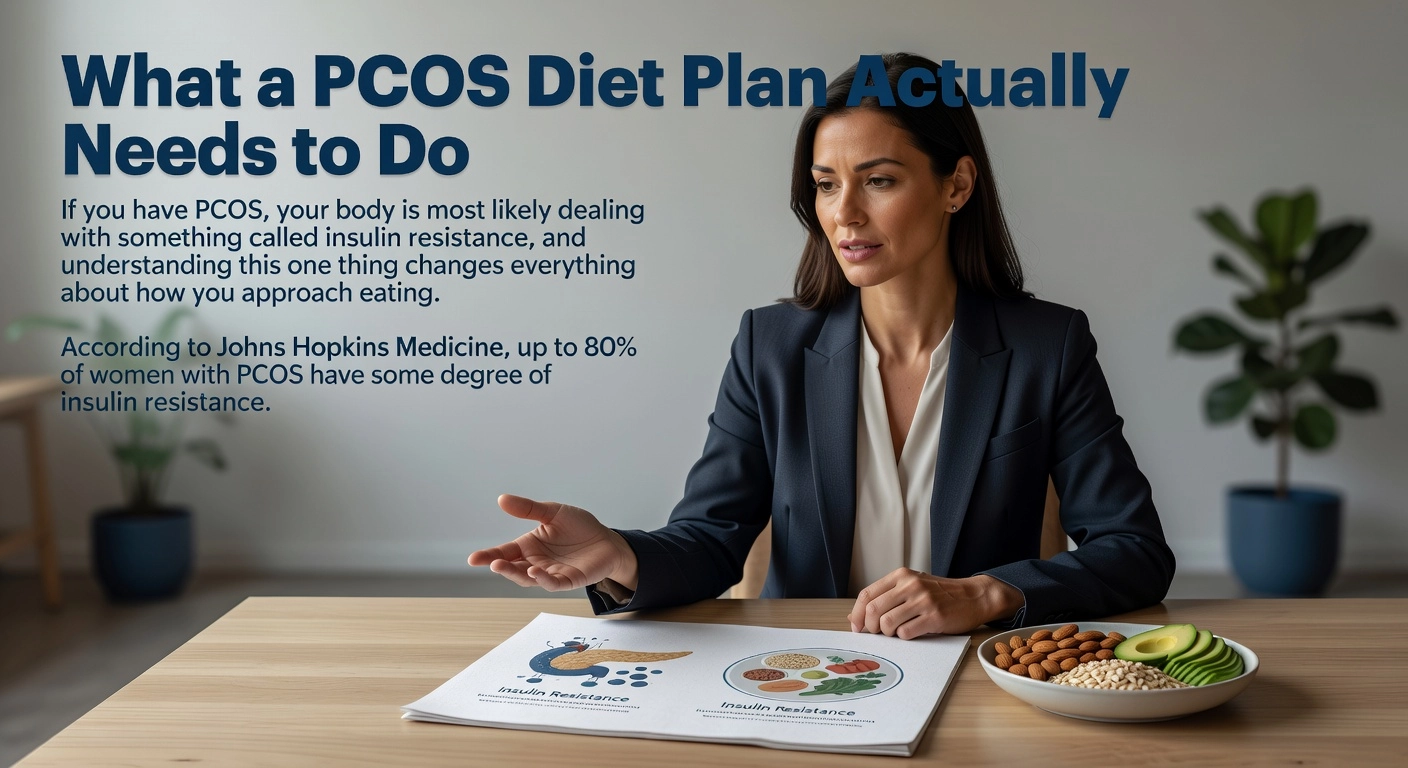
If you have PCOS, your body is most likely dealing with something called insulin resistance, and understanding this one thing changes everything about how you approach eating. According to Johns Hopkins Medicine, up to 80% of women with PCOS have some degree of insulin resistance. In plain terms, your cells stop responding properly to insulin (the hormone that moves sugar from your blood into your cells for energy), so your pancreas pumps out even more of it to compensate. That extra insulin circulating in your system is what drives those intense sugar cravings, makes stubborn belly fat so hard to shift, and leaves you exhausted even after a full night of sleep. It is not a willpower problem. It is a hormone problem.
So what does a solid PCOS diet plan actually need to do? The real goal is blood sugar stabilization and reducing inflammation, not slashing calories to the bone. Extreme restriction actually backfires by spiking your stress hormones and triggering even worse cravings. The WHO confirms that lifestyle changes, especially sustainable dietary shifts, are a cornerstone of PCOS management for exactly this reason.
Here is the encouraging part: you do not need to lose a dramatic amount of weight to feel a real difference. Clinical research consistently shows that just 5 to 10% of body weight lost can restore ovulation, improve period regularity, and meaningfully lower your risk of type 2 diabetes. That might be 8 to 15 pounds for many women, which feels a lot more achievable than some massive transformation.
Now, let’s bust the biggest myth in the PCOS space: there is no single perfect diet. Mediterranean, low-GI, and high-protein eating patterns all show real benefits, and they work for the same underlying reasons. They all prioritize whole foods, slow down digestion, keep blood sugar steady, and cut out the processed stuff that inflames your system. The approach that works best is simply the one you can actually stick to long term.
Which brings us to the most important point of all: sustainable eating will always beat any 30-day challenge or elimination plan. Cutting out entire food groups might feel productive at first, but it rarely lasts and often leads to rebound cravings that feel ten times worse with PCOS. Small, consistent changes that fit your real life compound into genuinely life-changing results over time.
Protein at Every Meal, the Lazy Way
If there’s one thing that can genuinely change how you feel with PCOS, it’s making sure protein shows up at every single meal. Research consistently points to 20 to 30 grams of protein per meal as a sweet spot for stabilizing blood sugar, and here’s why that matters so much for us. Protein digests slowly, which means glucose enters your bloodstream gradually instead of flooding it all at once. That gradual release prevents the insulin spikes that make PCOS symptoms so much worse. On top of that, eating enough protein triggers your body to release satiety hormones like GLP-1 and peptide YY, while dialing down ghrelin, the hormone that screams at you to eat every carb in sight. Protein also plays a direct role in hormone production and helps preserve the muscle mass that keeps your metabolism working in your favor.
Your Zero-Effort Protein Lineup
The best part? You do not need to cook elaborate meals to hit your protein goals. Here are the lazy staples worth keeping on hand at all times:
- Rotisserie chicken: Grab one from the store, shred it, done. It works in bowls, wraps, or straight off the bone with zero guilt.
- Canned tuna: Open, drain, eat. Half a can gets you close to 20 grams of protein with zero cooking involved.
- Hard-boiled eggs: Batch cook a dozen on Sunday or buy them pre-peeled. Three to four eggs gives you roughly 18 to 24 grams.
- Greek yogurt: A large single-serve container has around 15 to 17 grams before you add anything else.
- Cottage cheese: Scoop it straight from the tub for about 16 grams per serving. It is more versatile than people give it credit for.
- Deli turkey: Roll a few slices around some cheese or eat them plain. Four ounces easily gets you to 25 grams.
What 25 Grams Actually Looks Like
For beginners, the numbers can feel abstract, so picture this: one medium chicken breast about the size of your palm, or one full can of tuna, or a large container of Greek yogurt, or about four eggs on a plate. That is your protein anchor. The rest of your plate gets filled with vegetables, maybe a small scoop of complex carbs, and a little healthy fat.
The 90-Second Breakfast That Changes Everything
Spoon one large container of plain Greek yogurt into a bowl. Mix in one scoop of vanilla protein powder. Toss in a handful of frozen berries straight from the bag (no thawing needed). Sprinkle on some hemp seeds for extra protein and healthy fats. Stir it all together. You just made a breakfast with 30 to 40 grams of protein in less time than it takes to brew coffee, and it requires exactly one spoon to wash.
Why Skipping Breakfast Is Wrecking Your Whole Day
This is one of the most common PCOS mistakes and it has a real snowball effect. When you skip breakfast or eat something low in protein like toast or a muffin, your blood sugar drops early. Your body responds by spiking cortisol, your stress hormone, which also happens to make insulin resistance worse. By 10am you are already chasing cravings, and by 2pm you are raiding whatever is closest. That pattern of crashing and compensating repeats all day long. Starting your morning with 25 to 30 grams of protein sets a stable foundation that makes the rest of your food choices significantly easier to manage.
The Fiber Goal That Actually Keeps Cravings Quiet
Protein is doing a lot of heavy lifting in your PCOS diet plan, but fiber is the teammate that actually keeps you from raiding the pantry at 3pm. The target to aim for is 25 to 35 grams of fiber daily, and most women with PCOS are getting nowhere near that, with studies showing average intakes closer to 13 to 20 grams per day. Fiber slows down digestion, which means glucose enters your bloodstream more gradually, and that gentler rise in blood sugar is exactly what your insulin-resistant body needs. Less spiking means less crashing, and less crashing means fewer of those urgent, desperate snack cravings that hit hard in the afternoon.
Your No-Prep Fiber Starter Pack
The easiest way to hit your fiber goal is to keep lazy staples on hand that require zero cooking and barely any thought. Frozen peas and frozen edamame can go straight into a bowl or get microwaved in two minutes. Canned beans just need a quick rinse. Pre-washed leafy greens are ready the second you open the bag. Chia seeds stirred into yogurt or a glass of water takes about ten seconds. These are the foods that quietly bump your fiber numbers without adding anything to your to-do list.
Here is the quick science without the jargon: soluble fiber dissolves in water and forms a slow gel in your gut that helps stabilize blood sugar and keep you full longer, while insoluble fiber stays intact and keeps digestion moving smoothly. For PCOS specifically, soluble fiber is your best friend per handful, and beans, chia seeds, oats, and berries are your top sources.
Sneak It Into What You Are Already Making
You do not need new recipes. Toss half a can of black beans into your scrambled eggs for a filling breakfast with bonus fiber and protein. Stir a tablespoon of chia seeds into your morning smoothie; you will barely notice them. Swap your regular tortilla for a high-fiber wrap when you are making a quick lunch. These tiny swaps add up fast without any extra effort on your end.
One mistake worth calling out: leaning on bread as your main fiber source. Even bread labeled “whole grain” often delivers only 1 to 2 grams of fiber per slice, and research on fiber and PCOS outcomes consistently shows that variety matters as much as quantity. Bread alone rarely gets you to your daily target, and many varieties can still cause blood sugar spikes if they are not balanced with protein or fat. Prioritizing legumes, seeds, vegetables, and fruit alongside any bread gives you the mix of soluble and insoluble fiber that actually makes a difference for insulin sensitivity and cravings control.
Low-GI Carbs You Can Actually Live With
Let’s talk about carbs, because if you’ve spent any time in PCOS spaces online, you’ve probably been told to fear them. That’s not what we’re doing here.
The glycemic index is basically a ranking system for how fast a carbohydrate food pushes your blood sugar up after you eat it. High-GI foods like white rice, instant oatmeal, regular potatoes, and white bread get digested super quickly, which sends your blood sugar spiking fast. For anyone with PCOS and insulin resistance, that spike is a problem. Your body pumps out a rush of insulin to deal with it, and when insulin is running high, it can trigger more androgen production, more cravings, more fatigue, and a frustrating cycle that makes everything harder. Lower-GI foods digest more slowly, which means a gentler, steadier rise in blood sugar instead of a rollercoaster.
The good news is that you don’t need to cut carbs out. Physician-reviewed guidelines suggest carbs make up around 30 to 45% of your daily calories when you have PCOS, which means they still have a real place on your plate. The focus is on swaps, not elimination. Here are the ones that actually make a difference:
- Brown rice instead of white rice – more fiber, lower GI, still totally satisfying
- Sweet potato instead of regular potato – more nutrients and a slower blood sugar response
- Steel-cut oats instead of instant oatmeal – instant oats are heavily processed and spike blood sugar faster than you’d expect
- Lentil pasta instead of regular pasta – bonus points because lentil pasta also brings protein to the table
Here’s a trick that makes even imperfect carb choices more manageable: always pair your carbs with protein and fat. Adding eggs to your oats, chicken to your rice bowl, or nut butter to a piece of fruit slows down how fast everything digests. That means a smaller blood sugar response, better satiety, and fewer cravings later. You don’t have to eat perfectly; you just have to eat smart combinations.
Restricting carbs too hard often backfires with PCOS. The intense cravings, the binge cycles, the feeling of being completely out of control around food? Those often get worse with heavy restriction, not better. Carbs give your body energy, fiber, and nutrients it genuinely needs. The goal is choosing the right ones and building meals that keep your blood sugar steady all day long.
Healthy Fats That Do Real Work for PCOS
Fats got a bad reputation for a long time, but when it comes to your PCOS diet plan, the right fats are genuinely doing work for your hormones, your energy, and your cravings.
Omega-3s and Your Hormones
Here is something worth knowing: omega-3 fatty acids from sources like fatty fish, flaxseed, and walnuts may actually help lower androgens. Androgens are the hormones responsible for things like acne breakouts and unwanted hair growth, two of the most frustrating PCOS symptoms. A 2025 randomized trial found that 3 grams of omega-3 daily for 8 weeks significantly reduced testosterone levels and improved menstrual regularity in women with PCOS. That is a pretty big deal from something as simple as adding salmon to your dinner rotation.
The Lazy Fat Starter Pack
You do not need to overhaul anything. Just keep these on hand and you are covered:
- Avocado: creamy, filling, and works on basically everything
- Extra virgin olive oil: the easiest drizzle upgrade you can make
- A small handful of almonds or walnuts: grab-and-go fat and protein in one
- Canned sardines or salmon: cheap, omega-3 packed, and zero cooking required
Quick note on oils: healthy fats from whole food sources like olive oil, nuts, and fatty fish support hormone balance and reduce inflammation, while ultra-processed seed oils like soybean or corn oil tend to be high in omega-6s and can tip the balance in the wrong direction when overconsumed.
The Laziest Fat Hack Ever
Drizzle olive oil over whatever you are already eating. That is it. Add half an avocado to your lunch. According to Brown Health, building meals around anti-inflammatory whole foods like these supports insulin sensitivity and overall hormone health without requiring complicated meal prep.
Healthy fats also slow digestion, which keeps you fuller longer and helps stabilize blood sugar. That directly translates to fewer cravings and less of that urgent need to eat everything in sight after 8pm. If evenings are your weak spot, building more healthy fat into your meals earlier in the day is one of the most effective (and effortless) things you can do.
What to Cut Back On (Without Making It a Moral Issue)
Now that you know what to add to your PCOS diet plan, let’s talk about what to ease back on. And before you brace yourself, this is not a shame spiral or a list of things you’re “bad” for eating. This is just practical information about which foods are actively working against your hormones, so you can make swaps that actually feel doable.
The number to keep in mind is 25 grams of added sugar per day, which works out to about 6 teaspoons. That sounds manageable until you realize how sneaky added sugar is in foods that seem totally healthy. A single flavored yogurt can have 15 to 20 grams. A granola bar that markets itself as a wholesome snack? Easily 12 grams. One flavored latte from your coffee shop can blow past 25 grams before you’ve even had breakfast. These aren’t junk foods in the obvious sense, which is exactly why they catch so many people off guard.
The Biggest PCOS Offenders
The foods that tend to cause the most trouble for PCOS are sugary coffee drinks, flavored yogurts, granola bars, white bread, pastries, sodas, and fast food. What these all have in common is that they’re either high in added sugar, made from refined carbs, or both. They spike your blood sugar fast, trigger a big insulin response, and then leave you crashing and craving more within an hour or two. If your cravings feel out of control, these foods are often a big reason why.
Ultra-processed foods make this worse because they combine refined carbs, added sugars, and additives in ways that drive inflammation and make insulin resistance harder to manage. Research consistently links higher ultra-processed food intake with worse PCOS outcomes, compounding symptoms like weight gain, hormonal imbalance, and energy crashes all at once.
Simple Swaps That Don’t Feel Like Punishment
Cutting back does not mean giving everything up cold turkey. Try one swap per category and see how it feels. Swap soda for sparkling water with a squeeze of lemon or lime. You still get the fizz without the sugar spike. Swap flavored yogurt for plain Greek yogurt and add your own berries or a tiny drizzle of honey so you control exactly what goes in. Swap a pastry or granola bar breakfast for overnight oats, made with plain oats, chia seeds, and whatever fruit you have on hand. It takes five minutes the night before and it actually keeps you full.
Reducing these foods is not punishment. It is simply clearing out the things that are fighting against your hormones, so everything else you’re doing can actually work.
Why Meal Timing Matters Even on Your Most Chaotic Days
Here’s the thing about PCOS and food timing: it’s not about being perfect or eating on a strict schedule like a robot. It’s about understanding that your body genuinely struggles when it goes too long without fuel, and on the days when everything is chaos, that struggle gets louder.
When you skip a meal or go more than four to five hours without eating, your blood sugar drops. For women with PCOS and insulin resistance, that drop hits harder than it does for most people. Your body panics a little and starts screaming for fast energy, usually in the form of something sweet or starchy. This is why you can hold it together all morning and then absolutely demolish the snack cabinet at 4pm. It’s not a willpower problem. It’s a blood sugar problem, and the connection between skipping meals and intense PCOS cravings is well documented.
The simplest structure that works for most PCOS women is three balanced meals a day, each built around protein, fiber, and a healthy fat. You already know these pieces from the earlier sections. The goal here is just to repeat that combo three times a day, spaced roughly every four to five hours. You don’t need a complicated meal plan. You just need that basic pattern showing up consistently.
Now, real life as a busy mom looks nothing like a wellness influencer’s aesthetic lunch spread. You eat standing over the sink. You finish your toddler’s half-eaten quesadilla and call it a meal. You forget to eat lunch until 3pm and then wonder why you feel unhinged. Here’s a quick backup plan for each scenario. If you’re eating standing up and rushing, grab protein first. A handful of nuts, a cheese stick, or a few bites of leftover chicken buys your blood sugar some time. If you’re eating kids’ leftovers, add something to it. Pair those mac and cheese scraps with a hard-boiled egg or some Greek yogurt on the side. If you forgot lunch entirely, don’t skip it and wait for dinner. Eat something small right now and then eat dinner at a normal time anyway.
The single best way to make meal timing easier is to keep grab-and-go protein options front and center in your fridge. Hard-boiled eggs, Greek yogurt cups, cottage cheese, rolled turkey slices, or a batch of egg muffins you prepped on Sunday. When food is visible and requires zero effort, you’ll actually eat it. The barrier to eating on time needs to be as low as possible on the days when your brain is already running on empty.
One more reason consistent timing matters: cortisol. Women with PCOS who are already stressed and sleep-deprived have elevated cortisol levels, which worsens insulin resistance and makes cravings even harder to manage. Skipping meals, especially breakfast, spikes cortisol further. Eating regularly throughout the day is one of the quieter ways to support your stress hormones without adding anything complicated to your routine.
A Sample Lazy 1-Day PCOS Meal Plan (Under 30 Minutes Total)
Okay, so all that talk about protein, fiber, and low-GI carbs is great in theory. But what does an actual lazy PCOS day look like when you’re busy, tired, and have zero interest in meal prepping on a Sunday? Here’s a full day that comes together in under 30 minutes of hands-on time, total.
Breakfast: Greek Yogurt Bowl with Berries and Hemp Seeds (3 minutes)
Grab about 1.5 cups of plain Greek yogurt, throw on a handful of mixed berries, and sprinkle 2 to 3 tablespoons of hemp seeds on top. That’s genuinely it. This bowl clocks in at roughly 25 grams of protein, and the berries add low-GI carbs with real fiber and antioxidants. Hemp seeds quietly contribute plant-based protein, omega-3s, and magnesium, which is a mineral many women with PCOS are low in. It takes less time to make than it does to scroll Instagram.
Lunch: Rotisserie Chicken Salad (5 minutes)
Pull apart some store-bought rotisserie chicken over a bag of pre-washed greens. Add sliced cucumber, half an avocado, half a cup of rinsed canned chickpeas, and a drizzle of olive oil with a squeeze of lemon. This lunch hits approximately 35 grams of protein between the chicken and chickpeas, plus a solid 10 or more grams of fiber from the veggies, avocado, and legumes. The healthy fats from the avocado and olive oil slow everything down so your blood sugar stays steady through the afternoon.
Snack: Hard-Boiled Egg and a Handful of Almonds
Keep a few pre-boiled eggs in the fridge and this snack is ready in seconds. One egg plus about an ounce of almonds gives you roughly 12 grams of protein, healthy fats, and just enough fiber to bridge the gap between lunch and dinner without triggering an insulin spike. This combo is specifically good for that 3pm window when cravings tend to hit hardest with PCOS.
Dinner: Sheet Pan Salmon with Frozen Broccoli and Sweet Potato (20 minutes hands-on)
Season a salmon fillet with olive oil, garlic, and whatever spices you have. Toss frozen broccoli and sweet potato wedges on the same pan. Roast and walk away. Dinner delivers around 35 grams of protein, anti-inflammatory omega-3s from the salmon, and fiber-rich carbs from the sweet potato and broccoli that digest slowly thanks to the protein and fat alongside them.
Your Rough Daily Totals (No Tracking App Required)
Here’s what this lazy day actually adds up to:
- Total protein: roughly 105 to 110 grams (well above the 20 to 30g per meal target)
- Total fiber: roughly 30 to 35 grams (right in line with the 25 to 35g daily goal)
- Carbs: moderate, mostly from whole-food sources paired with protein and fat
- Fats: primarily from olive oil, avocado, almonds, hemp seeds, and salmon
This is a day that genuinely works for PCOS without any complicated tracking, specialty ingredients, or hours in the kitchen. It hits your targets, keeps cravings manageable, and still fits into a real busy-mom schedule.
Your PCOS Pantry Staples List for Lazy Weeks
Think of this as your PCOS survival kit for the weeks when cooking feels impossible. Stock these five categories and you can throw together a balanced, blood-sugar-friendly meal in minutes without a single recipe.
Proteins to Always Have on Hand
Rotisserie chicken is honestly the MVP of lazy PCOS eating. Grab one from the store, shred it over the weekend, and you have protein ready for bowls, wraps, and salads all week. Canned fish like tuna, sardines, and salmon are cheap, shelf-stable, and loaded with omega-3s that help with inflammation. Eggs are endlessly versatile, and hard-boiling a batch on Sunday means breakfast is handled for days. Cottage cheese and plain Greek yogurt pull double duty as snacks and meal bases. Frozen edamame microwaves in three minutes flat. Keep a protein powder tucked away for the days when everything falls apart and a quick smoothie is all you can manage.
Low-GI Carb Staples That Store Well
Canned lentils and chickpeas are fiber and protein in one can. Rinse them, throw them in anything, and you’re done. Microwavable brown rice pouches mean you have a whole grain base ready in 90 seconds. Sweet potatoes microwave beautifully and pair with almost every protein on this list. Frozen cauliflower rice is a brilliant low-carb filler that stretches meals without spiking blood sugar.
Healthy Fat Basics
Extra virgin olive oil goes on everything. Natural almond butter with no added sugar is a satisfying snack or smoothie addition. A bag of walnuts handles the 3pm snack crisis. Frozen avocado chunks blend into smoothies and defrost quickly for toast.
Fiber Boosters That Blend Into Anything
Chia seeds and hemp seeds stir into yogurt or oats without changing the flavor at all. Frozen peas toss into rice or soup in seconds. Canned black beans are the easiest fiber addition to any bowl.
Flavor Shortcuts That Make Lazy Meals Feel Intentional
Garlic powder and smoked paprika make plain chicken and roasted veggies taste like you actually tried. A squeeze of lemon juice brightens everything instantly. A good hot sauce adds excitement to simple meals so healthy eating never starts to feel like a punishment.
Progress Over Perfection Is the Whole Point
Here is the truth that nobody tells you when you’re starting a PCOS diet plan: one “bad” meal does not undo your progress. Neither does a rough week. What actually moves the needle with PCOS is the pattern you build over weeks and months, not whether Tuesday’s lunch was perfect.
Even small, consistent improvements add up to real changes in your body. Getting closer to that 20 to 30 grams of protein per meal, sneaking in more fiber, and swapping a couple of refined carbs for lower-GI options, these things quietly improve your insulin sensitivity, reduce inflammation, and help your hormones find a better balance. You do not need a dramatic overhaul to feel the difference.
And on the days when everything falls apart, because those days are real and they happen, just follow the one-thing rule. Get the protein in. That is it. One anchor keeps your blood sugar steadier, cuts cravings, and keeps you from spiraling into an all-or-nothing headspace.
Start with one or two changes from this list rather than trying to fix everything overnight. Pick protein first, or swap one refined carb. Build from there. When you are ready for more support, check out the lazy high-protein recipes and cravings-control content here on the site. That is your next practical step.
Conclusion
Managing PCOS does not have to mean overhauling your entire life overnight. Here are the key things to remember: focus on whole, nutrient-dense foods that stabilize your blood sugar, cut back on processed foods and added sugars that trigger inflammation, and keep your meals simple enough to actually stick with long-term.
You are already doing one of the hardest jobs in the world as a busy mom. Your health deserves a place on that to-do list too.
Start small. Pick one or two changes from this post and commit to them this week. Swap the sugary breakfast for a protein-packed option. Prep a batch of grains on Sunday. Small, consistent steps add up faster than you think.
You have everything you need to start feeling better. The best PCOS diet plan is the one that works for your real life, and that starts today.
⚡ Take Your PCOS Journey to the Next Level
Managing your symptoms doesn’t stop here! To make this journey as seamless, realistic, and stress-free as possible, explore our companion guides, easy-to-follow recipes, and step-by-step tools designed specifically for busy moms:
📚 More Practical PCOS Guides & Tips
- The Big Picture: Discover Why PCOS Causes Weight Gain and why it is absolutely not your fault.
- Real Motivation: Read my personal story on How I Lost 25kg in 6 Months with PCOS using these exact strategies.
- Movement That Works: Learn how to use simple, stress-free Walking for PCOS to boost your insulin sensitivity without exhaustion.
- PCOS-Friendly Grocery Staples: Find out if Are Oats Good for PCOS? and how to introduce smart carbs back into your day.
🛠️ Grab Your PCOS Shortcuts & Digital Assets
Stop guessing and start tracking with these custom, mom-tested digital resources:
- 🎁 Free Download: Jumpstart your progress with our completely free 3-Day PCOS Fat Loss Kickstart.
- 🔄 The Complete Routine Tracker: Ready to build lasting habits? Grab the ultimate 30-Day PCOS Fatloss Routine For Busy Moms and take back control of your schedule, hormones, and energy today!
Leave a Reply