
Have you ever noticed a strange “pooch” in your belly that just won’t go away, no matter how many core exercises you do? You might be dealing with something called diastasis recti, and you’re definitely not alone. This condition affects millions of people, especially postpartum women, and it often goes undiagnosed for years.
The good news? You don’t need a doctor’s visit to get started. Learning how to check for diastasis recti at home is actually pretty simple, and it only takes a few minutes. With just your hands and a little guidance, you can figure out whether that gap in your abdominal muscles is something you need to address.
In this post, we’re going to walk you through exactly what diastasis recti is, why it happens, and a step-by-step self-check you can do right now on your living room floor. No special equipment, no medical degree required. By the end, you’ll have a clear picture of what’s going on with your core and what to do next. Let’s get into it!
What Is Diastasis Recti and Why So Many Moms Have It
If you’ve ever noticed a soft, almost squishy gap running down the middle of your belly, or wondered why your core still feels “off” months (or even years) after having your baby, you might be dealing with diastasis recti. And trust me, you are far from alone.
Diastasis recti (DR) is simply a separation of the two long vertical muscles that run down the front of your abdomen, known as the rectus abdominis. These two muscles are normally held together by a strip of connective tissue called the linea alba, which runs right down your midline from your sternum to your pubic bone. During pregnancy, your growing uterus pushes outward and pregnancy hormones increase tissue laxity, causing that connective tissue to stretch and the muscles to drift apart. It is actually a completely normal adaptation your body makes to accommodate your baby.
Here’s the part that often gets overlooked though: this is not just a “mom pooch” or a cosmetic issue. The linea alba plays a huge role in core stability, spinal support, and even pelvic floor function. When that connection is weakened, you can experience back pain, poor posture, core weakness, and pressure-related symptoms. So if you have been blaming your belly on not working out enough, please give yourself some grace because something structural may actually be going on.
How Common Is It Really?
The numbers are honestly pretty eye-opening. Research shows that up to 100% of women have some degree of abdominal separation by week 35 of pregnancy. That drops to around 60% at 6 weeks postpartum, then roughly 45% at 6 months, and about 33% by the 12-month mark.
But here is what most people do not talk about: DR is not just a new-mom problem. Studies show that between 30% and 36% of women still have measurable diastasis recti anywhere from 3 to 30 years after giving birth, according to this long-term study from NIH. So if your youngest is in middle school and you are still experiencing core issues, this information is absolutely still relevant for you.
A Special Note for Moms with PCOS
If you have PCOS, this topic is worth paying extra attention to. The hormonal imbalances and chronic low-grade inflammation associated with PCOS can affect how your connective tissue heals and responds to rehabilitation. While research specifically connecting PCOS to diastasis recti outcomes is still limited, the systemic effects of PCOS on tissue quality and recovery are real considerations, according to Cleveland Clinic’s overview of diastasis recti. Working with a pelvic floor physical therapist who understands both conditions can make a real difference in your recovery journey.
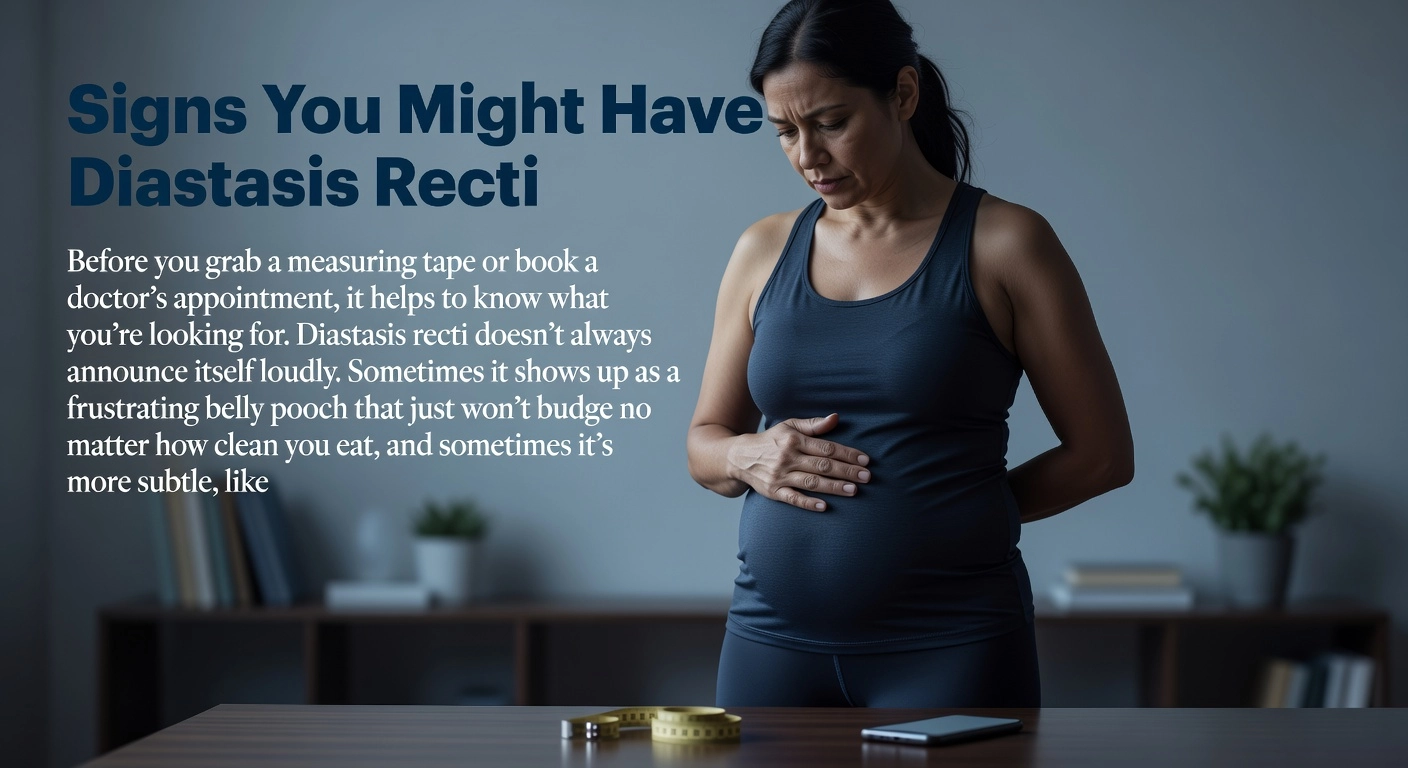
Signs You Might Have Diastasis Recti
Before you grab a measuring tape or book a doctor’s appointment, it helps to know what you’re looking for. Diastasis recti doesn’t always announce itself loudly. Sometimes it shows up as a frustrating belly pooch that just won’t budge no matter how clean you eat, and sometimes it’s more subtle, like a nagging sense that your core just isn’t holding things together the way it should.
Here are the most common signs to watch for:
The “mom pooch” that ignores your diet. If you’ve lost weight, cleaned up your eating, and still have that soft, rounded bulge sitting low on your belly, that’s a major red flag. This is probably the most misunderstood sign of diastasis recti, because so many moms blame themselves or assume it’s just leftover baby fat. But that pooch is often a structural issue caused by a gap in your abdominal wall, not a fat problem. Weight loss alone will not close diastasis recti. The gap in your connective tissue needs targeted rehab, not another calorie deficit.
Visible doming or coning along your midline. If you do a crunch or try to sit straight up from lying down and you notice a ridge, tent shape, or bulge running down the center of your belly, that’s called doming. It’s one of the clearest visible signs that your core muscles aren’t working together properly. Columbia Surgery explains that this kind of visible bulging during strain is a hallmark symptom worth taking seriously.
Core weakness that shows up in everyday life. This isn’t just about struggling at the gym. If getting up off the floor feels surprisingly hard, carrying grocery bags leaves your back aching, or rolling out of bed requires a weird workaround, your core may not be providing the support your body needs. That deep instability or “jelly-like” feeling around your midsection is your core telling you something is off.
Back pain, pelvic pain, or leaking. These symptoms feel totally unrelated to your belly, but they’re actually connected. When your abdominal wall isn’t doing its job, your lower back, hips, and pelvic floor have to compensate. Leaking a little when you sneeze, jump, or laugh is common but not something you just have to live with. According to pelvic health specialists at The Vag Whisperer, these pelvic floor symptoms often point back to compromised core function.
If any of these sound familiar, it’s worth doing a proper self-check, which we’ll walk through in the next section.
Before You Start: What You Need to Know
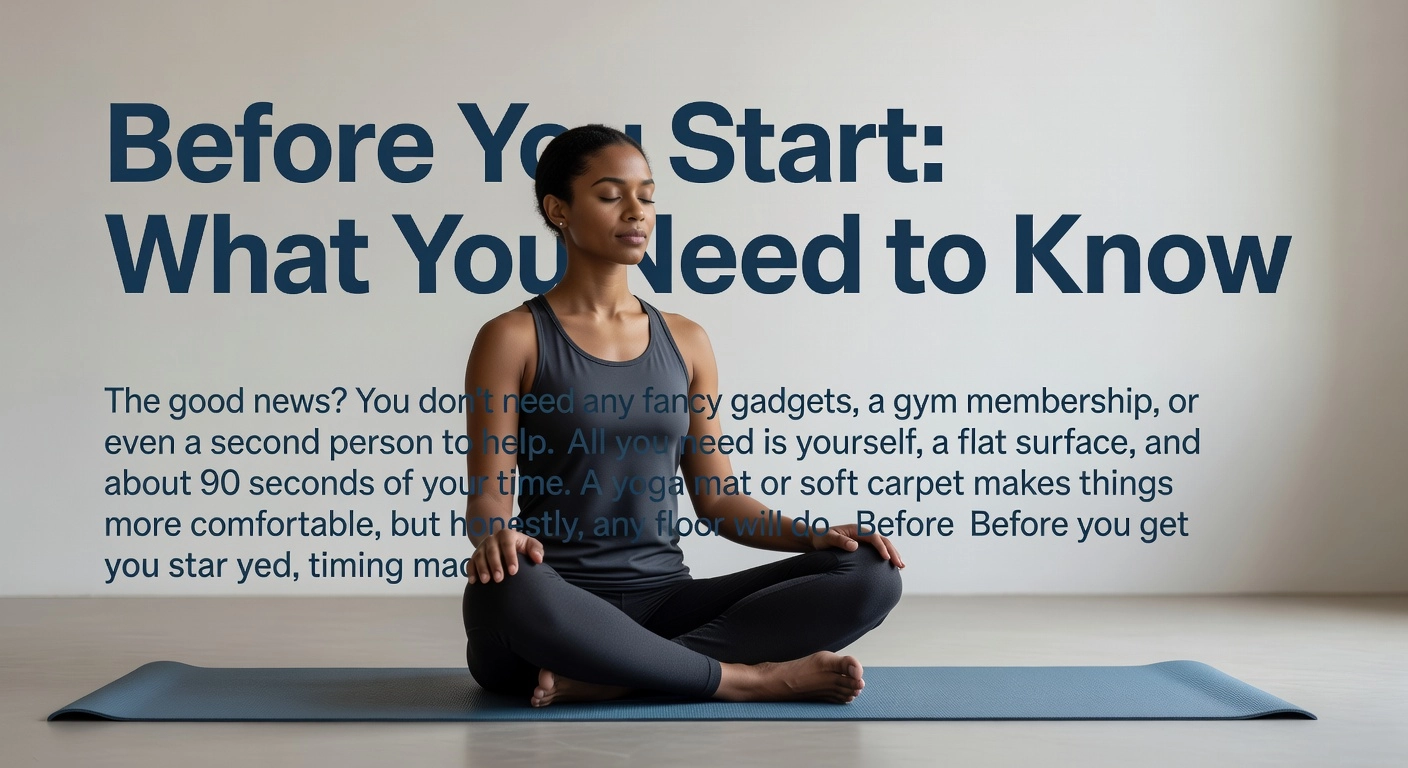
The good news? You don’t need any fancy gadgets, a gym membership, or even a second person to help. All you need is yourself, a flat surface, and about 90 seconds of your time. A yoga mat or soft carpet makes things more comfortable, but honestly, any floor will do.
Before you get started, timing matters more than you might think. Do this check when your stomach is relatively calm, meaning not right after a big meal, when you’re feeling bloated, or immediately following a workout. Any of those situations can create extra pressure or tension in your abdomen that gives you a less accurate picture of what’s actually going on.
One important heads-up for newer mamas: if you are fewer than 6 weeks postpartum, please get clearance from your doctor or midwife before doing this self-check. Your connective tissue is still in active healing mode at that stage, and poking around too soon can do more harm than good. Check with your provider first, even if you’re feeling pretty good.
When you’re ready, here’s how to get into position safely. Rather than doing a crunch motion to lower yourself down, roll onto your side first, then gently lower yourself to the floor using your arms for support. Do the same in reverse when you get back up. This protects your core and avoids putting unnecessary strain on that midline tissue.
Once you’re down, lie on your back with your knees bent and your feet flat on the floor, about hip-width apart. Let your belly fully relax. This is your starting position for the diastasis recti self-check, and getting it right sets you up for the most accurate reading possible.
Step-by-Step: How to Check for Diastasis Recti at Home
Okay, you’ve got your mat, you’re in a quiet corner, and you’re ready. Let’s walk through this together, one step at a time. It truly only takes a couple of minutes.
Step 1: Lie flat on your back with your knees bent and your feet flat on the floor, hip-width apart. Let your whole body relax. Drop your shoulders, unclench your jaw, and let your belly go soft. Tension in your body will make it harder to feel what’s actually going on underneath.
Step 2: Take two to three fingertips and place them vertically along your midline, pointing down toward your pelvis, starting right at your belly button. Press gently but with enough firmness to actually feel through any soft tissue. You’re looking for the center seam of your abdomen.
Step 3: Slowly lift just your head and shoulders off the floor, as if you’re doing the tiniest crunch imaginable. Hold for two to three seconds. You don’t need to go high; just enough to feel your ab muscles start to engage. One hand can stay behind your head for support if that helps.
Step 4: While holding that small lift, feel for a gap between two firm muscle ridges on either side of your midline. Count how many fingers fit side by side into that space. A gap of two or more finger widths is worth paying attention to. According to this detailed self-check guide, both the width and the depth of the gap matter.
Step 5: Now notice the texture beneath your fingers. Healthy connective tissue feels firm and springy, almost like pressing on an inflated balloon. If your fingers sink into soft, squishy tissue with almost no resistance, that’s a sign the linea alba may not have full tension, even if the gap seems small.
Step 6: Repeat this check about two to three inches above your belly button and two to three inches below it. The gap is often widest right at the navel, but separation can extend in either direction. This helpful resource from Nourish Move Love explains why checking multiple spots gives you a much clearer picture.
Step 7: Lower your head back down slowly. Then roll to one side and use your arms to push yourself up to sitting. Never sit straight up from this position, as that movement puts unnecessary strain on your core and can actually make things worse if DR is present.
What Your Results Actually Mean
So you’ve done the check. Now what does it all actually mean? Let’s break it down simply.
If you felt less than 2 finger widths of space with tissue that felt firm and springy, almost like pressing on a mini trampoline, you’re generally in the clear. That kind of resistance is a good sign that your linea alba is doing its job managing pressure and load through your core.
If you felt 2 or more finger widths, especially with tissue that felt soft, squishy, or like your fingers just sank right in with little pushback, that’s a strong indicator that diastasis recti is likely present. Think of the difference between pressing on a firm mattress versus pressing into a marshmallow. That tissue quality tells you a lot about how well your core can actually function.
Here’s the part that surprises most people: gap width alone doesn’t tell the whole story. A 3-finger gap with good tension and solid resistance can actually be less of a functional problem than a 1.5-finger gap with zero pushback. Depth and firmness matter just as much as width, sometimes more.
Also pay attention to whether you noticed any doming or coning along your midline during the crunch. That little ridge or bulge poking up is a clear sign your core isn’t managing intra-abdominal pressure well, and it’s worth noting even before you count finger widths.
Does a gap mean you need surgery? Almost certainly not. The vast majority of cases respond really well to targeted rehabilitation exercises guided by a pelvic floor PT. Conservative rehab focused on deep core activation, breathing mechanics, and gradual loading helps most moms see meaningful improvement, sometimes years postpartum. Surgery is typically a last resort reserved for severe cases with hernias or significant functional impairment after dedicated conservative care has been tried.
The PCOS Mom Pooch Connection Nobody Talks About
If you have PCOS and you’ve been doing everything “right” — eating cleaner, moving more, managing your insulin resistance — but that stubborn lower belly pooch just won’t budge, please hear this: it might not be fat at all. Diastasis recti creates a structural bulge caused by separated connective tissue, and no amount of calorie cutting will close that gap. Weight loss reduces stored fat, but it cannot repair or rebuild the linea alba. The pooch you’re staring at in the mirror may literally be your internal tissue protruding through a weakened midline, not something you can diet away.
This is the part nobody really talks about when it comes to PCOS and body changes after pregnancy.
PCOS adds a layer of complexity that makes DR recovery harder. The chronic low-grade inflammation that comes with PCOS affects your body’s ability to remodel collagen and heal connective tissue efficiently. Your hormonal environment is already working against you in ways that most generic postpartum advice completely ignores. This means that targeted core rehabilitation isn’t just a “nice to have” for women with PCOS; it’s genuinely essential. Waiting and hoping the gap closes on its own is less likely to work when your body’s healing pathways are already under hormonal stress.
Then there’s the insulin resistance and elevated cortisol piece. Both are incredibly common with PCOS, and both quietly contribute to core weakness, anterior pelvic tilt, and postural habits that increase pressure on an already struggling midline. You might be unknowingly making DR symptoms worse just through everyday movement patterns that your body adopted over time.
Here’s the most important thing to hold onto: none of this means you are broken or failing. It simply means that weight loss and DR recovery are two completely separate processes that need to run alongside each other. Addressing your PCOS through nutrition and lifestyle, while also doing targeted core rehab, isn’t doing double the work. It’s giving your body the two different tools it actually needs to heal.
When to Stop Self-Checking and See a Professional
The self-check is a great starting point, but there are moments when you really do need to hand things over to a professional. Knowing when to make that call can save you months of frustration and actually get you real results faster.
If your gap measures 2 to 3 or more finger widths, especially if the tissue underneath feels soft and squishy rather than firm, that’s your sign to book an appointment with a pelvic floor physical therapist. Width alone isn’t the whole story, but a wide gap paired with poor tension means your core isn’t managing pressure the way it should, and that needs a trained eye.
Pay attention to symptoms beyond just the gap itself. Persistent lower back pain, feeling like things are “falling out” or heavy in your pelvis, leaking when you sneeze or cough, or pain during everyday movements like lifting your toddler or getting out of bed, all of these are red flags worth taking seriously. These symptoms tell you the separation is affecting your body’s function, not just its appearance.
If you’ve been doing targeted core rehab consistently for 3 to 4 months and nothing has changed, that’s another clear sign you need personalized guidance. A generic YouTube routine can only take you so far.
A pelvic floor physical therapist can use ultrasound imaging, the actual gold-standard diagnostic tool, to measure your inter-recti distance accurately and assess tissue function. This gives you a real picture of your severity and a rehab plan built specifically for your body. And if getting to a clinic feels impossible between work, kids, and everything else on your plate, virtual pelvic PT sessions are widely available and genuinely effective. Many busy moms see great progress without ever leaving home.
Lazy-Friendly Next Steps After Your Self-Check
If your self-check left you suspecting diastasis recti, take a breath (literally, more on that in a second) because your next steps are actually pretty low-key. No intense workout programs required.
Start with diaphragmatic breathing before anything else. This is the unsexy, unglamorous foundation of DR recovery, and it genuinely works. Lie on your back with your knees bent, place your hands on your lower belly, and breathe deeply through your nose so your belly and ribs expand outward. As you exhale, gently draw your belly button in and up, like a soft zip. That gentle engagement is waking up your deep core without putting harmful pressure on your midline. Practice this 5 to 10 breaths a few times a day. Skip the crunches and sit-ups completely for now, since those can actually widen the separation further.
Small daily movement habits matter more than you think. Roll to your side before sitting up from bed or the floor. Brace your core gently before lifting your toddler or groceries. Stop sucking your belly in all day; that habit actually increases internal pressure and works against healing.
Your PCOS-friendly high-protein diet is already helping you here. Protein, vitamin C-rich foods, and anti-inflammatory ingredients like salmon, eggs, berries, and leafy greens all support connective tissue repair. Your diastasis recti self-check routine and your meal plan are working together, which is the kind of lazy efficiency we love.
Avoid heavy crunches, double-leg lowers, and intense Pilates rollups until a professional clears you. Then bookmark this post and recheck yourself in 6 to 8 weeks to track your real progress.
Quick Recap and What to Do Right Now
Here is the quick version if you scrolled straight to the bottom: lie on your back with knees bent, press 2 to 3 fingers vertically along your midline at and around your belly button, lift your head slightly, and feel for a gap or softness. A gap of 2 or more finger widths, especially with squishy tissue or visible doming, is a sign you may have diastasis recti and should take the next steps seriously.
The biggest myth worth repeating? That stubborn mom pooch is often structural, not a fat loss problem. No amount of dieting will close a connective tissue gap; targeted rehab will.
If you have PCOS, please hear this: slower healing is completely normal. Hormonal shifts and inflammation can affect tissue recovery, and that does not mean you are doing anything wrong or failing.
If your gap measures 2 or more finger widths, or if symptoms like back pain, leaking, or core weakness are creeping into your daily life, booking a session with a pelvic floor physical therapist is genuinely worth it.
Your one action for today: do the self-check, jot down your results, and come back for the next steps guide.
Conclusion
Now you have everything you need to take the first step toward understanding your core. To recap the key takeaways: diastasis recti is common and treatable, a simple self-check can reveal whether you have a gap that needs attention, and knowing your starting point makes all the difference in your recovery journey. Most importantly, doing the wrong exercises can actually make things worse, so awareness truly is everything here.
Your next move is simple. Grab a mat, find a quiet spot, and do your self-check today. If you find a gap, don’t panic. Bring your findings to a pelvic floor physical therapist or your doctor for personalized guidance.
Your core has carried you through so much. It deserves the right kind of care, and that care starts with you taking this one small but powerful step forward.
⚡ Rebuild Your Postpartum Core Safely
Healing a belly gap requires a gentle, deliberate approach that protects your core while rebuilding your strength from the inside out. Keep your recovery moving forward with these realistic, mom-tested guides and home shortcuts:
📚 More Postpartum Recovery & Safe Fitness Guides
- Understand the Gap: Not sure what is happening beneath the surface? Read our full breakdown: What is Diastasis Recti: A Busy Mom’s Guide.
- Protect Your Abdominals: Stop accidentally straining your core and follow our Safe Exercises for Diastasis Recti: A Realistic Guide.
- Rebuild Your Stamina: Ready to start moving consistently again? Check out the ultimate low-stress Postpartum Workout Plan for Beginners.
- Gentle Low-Impact Cardio: Learn how simple daily movement lowers stress and aids fat loss with our guide on Walking for PCOS and Postpartum Health.
🛠️ Grab Your At-Home Routine Shortcuts & Checklists
Take the guesswork, pressure, and planning out of your week with these ready-to-use digital tools designed for busy moms:
- 🎁 Free Download: Start rebuilding consistent daily habits with our completely free 3-Day Postpartum Fat Loss Kickstart.
- 🔄 The Complete Daily Tracker: Want a step-by-step roadmap to take control of your schedule, energy, and physical health from home? Grab the 30-Day PCOS Fatloss Routine For Busy Moms.
- ⏱️ The Quick Lifestyle Shift: Short on time and running on low energy? Reset your baseline habits in just one week with our 7-Day Lazy Lifestyle Reset Guide.
Leave a Reply