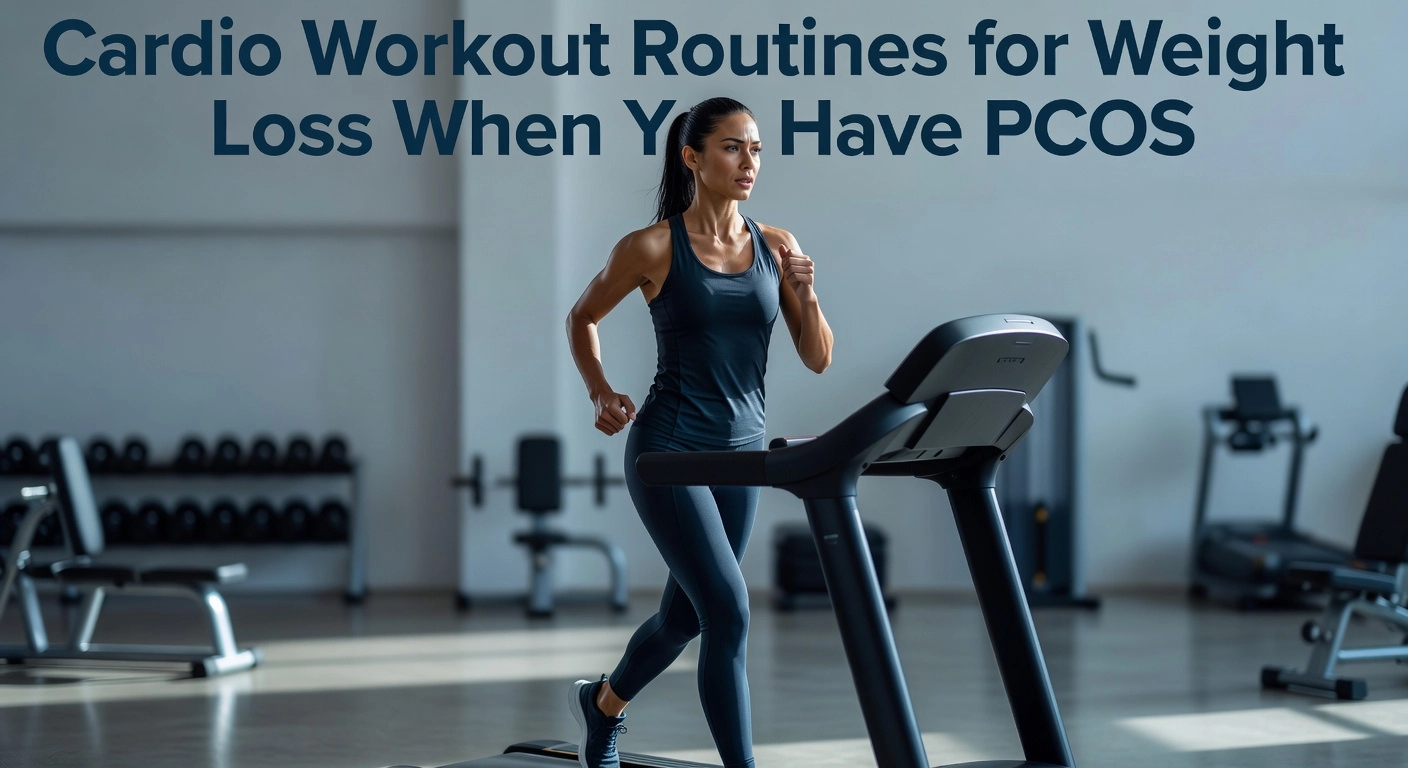
If you are looking for the most effective cardio workout routines for weight loss because you have PCOS and feel like you are constantly fighting your own body, you are definitely not alone. Polycystic ovary syndrome can make dropping pounds feel like an exhausting, uphill battle, and it’s incredibly frustrating when you’re putting in the effort but not seeing the results you deserve. The good news? The right kind of gentle, consistent movement can genuinely make a massive difference without sending your stress hormones into overdrive.
Finding realistic cardio options that support your body doesn’t have to be complicated or overwhelming, especially if you are balancing a hectic family schedule. In fact, keeping things simple and low-friction is often the most effective approach for maintaining metabolic health. Your body responds to exercise a little differently when managing insulin resistance, so knowing which workouts actually work in your favor is a total game-changer.
In this post, we’re breaking down beginner-friendly cardio routines that are gentle on your hormones, easy to stick with, and highly effective for fat loss. Whether you have 15 minutes or a little longer gaps in your day, there is a low-stress option here for you. Get ready to feel confident, energized, and finally in control of your fitness journey without the burnout. Let’s dive in!
Table of Contents
Why Generic Cardio Advice Backfires With PCOS
Here’s the thing nobody tells you when you get a PCOS diagnosis and your doctor hands you a pamphlet about “eating less and exercising more”: generic fitness advice was not written for your body. Standard cardio recommendations assume your hormones are playing nicely together, your insulin is doing its job, and your stress response isn’t already working overtime. For most women with PCOS, none of that is true. According to the WHO, PCOS affects an estimated 10 to 13% of reproductive-aged women globally, and up to 70% of those women have insulin resistance. That’s not a minor detail. That’s a completely different operating system.
So when you follow the standard advice and hammer yourself with daily high-intensity cardio, your body doesn’t respond with fat loss. It responds with cortisol. Lots of it. Cortisol is your stress hormone, and in a PCOS body that’s already running on a disrupted hormonal system, spiking it repeatedly makes insulin resistance worse, encourages your body to store more fat around your belly, and lights your cravings on fire. Research confirms that excessive high-intensity exercise can push PCOS symptoms in the wrong direction entirely.
And that ravenous, eat-everything-in-sight hunger you feel after an intense workout? That is not you being weak or lazy. That is a documented physiological response. Cortisol directly stimulates appetite, especially for high-calorie foods, and in a PCOS body with already-disrupted hunger hormones like ghrelin and leptin, the effect is amplified. You burn 400 calories in a spin class and then spend the rest of the day fighting the urge to eat 800 more. It’s not a willpower problem. It’s biology working against your workout.
PCOS-friendly cardio flips the script entirely. Instead of chasing maximum calorie burn at maximum intensity, the goal is improving insulin sensitivity and keeping cortisol in check. Moderate and low-impact options like brisk walking, swimming, and cycling consistently outperform intense daily cardio for women with PCOS because they move the needle on the actual root problem without triggering that hormonal stress spiral. Sustainable beats intense every single time when your hormones are already in chaos.
Incline Walking: The Laziest Fat-Burning Trick That Actually Works

If jogging sounds like a punishment and the gym feels like a place other people go, incline walking might be your new best friend. Here’s the deal: set your treadmill to a 10- to 12-percent incline, walk at 3 mph, and let gravity do the heavy lifting. That’s genuinely it. You don’t need to run. You don’t need to sweat through your eyelids. You just need to walk uphill like you’re late to pick up your kid from school.
The calorie burn is the part that’ll surprise you. A 2025 study highlighted by Runner’s World found that incline walking at this pace burns a similar number of total calories as jogging, but here’s the kicker: it actually burns a higher percentage from fat, around 40% versus 33% for running. So you’re essentially doing jogging-level work at a pace where you can absolutely watch Netflix and feel like a functional adult human being. That is not a small thing when you have PCOS, a to-do list, and approximately zero energy reserves.
For PCOS specifically, this workout is almost suspiciously perfect. High-intensity cardio can spike cortisol, and elevated cortisol wrecks insulin sensitivity, which worsens basically every PCOS symptom you’re already fighting. Incline walking keeps your heart rate in the fat-burning zone, roughly 60 to 70 percent of your max, without triggering that cortisol spiral. The 12-3-30 workout protocol that went viral is built on exactly this principle, and PCOS communities have been quietly recommending it for years.
Practically speaking, this is the workout that actually fits into real mom life. It takes 30 minutes, fits into naptime or the post-drop-off window, and requires zero warm-up panic. Just hop on, set the incline, and go. When you’re done, pair it with a high-protein snack like Greek yogurt or a couple of hard-boiled eggs. That combination stabilizes blood sugar, crushes post-workout cravings, and keeps your hormones from throwing a tantrum for the rest of the afternoon.
Zone 2 Cardio and Why Your Daily Walk Counts More Than You Think
Here’s the part where your daily coffee-run-turned-power-walk officially becomes a legitimate workout. Zone 2 cardio sits at 60 to 70 percent of your maximum heart rate, which sounds technical but is actually the easiest exercise intensity to find without any gadgets. The classic talk test works perfectly: if you can hold a full conversation but would embarrass yourself trying to sing, congratulations, you are already there. You do not need a smartwatch, a heart rate monitor, or any device more sophisticated than your own lungs to figure this out.
For women with PCOS, Zone 2 is genuinely special and not in a marketing way. Insulin resistance is the core metabolic problem driving PCOS weight gain, cravings, and hormonal chaos. Zone 2 training directly improves insulin sensitivity by increasing your muscles’ ability to absorb glucose without needing extra insulin to do it. Research suggests moderate aerobic exercise can improve insulin sensitivity by 25 to 50 percent in sedentary adults, and those improvements can last up to 72 hours after a single session. That is a lot of return on a brisk walk to the grocery store.
The other massive win is cortisol. High-intensity workouts spike cortisol repeatedly, which for a PCOS body basically pours fuel on a hormonal dumpster fire. Zone 2 keeps cortisol manageable, supports recovery, and actually promotes hormonal balance over time, making it the most sustainable long-term cardio option for busy, hormonally complicated humans.
The lazy adaptations practically write themselves: the school run counts, stroller walks count, parking at the far end of the lot definitely counts, and even those errands you pretend to enjoy? Also count. Aim for 150 to 300 minutes of this weekly and you are genuinely doing the work.
10-Minute Home HIIT for When You Have a Naptime and Zero Equipment
Good news: you do not need a gym membership, a full hour, or even pants with a waistband to make this work. A 10-minute HIIT session during naptime is a legitimate cardio workout, and here is why it hits different compared to a slow jog that takes three times as long.
The EPOC effect is the whole point. HIIT, which stands for high-intensity interval training, burns calories while you are working hard AND continues burning after you stop, thanks to something called excess post-exercise oxygen consumption. Your body keeps working to restore itself while you are sitting on the couch absolutely not folding that laundry. The Cleveland Clinic explains EPOC as your metabolism staying elevated during recovery, which means the workout keeps paying out after you have already moved on with your day.
For PCOS specifically, more is not better. Stick to 1 to 3 HIIT sessions per week, maximum. Push past that and cortisol, your stress hormone, starts spiking regularly, which worsens insulin resistance and basically undoes the work. Your hormones are already dealing with enough. Do not give them extra paperwork.
Here is your 10-minute protocol, no equipment required:
- Jumping jacks: 40 seconds work, 20 seconds rest
- Squat jumps (or regular squats if your knees have opinions): 40 seconds work, 20 seconds rest
- High knees: 40 seconds work, 20 seconds rest
- Mountain climbers: 40 seconds work, 20 seconds rest
- Burpee modification (step back instead of jumping, skip the push-up, preserve your dignity): 40 seconds work, 20 seconds rest
Repeat that circuit twice and you have hit 10 minutes of real work with zero excuses about not having time.
Do not do HIIT on back-to-back days. Your hormones will formally object. Space sessions out with walking, rest, or strength training in between so your body can actually recover and keep showing up for you.
Stationary Bike Cardio: Netflix Compatible and Actually Effective
If the thought of leaving your house to exercise makes you want to close the blinds and pretend you’re not home, a stationary bike might be the cardio solution you didn’t know you needed. It burns roughly 292 calories per hour for a 160 lb person at moderate effort, which is genuinely solid for something you can accomplish in pajamas while watching reality TV. That calorie burn adds up fast when you’re consistent, and consistency is where the real magic happens.
For PCOS moms dealing with inflammation and joint sensitivity, stationary biking is genuinely one of the kinder options out there. It’s non-weight-bearing, meaning your knees and hips are not taking a beating the way they would during running or jumping. Lower cortisol impact compared to high-intensity work means your hormones are not staging a rebellion afterward either.
Here is where it gets really good for the lazy-but-trying crowd: Zone 2 pace on a bike is easy enough that you can hold a full conversation, or more importantly, actually follow a Netflix plot. That low-key effort level makes it realistic to ride for 45 to 60 minutes because you’re genuinely distracted. Consistency beats intensity every single time for long-term weight loss.
You don’t need anything fancy to make this work. A basic budget bike at home or a standard gym bike gets the job done just as well as anything with a screen and a monthly subscription. And on the days when going outside sounds genuinely impossible? This is your guilt-free answer.
Swimming: The Highest Calorie Burn You Are Probably Ignoring
Okay, hear me out before you scroll past this one. Swimming burns approximately 423 calories per hour at a light to moderate pace, which makes it the highest calorie burn among low-impact options on this entire list. Higher than the bike. Higher than the elliptical. And your joints barely notice you were there.
For PCOS moms dealing with joint pain, inflammation, or just the general feeling that your body is staging a quiet revolt, water is genuinely magical. Buoyancy reduces the load on your joints by up to 90 percent, which means you can actually move without everything hurting afterward. Swimming also hits your arms, legs, core, and back all at once, so you are getting a full-body session without designing some complicated gym circuit. The water itself acts as resistance, meaning you are building muscle and doing cardio at the same time. That hybrid effect supports your metabolism in a way that just pedaling or walking does not quite replicate.
Now for the scheduling reality check, because this blog is nothing if not honest. Swimming requires a pool, probably childcare, and the psychological courage to exist in a swimsuit in public. That is a lot of logistics for a Tuesday. Gold star just for attempting it.
But even one session per week adds meaningful calorie burn and gives your body a recovery-friendly movement day between harder efforts. Start there. One swim. That counts.
Movement Snacks Count as Cardio and Nobody Can Tell You Otherwise
Here is your permission slip, signed by actual science: dancing in your kitchen while your pasta boils is cardio. The updated U.S. Physical Activity Guidelines removed the old 10-minute minimum bout requirement entirely, meaning short bursts of movement, even two or three minutes at a time, accumulate toward your 150-minute weekly goal. So yes, that frantic cleaning sprint before your in-laws arrive counts. Your toddler dance party counts. Walking in circles while you take that phone call you’ve been dreading counts. All of it counts.
Movement snacks are exactly what they sound like: small bites of activity scattered throughout your day. A 10-minute scrubbing-the-bathroom sprint, active floor play with your kids, marching in place during commercial breaks, pacing your kitchen while your coffee brews. These micro-sessions are especially powerful on the days when a structured workout is completely unrealistic, which, let’s be honest, is most days when you’re a busy mom with a packed schedule and a body that runs on caffeine and spite.
For anyone with PCOS, this approach has a bonus win built in. Short movement bouts prompt your muscles to absorb glucose for energy, which stabilizes blood sugar between meals and directly reduces those relentless cravings that feel impossible to fight. Better blood sugar control means fewer hormonal spikes driving you toward the snack cabinet at 3pm.
The real shift here is mental. When you stop waiting for the perfect uninterrupted workout window and start treating everyday movement as intentional exercise, consistency stops feeling impossible and starts feeling inevitable.
Strength Plus Cardio Circuits Beat Pure Cardio for PCOS Every Time
Here is something that will make you feel smarter than every person still grinding away on a treadmill for an hour: building muscle means you burn more calories while doing absolutely nothing. Your resting metabolic rate goes up when you have more muscle tissue, because muscle is metabolically expensive to maintain. Even modest muscle gains can add around 50 extra calories burned per day just existing on your couch. For PCOS specifically, that is not a nice bonus, it is kind of the whole point.
The insulin sensitivity angle is where strength training really earns its place for PCOS bodies. Muscle tissue acts as a major glucose disposal site, and every contraction during a strength workout improves how your cells respond to insulin independently of what your cardio is doing. Research suggests that each 10 percent increase in muscle mass is associated with roughly an 11 percent reduction in insulin resistance risk. That is your body getting better at managing blood sugar just because you did some squats. Cardio helps too, but strength training brings something different and additive to the table.
Here is the actual circuit to try:
- Squats, push-ups, resistance band rows (30 to 45 seconds each)
- 1 minute of cardio (marching in place, jumping jacks, whatever)
- Repeat 3 to 4 rounds, total time under 20 minutes
The evidence-backed recommendation for PCOS metabolic health is at least 2 strength days per week alongside your cardio work. That is genuinely not a lot. And this hybrid format is where lazy becomes a legitimate strategy: fewer total sessions, shorter duration, and more metabolic benefit per minute because you are hitting both systems at once.
A Sample Weekly Cardio Plan You Might Actually Stick To
Here is what a real week looks like when you actually have a life, a kid, PCOS, and approximately zero energy left over for anything heroic.
- Monday: 20-minute Zone 2 walk or incline treadmill during naptime. Flat road, incline treadmill, parking lot laps while your coffee goes cold. Doesn’t matter. Just keep it conversational pace, which means you could technically complain out loud about your to-do list while you walk. That’s the right intensity.
- Tuesday and Thursday: Movement snacks only, aiming for 8,000 to 10,000 steps through daily life. No structured workout. Just move more than you sit. Park farther away. Pace while you’re on hold. Dance aggressively while reheating leftovers. It counts. Science said so.
- Wednesday: 10-minute home HIIT, then immediately eat something with protein. The HIIT session spikes your blood sugar temporarily, so following it with a high-protein snack helps bring things back to baseline. Greek yogurt, a hard-boiled egg, a protein shake. Nothing fancy, just something that prevents you from eating an entire bag of crackers twenty minutes later.
- Friday: 20-minute Zone 2 walk or stationary bike while watching something genuinely trashy on streaming. This is not a compromise. This is a strategy. You are more likely to actually do this if you are also watching people make questionable decisions on television.
- Weekend: One longer 30 to 40 minute walk, plus one full rest day with absolutely zero guilt. Rest is not a failure. Rest is literally built into the plan on purpose. Your body repairs itself, your cortisol settles down, and you come back Monday actually ready to move instead of running on empty.
That’s it. That’s the whole week.
The One Cardio Mistake That Makes PCOS Weight Loss Harder
Here is the most counterproductive thing you can do with PCOS: decide that if three HIIT sessions a week is good, seven must be incredible. Spoiler alert, your cortisol disagrees loudly.
Daily high-intensity cardio is genuinely the most common mistake women with PCOS make, and it is also the most damaging. Your body already runs hotter on cortisol than the average person. Piling intense workout after intense workout on top of that does not accelerate fat loss; it tells your body to store more belly fat, crank up insulin resistance, and send your cravings completely off the rails. That relentless hunger at 10pm after a hard workout is not weakness. That is your stress hormones doing exactly what chronic cortisol elevation is designed to do.
The fix is not backing off entirely. It is capping HIIT at three sessions per week and filling the rest of your week with Zone 2 walks and low-key movement, which you have already been doing. That combination does the metabolic work without torching your hormonal balance.
What often gets ignored is what happens right after the workout. A high-protein snack within 30 to 60 minutes is not a suggestion for PCOS recovery; it is genuinely non-negotiable. Greek yogurt, cottage cheese, a protein shake, eggs; something that stabilizes blood sugar before your insulin decides to spiral.
And finally, boring consistency at moderate intensity will beat sporadic intense effort every single time, especially when your hormones are actively working against you.
Start Somewhere Embarrassingly Small and Build From There
Consistency over intensity is not something that belongs on a gym wall poster. It is the actual, research-backed science of why PCOS bodies respond better to regular moderate movement than to brutal workout binges followed by a week of recovery on the couch. Your hormones, your cortisol levels, and your insulin sensitivity all improve with steady, repeatable effort. Not heroic effort. Just regular effort.
Now, 150 minutes per week sounds like a training schedule for someone who has free time and a personal chef. But broken down, that is roughly three 10-minute walks per day. You probably already do some version of this between school drop-off, grocery runs, and the seventeen trips you make to the kitchen every afternoon.
Pick one or two routines from this list and do them three times this week. That is your only job right now. Not optimizing, not tracking macros perfectly, not downloading four fitness apps. Three sessions.
Then pair whatever cardio you do with a high-protein meal or snack afterward. Protein manages cravings, supports muscle recovery, and keeps you from eating everything in your pantry post-workout. These two things work together, not in separate life categories.
You do not need a perfect week. You need a week that is slightly less sedentary than last week. Start embarrassingly small and build from there, because small and consistent will always beat intense and abandoned.
Conclusion
Living with PCOS makes weight loss harder, but it is absolutely not impossible. The right cardio routine can work with your hormones instead of against them, making your efforts finally feel worth it. Here are the key takeaways to remember: keep your workouts low to moderate intensity, stay consistent over time, and listen to your body when it needs rest. Short sessions done regularly will always beat long workouts done occasionally.
Now it is your turn to take action. Pick one beginner-friendly routine from this post and commit to trying it this week. Start small, be patient with yourself, and celebrate every win along the way. Your PCOS journey is unique, and so is your progress. With the right tools and a little consistency, feeling strong, energized, and confident in your body is completely within reach.
⚡ Simplify Your Routine & Reclaim Your Energy
Staying active shouldn’t feel like a punishment on your busy schedule. Balance your physical stamina, heart health, and daily schedule with these realistic, mom-tested guides and low-effort shortcuts:
📚 More Practical Fitness & Nutrition Guides
- The Complete Home Blueprint: Prefer a broader approach to moving your body without stepping out the door? Explore our foundational Workout Routines for Moms.
- The Gym Floor Gameplan: Ready to upgrade your movement with club equipment? Check out our straightforward Planet Fitness Exercise Routines for Weight Loss.
- The Stress-Free Meal Prep: Fuel your active days without spending hours in the kitchen: Lazy Low Calorie Meal Prep for Moms.
- Real-Life Transformation: Read my personal, authentic story on How I Lost 25kg in 6 Months using simple, sustainable habits.
🛠️ Grab Your Lazy Fat Loss Shortcuts & Trackers
Take the heavy planning, guesswork, and mental fatigue completely out of your health journey with these ready-to-use digital tools:
- 🎁 Free Download: Reset your daily momentum and start building consistency with our free 3-Day Postpartum Fat Loss Kickstart.
- 🔄 The Complete Daily Tracker: Take absolute control of your routine, tracking, and daily movement goals with The 30-Day Fatloss Routine For Busy Moms.
- ⏱️ The Quick Lifestyle Shift: Short on time and low on energy? Reset your baseline habits in just seven days with our 7-Day Lazy Lifestyle Reset Guide.
Leave a Reply