Yes, oats can be good for PCOS. They provide soluble fibre that may support steadier blood sugar, digestion and fullness. However, the type of oats, portion size and toppings can make a significant difference—especially if you have insulin resistance.
For a more balanced PCOS breakfast, choose rolled or steel-cut oats and pair them with protein, healthy fat and extra fibre. In this guide, we’ll compare the best oats for PCOS, explain whether oatmeal supports weight loss, and show you how to avoid common blood-sugar mistakes.
Table of Contents
Are Oats Bad for PCOS? The Short Answer
If you’ve been Googling “are oats good for PCOS” and getting a mix of “yes, eat them!” and “no, avoid carbs!” you are not alone. The frustrating truth is that both camps have a point, and the real answer lives somewhere in the middle.
The short version: yes, oats can absolutely be part of a PCOS-friendly diet, but how you prepare them and what you eat them with makes a huge difference. Johns Hopkins Medicine specifically recommends steel-cut and rolled oats as part of a PCOS management plan because they help keep blood sugar stable, unlike refined carbs and sugary cereals.
Here is where it gets important, though. A plain bowl of instant oats eaten on its own? That can actually spike your blood sugar and leave you hungrier an hour later, which is the opposite of what we want with PCOS. But steel-cut or rolled oats paired with protein and healthy fats? That combination slows digestion, blunts the glucose response, and keeps cravings in check for hours.
Research backs this up. A 2021 meta-analysis found that oat beta-glucan reduced post-meal glucose peaks by approximately 28%, which is a meaningful difference for anyone managing insulin resistance.
So before you either add oats to your cart or swear them off completely, keep reading. This is very much a “it depends” situation, and knowing the nuance will help you make oats actually work for your body and your busy schedule.
Why Oats Actually Help with PCOS Symptoms
So now that we know oats can work for PCOS, let’s get into the actual science behind why. And don’t worry, I’m going to keep this as jargon-free as possible because nobody has time for a biochemistry lecture on a Tuesday morning.
It All Starts with Beta-Glucan
The real MVP inside your bowl of oats is a soluble fiber called beta-glucan. When you eat oats, this fiber absorbs water in your gut and forms a thick, gel-like substance. That gel literally slows everything down, including how fast food leaves your stomach and how quickly glucose (sugar) gets absorbed into your bloodstream. For anyone with PCOS, this is a big deal because insulin resistance affects the vast majority of people with the condition, somewhere between 35% and 95% depending on body weight and other factors. When your digestion slows down, your blood sugar rises more gradually instead of spiking all at once.
The Numbers Are Actually Pretty Impressive
A 2021 meta-analysis published in the European Journal of Clinical Nutrition looked at over 100 studies and found that oat beta-glucan reduced post-meal blood sugar peaks by approximately 28% and lowered the overall blood sugar response by around 23%. To put that in everyday terms, think of your blood sugar after a carb-heavy meal as a sharp mountain peak. Beta-glucan essentially flattens that mountain into a gentle rolling hill. Lower peaks, steadier energy, and fewer of those mid-morning crashes that send you straight to the snack cabinet. This is exactly the kind of blood sugar stability that PCOS nutrition experts point to as foundational for symptom management.
Why Slower Blood Sugar Means Better Hormones
Here is where it connects directly to your PCOS symptoms. When blood sugar rises slowly, your body releases insulin slowly too. That matters because chronically high insulin tells your ovaries to produce more androgens, which are the hormones behind many of the most frustrating PCOS symptoms like acne, hair thinning, and irregular cycles. By keeping insulin lower and steadier, oats help interrupt that whole chain reaction. It is not a cure, but it is a genuinely meaningful tool.
Gut Health and Hidden Inflammation
Oats also act as a prebiotic, meaning they feed the beneficial bacteria living in your gut. Women with PCOS tend to have less diverse gut microbiomes, which contributes to systemic inflammation that makes hormonal imbalances worse. When your good gut bacteria feast on oat fiber, they produce compounds called short-chain fatty acids that help calm inflammation and support a healthier gut lining. This is one reason why making overnight oats specifically is worth trying, since chilled oats develop even more resistant starch for extra gut-health benefits.
A Bonus: Minerals That Support Hormone Balance
Oats also bring magnesium, zinc, and iron to the table. Magnesium supports insulin signaling and can help with the anxiety and sleep issues that often tag along with PCOS. Zinc plays a role in androgen metabolism and ovarian health. Iron helps combat the fatigue that comes from heavy periods or iron deficiency, both common with PCOS. These are not headline minerals, but they quietly support the hormonal and energy systems that PCOS tends to disrupt.
Steel-Cut vs. Rolled vs. Instant Oats: Which Is Best for PCOS
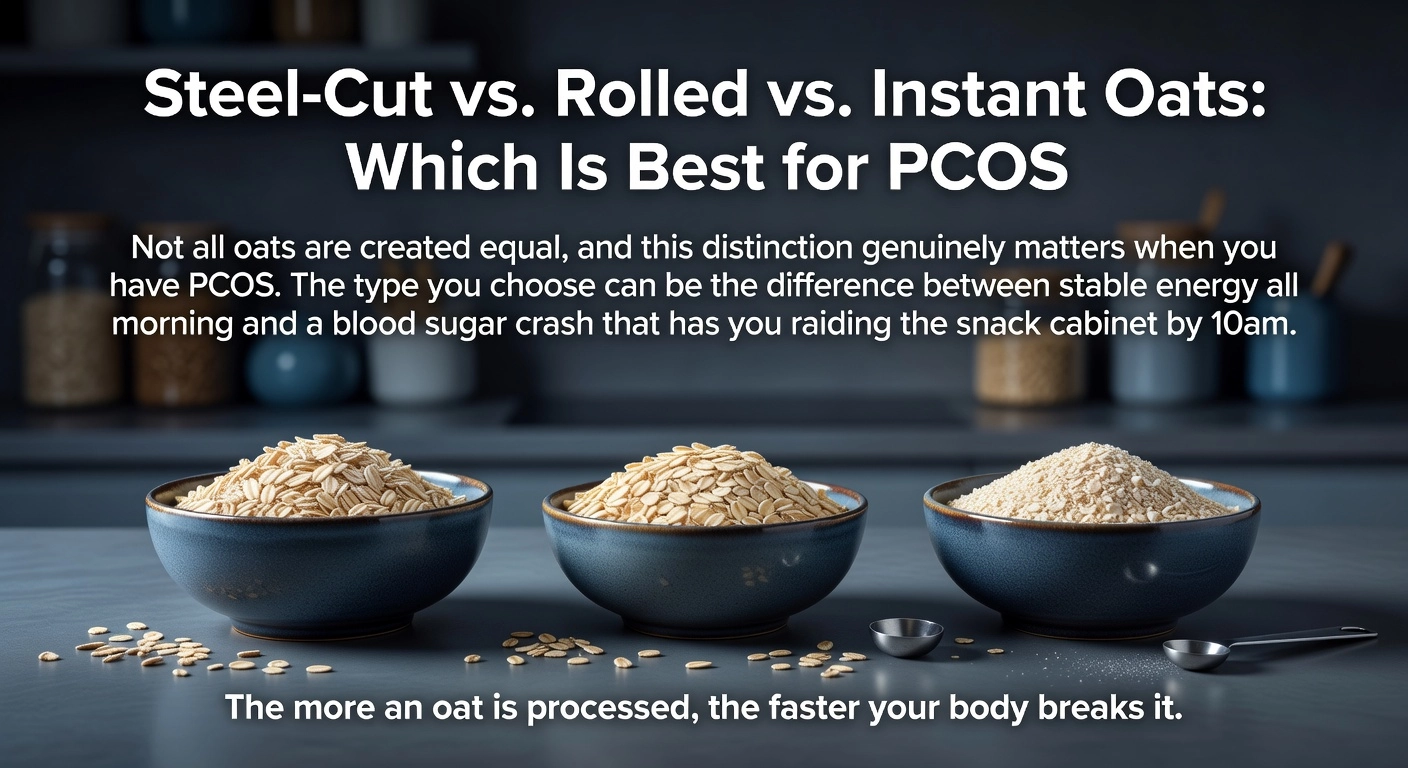
Not all oats are created equal, and this distinction genuinely matters when you have PCOS. The type you choose can be the difference between stable energy all morning and a blood sugar crash that has you raiding the snack cabinet by 10am.
The Processing Factor
The more an oat is processed, the faster your body breaks it down. Steel-cut oats are simply whole oat groats chopped into pieces, which means your digestive system has to work harder to break them down. That slower breakdown is exactly what you want with PCOS. Rolled oats are steamed and flattened, slightly more processed but still a solid option. Instant oats are pre-cooked, dried, and rolled super thin, so they digest quickly and spike blood sugar faster.
Here is what the glycemic index numbers actually look like in practice:
- Steel-cut oats: GI around 42 to 55 (low range, best for blood sugar stability)
- Rolled oats: GI around 55 to 65 (low to medium, still a great choice)
- Instant oats: GI around 70 to 83 (medium to high, works against insulin sensitivity goals)
One study even found that instant oatmeal spiked blood sugar similarly to white bread, while steel-cut oats raised it roughly 28% less. That is a meaningful difference when insulin resistance is part of your PCOS picture.
The Overnight Oats Bonus
Here is something really cool that most people do not know. When you soak rolled oats in the fridge overnight, they develop something called resistant starch. This type of starch resists digestion in your small intestine and acts more like fiber, feeding your gut bacteria and helping with blood sugar control. You actually get more gut health benefits from overnight oats than from the same oats cooked hot. For busy moms, this is a total win because you prep them the night before and grab them on your way out the door.
Quick Schedule-Based Breakdown
Zero time in the morning: Overnight rolled oats prepped in a jar the night before. Resistant starch bonus included at no extra effort.
Five minutes available: Rolled oats on the stovetop or microwave. Quick, PCOS-friendly, and easy to dress up with protein and berries.
Ten minutes on the stovetop: Steel-cut oats for the best blood sugar stability. Batch cook on Sunday and reheat all week.
Absolute emergency backup: Plain instant oats with added protein like Greek yogurt or nut butter to slow down digestion. Skip the flavored packets entirely since they are loaded with added sugar.
The bottom line is that steel-cut and rolled oats are your best friends for PCOS, and overnight oats are honestly the laziest and most effective option of all.
Are Oats Good for PCOS Weight Loss and Cravings?
Here is where things get really interesting, and honestly, this was the piece of the puzzle that changed everything for me personally.
When you have PCOS, your cravings are not a willpower problem. They are a blood sugar problem. Insulin resistance, which affects up to 70% of people with PCOS, creates a cycle where your blood sugar spikes, crashes hard, and then your body screams for quick energy in the form of carbs and sugar. Understanding this completely reframed how I thought about breakfast.
The Beta-Glucan Effect (In Plain English)
The soluble fiber in oats, called beta-glucan, does something genuinely useful for this cycle. It turns into a thick gel in your digestive system, which essentially slows everything down. Carbs do not rush into your bloodstream all at once; they trickle in gradually instead. Research from 2021 found that oat beta-glucan reduced post-meal blood sugar peaks by around 28%, which is a significant buffer against the kind of crash that sends you raiding the pantry at 10am. Less spike means less crash, and less crash means far fewer of those desperate, urgent cravings that feel impossible to ignore. You can read more about managing carbohydrate cravings with PCOS and why this cycle happens in the first place.
Why Protein Is the Missing Piece
Beta-glucan fiber is powerful on its own, but pairing it with protein is what transforms a basic bowl of oats into a real craving-control weapon. The fiber triggers fullness hormones like GLP-1 and PYY, while protein reinforces those signals and keeps them going longer. Think of the fiber as a slow-release energy capsule and the protein as the brake pedal that tells your brain it is genuinely satisfied, not just temporarily distracted. A bowl of oats with Greek yogurt, a scoop of protein powder, or a spoonful of nut butter will keep you full significantly longer than a plain bowl ever could.
My School-Run Turning Point
I want to be honest about what this looked like in real life, because the science only matters if it works on a Tuesday morning when you are packing three lunches and someone cannot find their left shoe. I used to hit a wall every single morning around 10am, reaching for whatever was easiest, usually something sweet or carby, just to function. When I started making overnight oats the night before with protein powder and almond butter, that spiral stopped almost immediately. The prep takes five minutes the evening before. The payoff is steady energy through the whole PCOS weight loss journey without white-knuckling your way through cravings. That is the lazy win I am always chasing.
How to Build a Lazy PCOS-Friendly Oat Bowl That Actually Works
Okay, so now that you know why oats work for PCOS, let’s talk about how to actually eat them in a way that fits your real life. Because knowing the science is great, but if your breakfast takes 45 minutes and requires ingredients you don’t have, it’s not going to happen on a Tuesday morning with kids to get out the door.
Here is the simple formula that makes all the difference.
The PCOS Oat Formula
Start with about ½ cup of dry rolled or steel-cut oats as a general serving, then adjust according to your individual needs. Build your bowl with a protein source, healthy fat and extra fibre to make it more balanced and satisfying.
Load Up on Protein
This is the step most people skip, and it’s honestly the most important one. Stirring in a few spoonfuls of plain Greek yogurt, adding a scoop of your favorite protein powder, or dolloping in some almond or peanut butter can take a single bowl from basically zero protein to somewhere between 20 and 30 grams. That protein hit slows digestion, supports muscle tissue, and plays a huge role in keeping you full until lunch. If you have PCOS and you’ve been eating plain oatmeal and wondering why you’re starving two hours later, the missing protein is almost certainly the culprit.
Add a Healthy Fat
Chia seeds, ground flaxseed, and nut butters are your best friends here. A tablespoon of chia seeds adds omega-3 fatty acids, a gel-forming fiber that further slows glucose absorption, and a satisfying thickness to your bowl. Ground flaxseed does something similar while also providing lignans that may support hormone balance. These fats don’t just slow things down in your digestive system; they also contribute to the kind of anti-inflammatory eating pattern that supports PCOS management over the long term. Plus, chia seeds basically dissolve into your oats overnight, so you don’t even notice them. Total lazy win.
Top with Berries
Blueberries, raspberries, and strawberries are low-glycemic, high-fiber, and loaded with antioxidants that help fight the chronic inflammation that makes PCOS symptoms worse. A small handful on top adds natural sweetness without spiking your blood sugar the way a drizzle of honey or a banana would. The bonus here, especially if you’re a mom feeding a family: kids absolutely love berries on oatmeal. You can make one bowl that works for everyone at the table, which is the lazy meal prep dream.
Three Lazy Variations That Actually Fit Your Life
The 5-Minute Stovetop Bowl is your weekday workhorse. Cook rolled oats on the stove for about five minutes, stir in protein powder or a big spoonful of nut butter at the end, toss on chia seeds and berries, and you’re done. Warm, filling, and actually satisfying.
The Overnight Jar requires zero morning effort, which makes it perfect for the days when you wake up already behind. The night before, combine oats, milk, Greek yogurt, chia seeds, and protein powder in a jar, shake it up, and put it in the fridge. Grab it on the way out the door. Cold, creamy, and completely ready to eat.
The Sunday Batch Prep is the ultimate lazy strategy. Make four or five overnight oat jars at once on Sunday evening. They keep in the fridge for up to five days, so your breakfasts are handled for almost the entire week. This approach takes maybe 15 minutes of active prep and completely eliminates morning decision fatigue, which is genuinely underrated when you’re managing PCOS symptoms and a busy schedule at the same time.
PCOS Oat Mistakes That Are Sabotaging Your Blood Sugar
Even when you’re choosing the right type of oats, it’s surprisingly easy to accidentally turn a PCOS-friendly breakfast into a blood sugar disaster. Here are the most common mistakes that could be working against you.
The Instant Packet Trap
Those little flavored oat packets feel like a convenient win, but they’re one of the sneakiest saboteurs for PCOS. Many contain 12 to 20 grams of added sugar per packet, which completely wipes out the blood sugar benefits you’re trying to get from oats in the first place. Johns Hopkins explicitly flags instant and flavored oatmeal as something to avoid for PCOS management. Stick with plain rolled or steel-cut oats and add your own toppings so you’re actually in control of what’s going into your body.
Eating a Giant Bowl With Nothing Else
Portion size genuinely matters here. A large bowl of plain oats with no protein or fat is basically a carbohydrate delivery system, and your blood sugar will respond accordingly. The beta-glucan fiber in oats does slow digestion, but it can only do so much without backup. Pairing a reasonable portion (around half a cup dry) with protein and fat is what actually creates that stable, sustained energy effect. You can check out more PCOS-friendly oatmeal guidance here if you want specifics on portions.
Sweetener and Topping Overload
A drizzle of honey here, some maple syrup there, a handful of dried mango on top, and suddenly your “healthy” oat bowl is loaded with rapid-digesting sugars. These additions counteract the viscous gel effect that beta-glucan creates in your gut, which is the exact mechanism that slows glucose absorption. Small amounts of fresh berries or a pinch of cinnamon are much better options.
Skipping the Protein (The Biggest Mistake)
Across clinical resources and PCOS community discussions alike, skipping protein is consistently named as the number one oat mistake. Oats alone do not have enough protein to meaningfully blunt your glucose response or keep cravings in check. Greek yogurt, cottage cheese, protein powder, even a spoonful of nut butter; something with staying power needs to be in that bowl every single time.
Thinking Oats Alone Will Fix Everything
Finally, oats are one piece of the puzzle, not the whole picture. How you distribute carbohydrates throughout your entire day matters just as much as what you eat at breakfast. Eating a balanced oat bowl but then having a carb-heavy lunch with no protein creates the same rollercoaster effect you were trying to avoid. Consistent, balanced meals across the day is what actually supports insulin management with PCOS long-term.
My Go-To Lazy High-Protein Overnight Oats for PCOS
All the theory in the world means nothing if you can’t actually execute at 10pm when you’re already exhausted. So here is the exact recipe I use, no fluff, no complicated steps.
The Recipe (Under 5 Minutes, I Promise)
Ingredients for one jar:
- ½ cup old-fashioned rolled oats
- ½ cup plain Greek yogurt (this alone gives you roughly 10 to 15 grams of protein)
- ½ scoop vanilla protein powder (adds another 10 to 12 grams of protein)
- ½ cup milk of your choice
- 1 teaspoon chia seeds
- A pinch of cinnamon and a tiny drizzle of honey if you want it sweeter
To make it: Mix the protein powder into the milk first so it blends smoothly, then stir everything together in a mason jar, seal it, and put it in the fridge. That is genuinely it. You are looking at roughly 25 grams of protein per jar, and the whole thing takes about three minutes. In the morning, the jar goes straight from the fridge into your bag. No reheating, no dishes, no thinking required.
If you prefer to skip the protein powder, swap it for one to two tablespoons of natural peanut butter or almond butter instead. You will get healthy fats plus an extra four to eight grams of protein, and it tastes like dessert.
Make It Kid-Friendly and Batch It on Sunday
The best part about this recipe for busy moms is that your kids will eat it too, which means you are not making two separate breakfasts. Add berries and a few dark chocolate chips on top for a “chocolate berry cheesecake” vibe that kids love. Sliced banana with peanut butter and a sprinkle of granola works great too. You can keep the base jar identical for everyone and just let each person add their own toppings.
On Sunday nights, I make three to four jars at once, which takes maybe fifteen minutes total. Stack them in the fridge and your entire weekday breakfast situation is solved before the week even starts. No morning decisions, no blood sugar disasters, and no separate meal for the kids.
Frequently Asked Questions About Oats and PCOS
Can I eat oats every day with PCOS?
Yes, oats can be eaten regularly as part of a balanced PCOS-friendly diet if they work well for you. A common starting portion is about ½ cup of dry oats, paired with protein, healthy fat and extra fibre. Individual needs and blood-sugar responses vary, so adjust the portion accordingly.
Are overnight oats better for PCOS than cooked oats?
Neither option is automatically better for PCOS. Overnight oats are convenient and retain the fibre found in oats, while cooked oats can be equally nutritious. The bigger difference comes from the type of oats, portion size and whether you add protein, healthy fat and extra fibre. Choose the version that suits your routine and blood-sugar response.
What if oats still spike my blood sugar?
This is real and valid. PCOS affects everyone differently, and some people are more sensitive to carbohydrates than others. If oats consistently leave you feeling shaky or hungry an hour later, try adding more protein, swapping instant for rolled or steel-cut, or simply rotating eggs in on some mornings. Neither food is better than the other across the board; it is about finding what works for your body.
Are oats gluten-free?
Oats are naturally gluten-free, but cross-contamination during processing is common. If you have gut sensitivities alongside PCOS, look specifically for certified gluten-free oats to be safe.
Oats vs. eggs for PCOS breakfasts?
Here is the good news: you do not have to choose. Oats bring fiber and gut health benefits. Eggs bring complete protein and healthy fats. Both support PCOS management, and combining them (hello, savory oats or eggs on the side) gives you the best of both worlds.
The Bottom Line on Oats and PCOS
Oats can be part of a balanced PCOS-friendly diet. Their fibre may support fullness and steadier blood sugar, but the overall meal matters more than oats alone. Choose a type and portion that works for you, and combine it with protein, healthy fat and extra fibre.
The three non-negotiables are simple enough to remember without writing them down. Choose rolled or steel-cut oats over instant. Add at least 20 grams of protein. Keep your portion to about a ½ cup dry. That’s genuinely it.
Ready to put this into action? Check out the high-protein PCOS breakfast recipes and craving control series right here on lazyfitmom.com for ready-to-go ideas that follow exactly these principles.
You are making evidence-backed choices for your health while managing a busy life with PCOS. That is not a small thing. Keep going.
💬 More Questions About Oats and PCOS
Can I eat instant oats if I have PCOS?
Yes, you can eat instant oats with PCOS, but plain varieties are generally a better choice than flavoured packets containing added sugar. Because instant oats are more processed, they may be digested faster than rolled or steel-cut oats. Pair them with protein, healthy fat and extra fibre to make the meal more balanced.
How much oatmeal should a woman with PCOS eat?
A good rule of thumb for a realistic portion size is 1/2 cup of dry rolled or steel-cut oats (which cooks up to about 1 cup). Because carbohydrates affect insulin resistance, keeping your portion controlled while filling the rest of your bowl with protein and fats is the key to staying full and energized.
Are oats good for PCOS weight loss?
Oats may support a PCOS weight-loss plan because their fibre can help with fullness and appetite control. They do not directly cause weight loss, however. Portion size and the complete meal still matter, so pair oats with protein and healthy fat instead of relying on a plain or heavily sweetened bowl.
What is the best time of day to eat oats for PCOS?
Breakfast is a fantastic time to eat oats, provided they are balanced with protein. Eating a high-fiber, high-protein breakfast helps set a stable blood sugar baseline for the rest of your day, preventing the mid-afternoon energy crashes and sugar cravings that many busy moms experience.
⚡ Simplify Your PCOS Meal Prep & Planning
Balancing your hormones doesn’t mean giving up comfort foods like oatmeal or spending your entire Sunday prepping meals. Explore our other realistic, mom-tested guides and shortcuts to keep your momentum going:
📚 More Practical PCOS Guides & Tips
- The Complete Blueprint: Ready to fix your kitchen layout? Check out our step-by-step PCOS Diet Plan for Weight Loss built for real life.
- The Motivation: Read my raw, personal story on How I Lost 25kg in 6 Months with PCOS without losing my mind.
- Simple Movement: Pair your breakfast with easy, stress-free walking for PCOS to drastically drop insulin resistance.
- Underlying Science: Deep dive into the physical shifts by reading Why PCOS Causes Weight Gain.
🛠️ Grab Your PCOS Shortcuts & Digital Assets
Stop second-guessing your meals and routine. Take the heavy lifting out of consistency with these custom digital tools:
- 🎁 Free Download: Start resetting your habits today with our completely free 3-Day PCOS Fat Loss Kickstart.
- 🔄 The Ultimate Consistent Companion: Want a full blueprint? Grab the 30-Day PCOS Fatloss Routine For Busy Moms and take back control of your schedule, energy, and hormonal health this week!
Leave a Reply