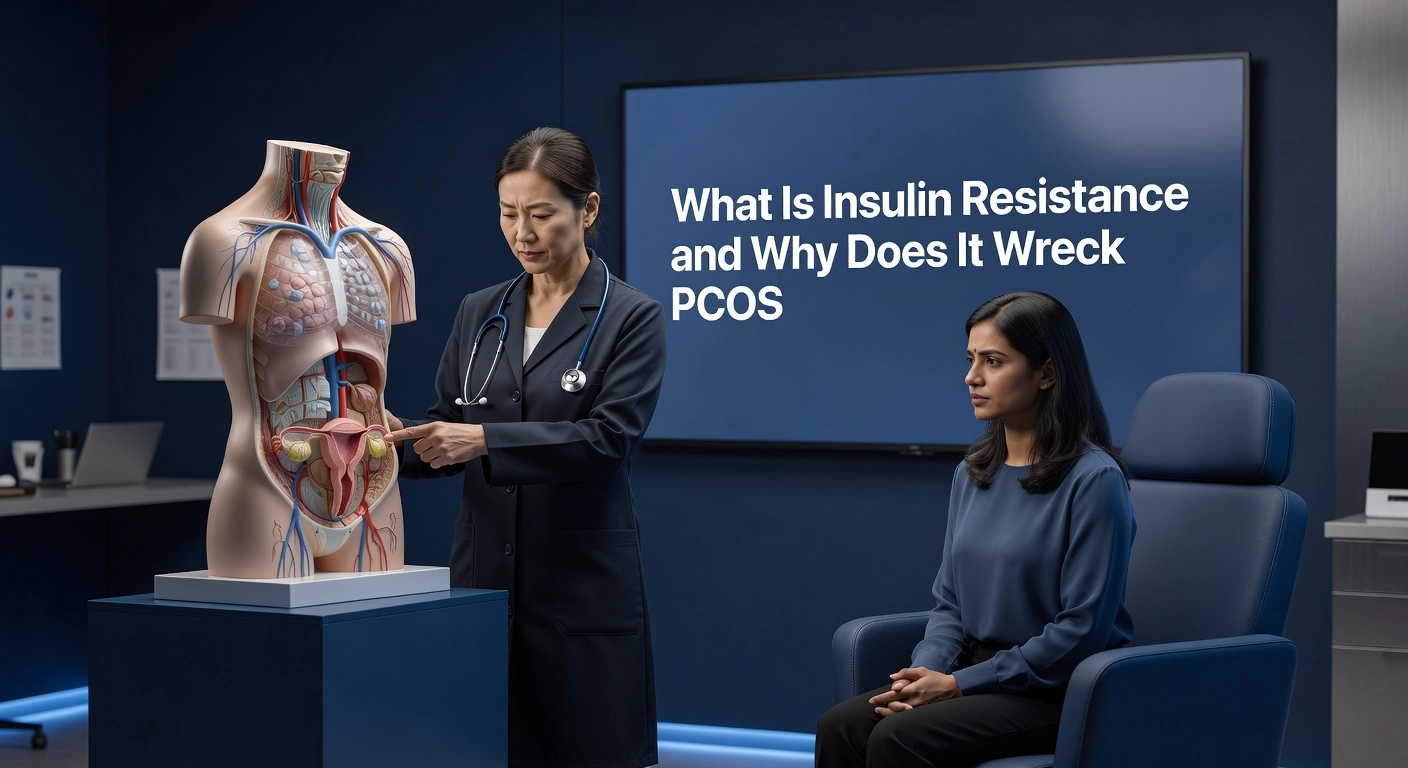

If you have PCOS, chances are your doctor has thrown around the term “insulin resistance” at least once. Maybe you nodded along, smiled politely, and then went home to Google it in a panic while eating a handful of chocolate you swore you wouldn’t touch.
Sound familiar? You are definitely not alone.
Here is the thing: it is not just some random medical buzzword. It is actually the hidden engine driving your most frustrating insulin resistance and PCOS symptoms.
Once you get a handle on what is happening inside your body, so many things start to make sense—including the stubborn midsection weight, the criminal sugar cravings, the bone-deep fatigue, and the absolute hormonal chaos.
In this post, we are breaking down the undeniable link between insulin resistance and PCOS symptoms in plain, simple language. Because let’s face it, your body is already gaslighting you daily; your medical information shouldn’t do it too. No confusing medical jargon, no overwhelming science lectures.
Just clear, beginner-friendly information that actually makes sense. You will learn what it really is, how it impacts your body, and why addressing it is such a massive game-changer for your daily life.
Let’s dive in.
Table of Contents
So What Actually Is Insulin Resistance
Okay, let’s break this down without the jargon coma your doctor probably put you in.
Insulin is basically your body’s key. After you eat, your blood sugar rises, and your pancreas releases insulin to unlock your cells and let that sugar inside to be used as energy. Simple enough, right? According to the CDC, this process is what is supposed to keep your blood sugar stable and your energy steady throughout the day.
But when you are dealing with insulin resistance and PCOS symptoms, that system completely derails.
With insulin resistance, those locks on your cells get rusty. Your pancreas, bless its panicked little heart, responds by pumping out more insulin to compensate. Think of it like knocking louder on a door that nobody is answering. For a while it works, but eventually, the whole system starts cracking under pressure.
Here is the nightclub analogy that actually made this click for me: your cells are a packed venue, and insulin is the bouncer. When resistance sets in, the bouncer stops letting anyone in. The line outside (your blood sugar) just keeps growing, spilling over into fat storage and cravings that feel genuinely criminal.
And that extra insulin floating around? Research from the NIH confirms it quietly wrecks your hunger signals, tanks your hormones, and parks fat specifically around your midsection. For women with PCOS, it also revs up androgen production, which is the lovely force behind acne, irregular cycles, and everything else you did not sign up for.
Here is the ultimate kicker: insulin resistance is not part of the formal PCOS diagnostic criteria, even though it actively drives the majority of insulin resistance and PCOS symptoms. So your doctor could technically diagnose you with PCOS and never once test for IR or even bring it up. Not because they are incompetent, but because the checklist simply does not require it. Frustrating? Absolutely. Your body is essentially gaslighting you while the official medical paperwork cheers it on? Classic.
Insulin Resistance and PCOS Symptoms: How Many Women Actually Have It? (The Numbers Are Wild)
Okay, friend. Buckle up, because these numbers are genuinely unhinged.
According to Allara Health, between 70 and 75 percent of all women with PCOS have insulin resistance—regardless of their weight. That means in a room of ten women with PCOS, roughly seven have a metabolic glitch. This is exactly why identifying insulin resistance and PCOS symptoms early is so critical.
Here’s where it gets spicy: up to 95 percent of women with PCOS who are obese have IR. But the real kicker? 75 percent of lean women with PCOS have it too. Lean. Normal BMI. Eating salads and doing their best. Still insulin resistant.
Yet, many get dismissed by doctors who look at their weight and assume everything is fine. They get told to “eat less,” completely ignoring how heavily insulin resistance and PCOS symptoms are driving their internal chemistry.
Let’s sit with this next one for a second: over 50 percent of women with PCOS will develop type 2 diabetes before age 40. The CDC backs this up. That statistic hit me harder than most things I’ve read at 11 PM while stress-eating crackers. On top of that, metabolic syndrome affects up to 43 percent of us, connecting insulin resistance and PCOS symptoms directly to heart health, blood pressure, and cholesterol.
And the trajectory isn’t improving. Global cases have roughly doubled recently, and research suggests an 8 to 11 percent rise through 2036.
The point isn’t to spiral; it’s to understand the math. When you look at how deeply insulin resistance and PCOS symptoms are biologically linked, it changes how you look at your body. You aren’t imagining it, and your weight doesn’t disqualify you from needing a real solution.
Also Read: How I Lost 25kg in 6 Months with PCOD (Busy Mom Weight Loss Journey)
Why Insulin Resistance Makes Every PCOS Symptom So Much Worse
So now that you know what insulin resistance is and how many of us are dealing with it, let’s talk about why it makes PCOS feel like such a complete disaster. Because it’s not just one problem. It’s more like a domino effect where every single domino is on fire.
1. Too Much Insulin Tells Your Ovaries to Make More Androgens
Here’s where things get personal. When your body is pumping out excess insulin (that’s the hyperinsulinemia we talked about), your ovaries actually respond to it. They use that insulin signal as a cue to produce more androgens, including testosterone. Your ovaries are basically following bad instructions from a very pushy manager.
The result? More acne, more hair thinning on your head, more unwanted hair everywhere else, and cycles that show up whenever they feel like it (or not at all). Research published in Scientific Reports confirms that higher insulin resistance and PCOS symptoms are directly linked to elevated androgen levels and clinical symptoms like these across PCOS phenotypes.
So no, your skin isn’t just “sensitive.” Your hormones are getting chaos instructions from your insulin.
2. IR Tanks Your SHBG, Letting Testosterone Run Wild
SHBG (sex hormone-binding globulin) is basically a chaperone protein that grabs onto testosterone and keeps it from causing trouble. Insulin resistance tells your liver to make less of it. Less SHBG means more free testosterone floating around in your bloodstream with zero supervision, making every androgen-driven symptom worse even if your total testosterone looks “normal” on paper. This is why some women get told their labs are fine but still feel absolutely terrible.
3. Insulin Literally Tells Your Body to Store Fat in Your Belly
High insulin actively promotes fat storage and shuts down fat burning, with a particular preference for visceral fat—the kind that sits deep in your abdomen. This is why the midsection weight with PCOS feels almost impossible to shift no matter how many cardio sessions you suffer through.
According to the WHO’s PCOS fact sheet, abdominal weight gain is a key feature of the condition, and it’s not a willpower problem. It’s a hormonal mechanics problem.
Worse, that belly fat then triggers a vicious cycle. The physical fat cells worsen your insulin resistance and PCOS symptoms, which in turn stores even more fat.
Congratulations, you’ve unlocked a self-sustaining nightmare loop.
4. Your Cravings Are Not Weakness, They Are a Biological Hostage Situation
Insulin resistance causes your blood sugar to spike and crash repeatedly throughout the day. Every crash sends a panic signal to your brain demanding fast carbs right now. On top of that, IR disrupts leptin (your “I’m full” hormone) and ghrelin (your “feed me” hormone), so your hunger cues are genuinely broken. Women with PCOS often describe cravings that feel compulsive rather than optional, and that’s because they basically are. This is not a character flaw. It is a documented hormonal pattern backed by research from the NIH.
5. The Fatigue Spiral That Makes Everything Harder
Blood sugar crashes from IR cause real, bone-deep exhaustion. And when you’re that tired, the things that would actually help—like cooking a protein-heavy meal or going for a walk—feel completely impossible.
The exhaustion makes your insulin resistance and PCOS symptoms worse, which in turn makes the fatigue worse. It’s the most inconvenient kind of irony.
This is why “just try harder” advice is genuinely useless here. You’re not lazy. You’re running on a metabolic system that is actively working against you, and that deserves an actual strategy, not a pep talk.
Signs You Might Have Insulin Resistance Right Now
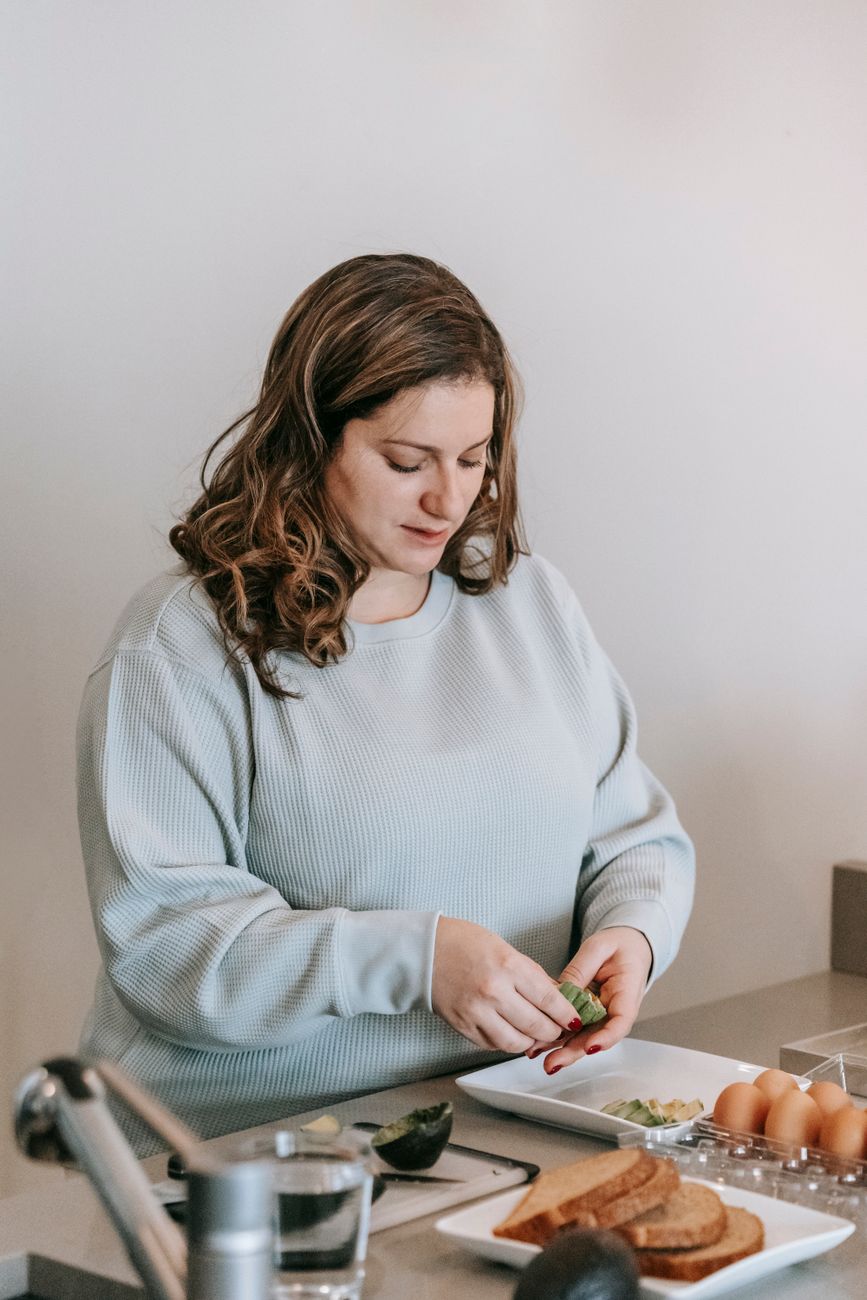
Here is the thing about insulin resistance: it rarely announces itself with a big, dramatic symptom. It sneaks in through the side door disguised as “being tired,” or “stress eating,” or “just getting older.” So let’s go through the actual signs, because there is a solid chance your body has been waving red flags, and you have been blaming yourself for lacking willpower.
1. You are craving sugar and carbs like it is your actual job. Not just “ooh, a cookie sounds nice” cravings. We are talking about the 3 pm desperation where you would eat stale crackers off the floor without blinking. When insulin is not working properly, your blood sugar crashes after meals, and your body screams for a quick fix. This is biology, not weakness. Research on prediabetes symptoms confirms that these intense cravings are one of the earliest and most overlooked signs of blood sugar dysregulation.
2. Your belly fat is not budging, no matter what you do. Insulin is a fat storage hormone, and it loves your midsection specifically. If you are eating well and moving your body but still looking three months pregnant, that stubborn visceral fat is a classic insulin resistance calling card.
3. You crash hard after meals. Especially carb-heavy ones. The 2 pm slump, where your eyelids turn to concrete while your children are somehow running laps, is not laziness. According to integrative medicine insights on insulin resistance, that post-meal energy crash is your blood sugar spiking and then dropping fast due to excess insulin response.
4. You have skin tags or dark velvety patches in skin folds. Neck, armpits, and under the breasts; if you have noticed darker or thickened skin in those areas, that is called acanthosis nigricans. Insulin literally stimulates skin cell growth when chronically elevated. This is a physical sign, not a hygiene issue.
5. You are irrationally angry at inanimate objects. The kitchen cabinet did nothing wrong. But blood sugar swings absolutely wreck your mood, focus, and patience. Brain fog, mood swings, and that specific fury of someone who cannot remember why they walked into a room are all tied to glucose instability. If you find yourself sobbing one minute and snapping the next, your blood sugar rollercoaster might be the real villain here.
What to Actually Eat to Fight Insulin Resistance with PCOS
Good news: fixing your plate does not require a culinary degree, a meal prep Sunday that eats your entire afternoon, or foods that taste like sadness. The whole goal here is simple. You want to keep your blood sugar stable so your pancreas does not have to pump out a flood of insulin every time you eat. That means building meals around low glycemic index foods, plenty of fiber, enough protein, and as little added sugar as you can manage without losing your mind.
Protein Is Your Best Friend (Aim for 20 to 30 Grams Per Meal)
According to Ubie Health’s MD-reviewed guidelines and supporting PMC research on PCOS dietary interventions, hitting 20 to 30 grams of protein per meal is one of the most effective tools for managing insulin resistance with PCOS. Protein slows how fast glucose enters your bloodstream, keeps you fuller longer, reduces cravings, and helps preserve muscle mass. The beautiful part is that high-protein eating is genuinely compatible with doing the absolute minimum in the kitchen. No elaborate recipes required. No standing over a stove for an hour.
Also Check Out: The Importance of Protein in Fat Loss: A Realistic Guide for Busy Moms
Fiber Is a Close Second (And Requires Zero Extra Effort)
Fiber slows digestion, prevents blood sugar from spiking after meals, feeds the gut bacteria that actually influence how sensitive your cells are to insulin, and helps your body process hormones more efficiently. You do not need to do anything dramatic to get more of it. Start by adding chia seeds to your yogurt, incorporating some spinach into your meals, or substituting white rice with beans. Targets hover around 25 to 35 grams per day for women with PCOS.
Want High Fiber Recipes for Lazy Moms? Read This
Foods Worth Quietly Removing
You do not have to overhaul everything at once. Still, these are the ones quietly wrecking your blood sugar: sugary drinks, including juice and sweetened coffees, white bread, ultra-processed snacks, pastries, and anything with an ingredient list that requires a chemistry background to read. Swap them out slowly, and you will notice the difference.
The Lazy High-Protein Lineup That Actually Works
Here are the no-cook or minimal-prep options that hit your protein targets without turning dinner into a project:
- Greek yogurt bowls (plain, unsweetened; around 15 to 20 grams per cup, add berries and chia seeds for fiber)
- Rotisserie chicken (shred it, eat it, done)
- Canned salmon (drain, add avocado or greens, call it a meal)
- Hard-boiled eggs (buy them pre-boiled if you want, zero judgment)
- Cottage cheese (high protein, endlessly versatile, weirdly underrated)
These options pair perfectly with fiber sources and keep your blood sugar stable without any drama. Start here, seriously, this should be your first task if you want to control your insulin resistance and PCOS symptoms.
Movement and Lifestyle Habits That Actually Move the Needle
Here is the part where diet stops getting all the credit.
If you have been eating “perfectly” for weeks and still feel like your body is staging a quiet protest, this might be why. Emerging research highlighted by EurekAlert in 2025 suggests that physical activity may be equal to or even more effective than diet alone for reducing insulin resistance in PCOS. That is genuinely important information for anyone who has been white-knuckling their way through clean eating and wondering why nothing is shifting.
1. You do not need a gym membership, a workout plan, or athletic shoes you actually like.
A short walk after meals is one of the most underrated insulin resistance hacks out there. When your muscles contract during movement, they can pull glucose out of your bloodstream through a pathway that works independently of insulin. Your body basically bypasses the broken key entirely and opens the door another way. A 2025 study found that just 10 minutes of walking after eating significantly lowered blood sugar compared to sitting still. Ten minutes. That is one lap around the block while your kids argue about something in the backseat.
2. Your exhaustion is not just a mood. It is a metabolic event.
Sleep deprivation directly worsens insulin resistance, and research from Columbia University found that cutting sleep to around six hours a night for six weeks increased insulin resistance by nearly 15 percent in women. As a busy mom with PCOS, being chronically under-rested is not just making you tired; it is actively working against your metabolism. This is a real medical problem, not a willpower issue.
3. Stress is running a genuinely evil little loop in your body.
Chronic stress raises cortisol, cortisol raises blood sugar, blood sugar raises insulin, high insulin worsens insulin resistance, and insulin resistance makes everything harder, which makes you more stressed. Repeat indefinitely. Managing stress is not a luxury wellness activity. For women with PCOS, it is a legitimate metabolic health strategy.
4. You do not need to lose a dramatic amount of weight to start feeling better.
Research consistently shows that losing just 5 to 10 percent of your body weight produces significant improvements in insulin sensitivity, hormone levels, and even menstrual regularity for women with PCOS. That is not a before-and-after transformation. That is a quieter, more manageable goal that your body will actually respond to.
Genuinely Lazy Strategies for Managing IR When You Have Zero Time
You do not need a perfect meal plan or a three-hour Sunday prep session. You need strategies that actually work when your brain is fried, your kids are feral, and your metabolic health is on the line.
Swap what is already in your house. Swap afternoon crackers for deli meat and cheese, or juice for lemon water. You are not adding new habits, just upgrading the ones currently wrecking your blood sugar.
Batch cook high-protein staples on Sunday. Shredded slow-cooker chicken, hard-boiled eggs, or lentils take minimal effort and give you instant options all week. Protein steadies blood sugar and controls insulin resistance, and PCOS symptoms before the 3 pm crash turns you into a craving-driven gremlin.
Build a zero-prep lazy snack station. Keep string cheese, jerky, Greek yogurt, and cottage cheese within arm’s reach. Grabbing these instead of your kids’ leftovers prevents the blood sugar spikes that make insulin resistance and PCOS symptoms worse.
Use the visual plate method. Fill half your plate with non-starchy vegetables, a quarter with protein, and a quarter with complex carbs. This naturally reduces your glycemic load without counting a single calorie or checking an app.
Front-load your protein at breakfast. Hitting 20 to 30 grams of protein first thing in the morning significantly reduces afternoon cravings. Eggs, cottage cheese, or a quick protein shake do this beautifully with zero fuss.
How to Actually Find Out If You Have Insulin Resistance
So here is the thing nobody tells you: you can get a full blood panel back, see “normal” on everything, and still have insulin resistance quietly running the show. Standard checkups seldom test for it directly.
What you actually need are three things: fasting insulin, fasting glucose, and a HOMA-IR calculation. A value above 2.0 to 2.5 is a red flag. But most standard panels skip fasting insulin entirely, meaning the calculation never happens. You must ask for it specifically.
Do not be fooled by a normal fasting glucose result. Your blood sugar can look fine while your insulin works triple overtime to keep it that way. This compensated phase can go on for years before glucose numbers budge. That elevated insulin, though, is already driving fat storage, ramping up androgens, and making your insulin resistance and PCOS symptoms worse.
HbA1c is similar. It gives a three-month blood sugar average, but misses early insulin resistance for the same reason. If your pancreas is compensating, HbA1c looks fine.
Continuous glucose monitors (CGMs) are popular for exactly this reason. They show in real time how your blood sugar responds to meals, stress, or a bad night of sleep. Just actual data about your body.
Finally, the most powerful sentence for your doctor’s office: “I have PCOS and I would like to be tested for insulin resistance specifically.” You are allowed to be direct and advocate for yourself.
The Lazy Takeaway: Small Boring Changes Actually Work
Here is the bottom line: insulin resistance is not a character flaw. It is a biological feature affecting the majority of women with PCOS, and it genuinely responds to small, consistent changes. You do not need to overhaul your life on a Monday.
Your laziest starting points to manage insulin resistance and PCOS symptoms are these: add 20 to 30 grams of protein to every meal, take a short walk after eating, and sleep as much as life allows. That is it. Research shows minor changes meaningfully improve insulin sensitivity—progress beats perfection every time.
When you need meal ideas that do not require chopping seventeen things on a Tuesday night, lazyfitmom.com has high-protein, minimal-prep recipes built for this.
You are not broken. You are just running an inconvenient metabolic quirk. The lazy approach is genuinely enough to start.
Conclusion
Insulin resistance is a powerful force driving your PCOS symptoms, from stubborn weight gain to hormonal exhaustion. The good news? Understanding it puts you back in the driver’s seat.
Here are your key takeaways: insulin resistance and PCOS symptoms are deeply linked, incredibly common, and highly responsive to consistent lifestyle changes.
Knowledge is your first tool. Now that you understand what is happening inside your body, you can take meaningful steps forward. Start by talking to your doctor about testing your fasting levels. Small, consistent changes can genuinely transform your journey. You’ve got th
Take Your Next Step
If you are ready to stop fighting your biology and start working with your hormones, you don’t have to figure it out alone. Choose the roadmap that fits your life today:
The “Lazy Fit” Digital Product Studio
Skip the guesswork and download a ready-made framework designed specifically for busy mom schedules:
- The Free 3-Day PCOS Fat Loss Kickstart – Perfect if you are completely exhausted and just want a quick, gentle, zero-cost win to jumpstart your metabolism.
- The LazyFitMom PCOS Kitchen Reset System – Best for streamlining your grocery runs, organizing a chaotic fridge, and making low-carb, high-protein meals your automatic default.
- The 7-Day Lazy Fat Loss Reset – A step-by-step, low-friction plan to stabilize your insulin levels and rebuild consistency over one solid week.
- The 30-Day PCOS Routine Roadmap – My comprehensive daily framework to completely rebuild your habits from the ground up, support your nervous system, and achieve lasting weight loss without a gym.
Top Reads From the Blog
Want to keep learning? Dive into my top guides written in plain English, minus the overwhelming medical jargon:
- How to Lose Weight Fast with PCOS: The Reality Check Every Mom Needs – Why standard fitness advice completely fails your hormones, and the exact shifts I used to lose 25kg in 6 months.
- Insulin Resistance and PCOS Symptoms: Why It Wrecks Your Progress – A beginner-friendly breakdown of the hidden engine behind stubborn midsection weight, fatigue, and criminal sugar cravings.
Leave a Reply