
If you have PCOS and find yourself reaching for pain relievers more often than you’d like, you are definitely not alone. Many women with polycystic ovary syndrome deal with persistent headaches and have no idea the two could be connected. So, can PCOS cause headaches? The short answer is yes, and the reasons behind it are actually pretty fascinating.
PCOS is much more than just a reproductive condition. It affects your hormones, your metabolism, your mood, and yes, even your head. If you have been asking yourself, “can PCOS cause headaches?” the connection involves a few different factors working together, and once you understand them, things start to make a lot more sense.
In this post, we are going to break it all down for you in plain, simple language. No confusing medical jargon, just clear explanations of why PCOS can trigger headaches and what is actually happening inside your body. By the end, you will have a much better understanding of your symptoms and feel more confident when talking to your doctor about what you are experiencing.

Table of Contents
Can PCOS Cause Headaches? The Short Answer is Yes
If you’ve ever wondered whether your PCOS and your constant headaches are connected, the answer is a clear and research-backed yes. And honestly? The numbers are kind of hard to ignore.
A 2020 study of nearly 200 women found that 72.8% of women with PCOS experienced headaches, compared to just 55% of women without PCOS. That’s not a small gap. Women with PCOS were more than twice as likely to deal with headaches regularly. When it came to tension-type headaches specifically, 52.6% of women with PCOS experienced them versus only 33.8% of women without the condition.
Migraines tell a similar story. A separate large Finnish study found that 34.2% of women with PCOS had migraines, compared to 24.7% of women without PCOS. That’s a meaningful difference, and it points to something real happening in the body, not just in your head (no pun intended).
What makes this even more significant is the real-life impact. According to research from Medical News Today covering the PCOS-migraine connection, headaches in women with PCOS disrupted professional performance in 31.6% of cases versus only 18.8% in women without PCOS. Daily activities were affected in 24.6% of PCOS women compared to just 11.2% of controls.
So if you’ve ever been told your headaches are “just stress” or brushed off by a doctor, these numbers validate what you’ve been feeling. Your headaches are not imaginary, and they are not random. They are a recognized, measurable part of the PCOS experience for many women.
Hormonal Imbalances Are a Major Headache Trigger
So now that we know PCOS and headaches are linked, let’s talk about why. And it really does come down to hormones doing the most chaotic thing possible at the worst possible times.
Estrogen: Your Brain’s Mood Ring
Estrogen is not just a reproductive hormone. It also plays a role in regulating pain signals and keeping your brain’s chemistry relatively stable. When estrogen levels drop suddenly, your brain notices, and it does not handle the change quietly. That sharp dip triggers inflammation in blood vessels, ramps up pain sensitivity, and can kick off the throbbing, nauseating misery of a migraine.
Think of estrogen like a volume knob on your nervous system. When levels are steady, the volume stays manageable. When estrogen suddenly crashes, it’s like someone yanked the knob off. That’s essentially what estrogen withdrawal does to your brain, and it’s the same mechanism behind classic menstrual migraines that happen right before your period.
Why PCOS Makes This So Much Worse
With PCOS, your hormones don’t follow a predictable schedule. Irregular or skipped ovulation means estrogen and progesterone can swing wildly without warning. Instead of a somewhat predictable monthly dip, you might experience random drops at any point in your cycle, or have long stretches with no cycle at all, followed by a sudden hormonal shift.
This unpredictability is genuinely frustrating. You can’t easily track patterns or prepare for headaches the way someone with a regular cycle might.
On top of that, elevated androgens like testosterone, which are a hallmark of PCOS, may add another layer of nervous system irritation. Higher androgen levels are linked to increased inflammation and pain sensitivity, essentially making your brain more reactive to those hormone swings.
The combination of erratic estrogen, elevated testosterone, and irregular cycles creates a perfect storm for unpredictable, hard-to-prevent hormonal headaches.
Blood Sugar Crashes Are Secretly Causing Your Headaches
Here’s something that might make a lot of sense once you hear it: that headache you got after skipping lunch? Or the one that showed up after you demolished a bag of crackers and a soda? That’s likely your blood sugar doing something your PCOS brain absolutely cannot handle.
Insulin resistance affects up to 70% of women with PCOS, and it’s one of the sneakiest headache triggers out there. When your body can’t use insulin effectively, your blood sugar stops behaving in a nice, steady line. Instead, it spikes and crashes all day long, and your brain, which runs almost entirely on glucose, does not take kindly to those crashes.
Why Your Brain Basically Panics During a Blood Sugar Drop
When your blood glucose drops rapidly, your brain treats it like a full-on emergency. It triggers a stress response that can activate pain pathways, and that response can show up as a headache or even a migraine. It’s not random. It’s your brain sending out a distress signal because it’s not getting the steady fuel it needs.
This is why skipping meals, eating high-sugar snacks, or going hours without any protein makes things so much worse for women with PCOS. Those habits cause sharp spikes followed by fast crashes, and each crash is a potential headache waiting to happen.
The Craving-Headache Connection Nobody Talks About
Here’s the part that honestly changed how I think about food: stabilizing your blood sugar doesn’t just reduce headaches. It also crushes cravings. Both problems share the same root cause, which means fixing one helps fix the other.
That’s where lazy, high-protein meals become your best defense. A quick rotisserie chicken bowl or a cup of Greek yogurt with some nuts keeps your blood sugar steady for hours. No crash, no craving spiral, no headache. Research backs this up: consistent protein and balanced meals are foundational for managing insulin resistance in PCOS. Simple, filling, and genuinely protective.
Inflammation and Sleep Apnea Make It Even Worse
Beyond hormones and blood sugar, there are two more big players quietly making your PCOS headaches worse: chronic inflammation and sleep apnea. And honestly, most people with PCOS have no idea either of these is even on their radar.
PCOS involves a state of chronic low-grade inflammation that runs in the background all the time, even if you feel “okay.” This inflammation is driven by insulin resistance, elevated androgens, and excess fat tissue, and it is not just a PCOS problem; it is also independently linked to more frequent and more severe headaches. Inflammation promotes what researchers call neuroinflammation, basically irritation in the nervous system that lowers your pain threshold and makes headaches hit harder. So even on a “normal” day, your body is already primed for more pain.
Then there is sleep apnea, which affects somewhere between 35 and 50% of women with PCOS according to current research, including a 2025 systematic review published in Frontiers in Endocrinology. Sleep apnea causes your oxygen levels to dip repeatedly overnight, which triggers morning headaches that are dull, persistent, and frustrating. The tricky part? Many women with PCOS do not know they have it. Women tend to present with atypical symptoms like fatigue, mood changes, or waking up with headaches rather than the loud snoring most people associate with sleep apnea. And if you are not overweight, doctors may not even think to screen you, as noted in research published via PMC.
Poor sleep from any cause also spikes your cortisol levels and raises inflammatory markers, which feeds directly back into more PCOS symptoms and more headaches. It becomes a cycle that is genuinely hard to break without addressing the root causes.
The good news is that your diet can actually help interrupt this cycle. Eating in an anti-inflammatory, high-protein, low-glycemic way helps reduce CRP and other inflammatory markers, stabilizes blood sugar, and supports better hormone balance. Think leafy greens, berries, omega-3 rich fish, and high-protein meals that keep you full and steady. These are the same lazy, practical swaps that help with PCOS overall, and they carry real benefits for your headache frequency too.
The Weight Connection Nobody Talks About Honestly
Here’s something that research shows but nobody really talks about openly: weight and PCOS create a headache combination that is very different from weight alone.
A 2020 study found that overweight or obese women with PCOS had an 81.5% headache rate, compared to 61.2% in normal-weight women with PCOS. That’s a 2.8 times higher odds of dealing with headaches just based on weight status within the PCOS group. That number is significant.
But here’s the part that really matters: this pattern did not show up in women without PCOS. Overweight women without PCOS did not show the same jump in headache rates. This tells us something really important. It’s not just about carrying extra weight in general. It’s about how excess weight specifically interacts with the hormonal and metabolic chaos that PCOS already creates, amplifying insulin resistance and inflammation in ways that directly feed headache mechanisms.
And please hear this clearly: this is not a willpower issue. PCOS itself drives weight gain through insulin resistance and androgen excess. It’s a hormonal and metabolic disorder, full stop. Your body is working against you in ways that have nothing to do with effort or discipline.
The genuinely good news? Even modest weight loss of 5 to 10% of body weight can meaningfully improve PCOS symptoms across the board, and headache relief is often one of the first wins people notice. That’s not a small thing. When your head stops pounding as often, you feel it immediately in your daily life, your focus, your mood, your ability to just function. That kind of tangible, quick-to-feel result can be incredibly motivating to keep going with the broader lifestyle changes that support PCOS management.
How PCOS Headaches Hit Different When You Are a Busy Mom
Research shows that headaches in PCOS do not just cause discomfort; they actively derail real life. In one study, headaches affected daily activities like housekeeping in 24.6% of PCOS women compared to just 11.2% of controls. They disrupted professional life in 31.6% of PCOS women versus 18.8% of controls. Those numbers tell a story that busy moms already know in their bones.
Picture this: it is 3 p.m. You just survived school pickup, there are three kids asking for snacks simultaneously, homework folders are spilling out of backpacks, and dinner needs to happen in an hour. Then the headache hits. That familiar pressure behind your eyes, the noise sensitivity, the wave of exhaustion that makes the thought of chopping a single vegetable feel impossible. You grab something quick, maybe a handful of crackers or something sweet, just to get through the next hour.
And here is where the spiral really kicks in. PCOS-related insulin resistance means your blood sugar is already unstable. That sugary snack spikes it fast, then drops it hard, which triggers more fatigue and, you guessed it, another headache. The craving cycle is not a willpower problem; it is a metabolic one.
What makes this especially frustrating is that so many moms chalk this up to “just being tired” or “mom life stress.” But frequent headaches tied to hormonal chaos, blood sugar crashes, and poor sleep from PCOS are not normal tiredness. They have a root cause. And identifying that PCOS is driving the cycle is genuinely the first step toward breaking it for good.
What Actually Helps: A Lazy Mom Approach
The good news is that so much of what drives PCOS headaches is actually within your control, especially when you focus on the basics. And “the basics” for a busy mom means simple, realistic, and low-effort.
Start With What You Eat (and When)
That same 2020 study that revealed just how common headaches are in PCOS women also looked at diet, and the findings are genuinely useful. Women who ate whole grains daily had significantly lower headache rates compared to those who ate them only occasionally. On the flip side, frequent potato consumption was linked to higher headache rates. This lines up perfectly with what we know about blood sugar: whole grains digest slowly and keep things stable, while high-glycemic foods like potatoes spike and crash your blood sugar fast, which is exactly the kind of rollercoaster that triggers headaches.
High-protein, low-glycemic meals are your best friend here. They stabilize blood sugar, quiet cravings, and reduce the hormonal chaos that feeds headaches. If you need easy ideas that actually work for a busy mom life, check out the lazy high-protein recipe roundup right here on the blog for practical starting points.
Meal timing matters just as much as what you eat. You do not need a complicated eating schedule. Just three solid high-protein meals at roughly consistent times each day can prevent the blood sugar crashes that spark headaches before they even start.
The Medication Conversation Worth Having
If you use hormonal birth control for PCOS, it is worth talking to your doctor about which type you are on. Continuous low-dose or progesterone-only options tend to keep hormone levels steadier, which may help reduce estrogen withdrawal headaches. Combined oral contraceptives, however, carry an increased stroke risk in women who experience migraine with aura, so that conversation with your provider is genuinely important.
There is also emerging research on GLP-1 medications like semaglutide showing promising dual benefits: better PCOS symptom control and potential reduction in migraine frequency. It is absolutely worth raising with your healthcare provider if you are already exploring weight management options.
Your Lazy Protein Toolkit
Keep these on hand at all times: Greek yogurt, rotisserie chicken, and pre-portioned nuts. These require zero cooking, take seconds to grab, and keep you from going too long without protein. Avoiding those long stretches without eating is one of the simplest and most effective headache prevention strategies you have.
When to Talk to Your Doctor About PCOS and Headaches
If your headaches are frequent, severe, or making it hard to get through your day, that is your sign to stop pushing through and actually talk to your doctor. So many of us with PCOS just accept headaches as part of the deal, but they do not have to be. There are real treatment options that address the root cause, not just the pain.
One thing worth knowing is that many general practitioners do not automatically connect PCOS and headaches. You may need to bring it up yourself. Be direct: mention your PCOS diagnosis, describe your headache patterns, and specifically ask whether the two could be related. Doctors can only connect dots they know you are giving them.
For women dealing with significant headache burden alongside PCOS, a team approach combining endocrinology and neurology is increasingly being recommended. Your hormones and your head pain are not separate problems; they are often the same problem showing up in two different ways.
There are also some red flags that mean you should call your doctor sooner rather than later, including a sudden severe headache that comes on fast, headaches paired with vision changes like blurry or double vision, and headaches that noticeably worsen around your cycle each month.
Before your appointment, start tracking your headaches alongside your food intake, sleep, and cycle dates. Even two or three weeks of data from a simple notes app can help your doctor spot patterns and personalize your care. A 2020 study on headache prevalence in PCOS women shows just how common and disruptive this really is, which is exactly the kind of context that makes these conversations easier to start.
The Bottom Line on PCOS and Headaches
Here is what it all comes down to: your PCOS headaches are real, they are rooted in actual physiology, and you are absolutely not making them up or just “being stressed.” Hormones, insulin resistance, inflammation, sleep apnea, and weight all pile on top of each other to create the perfect headache storm. That is a lot of overlapping triggers working against you at once.
The three things you can start doing right now are simple. Stabilize your blood sugar with high-protein meals and consistent eating times. Start tracking your headaches alongside your cycle so you can spot patterns. And bring this conversation to your doctor because PCOS-related headaches deserve a real medical conversation, not just ibuprofen and pushing through.
The best part? You do not need a perfect plan. Small, consistent changes to what you eat and when you eat genuinely move the needle on headache frequency over time.
Ready to take action? Check out my posts on lazy high-protein PCOS recipes, how to control cravings with PCOS, and my PCOS weight loss journey for practical next steps that actually fit real life.
PCOS Headaches FAQS
Can PCOS cause headaches every day?
Yes, daily headaches can happen with PCOS, often triggered by chronic insulin resistance, daily blood sugar crashes, or constant hormonal imbalances.
How do you get rid of PCOS hormonal headaches?
Managing PCOS headaches involves stabilizing your blood sugar with high-protein meals, staying hydrated, managing stress, and speaking to your doctor about hormone-balancing options.
Conclusion
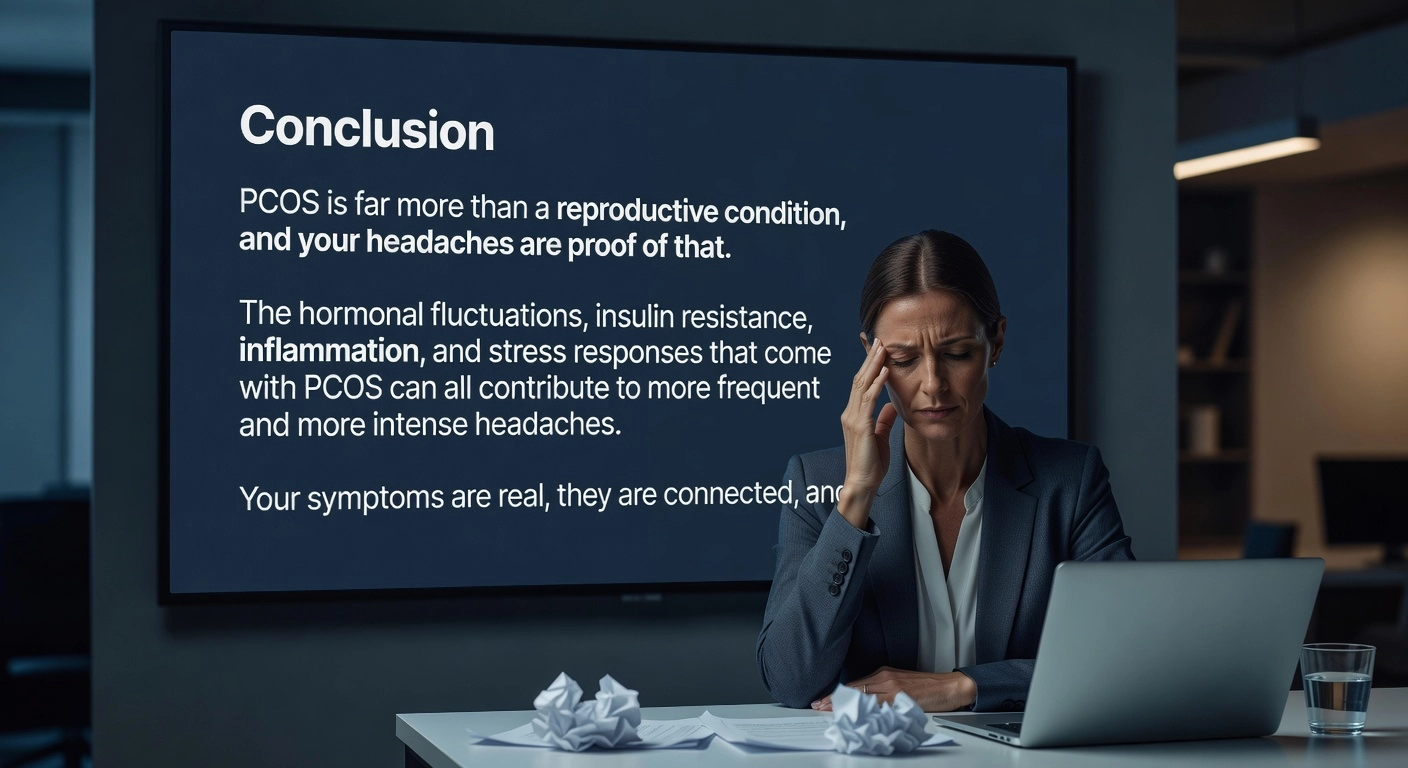
PCOS is far more than a reproductive condition, and your headaches are proof of that. The hormonal fluctuations, insulin resistance, inflammation, and stress responses that come with PCOS can all contribute to more frequent and more intense headaches. Your symptoms are real, they are connected, and they make complete sense once you understand the bigger picture.
The good news is that managing your PCOS more effectively can significantly reduce the frequency of headaches. Small lifestyle changes, the right medical support, and a better understanding of your own body can make a real difference.
If headaches have been disrupting your life, bring this up with your doctor at your next visit. You deserve answers and a plan that actually works for you. Understanding your body is the first step toward feeling better every single day.
More PCOS Resources for Busy Moms
Managing your symptoms shouldn’t feel like a second job. If you want to dive deeper into balancing your hormones, beating the bloat, and taking your energy back, here are some simple resources that actually fit into a busy schedule:
- Read: PCOS Weight Loss for Busy Moms: The Realistic Guide That Actually Works — Learn how to make fat loss sustainable without spending hours in the gym.
- Read: Insulin Resistance and PCOS Symptoms: Why It Wrecks Your Progress — Discover the real reason behind the stubborn weight and energy crashes (and how to fix it).
- Read: 15 Low Carb High Protein Meals for PCOS — Quick, family-friendly recipes that keep your blood sugar stable and stop hormonal headaches before they start.
Take the Next Step (Free & Paid Tools)
- Freebie: Grab the 3-Day PCOS Fat Loss Kickstart — A quick, zero-stress guide to reset your body this weekend.
- The Routine: The 30-Day PCOS Routine — Build daily, lazy-mom-approved habits that stick.
- The Kitchen Hack: The LazyFitMom PCOS Kitchen Reset System — Organize your kitchen and meal planning to make hormone-friendly eating completely effortless.
Leave a Reply