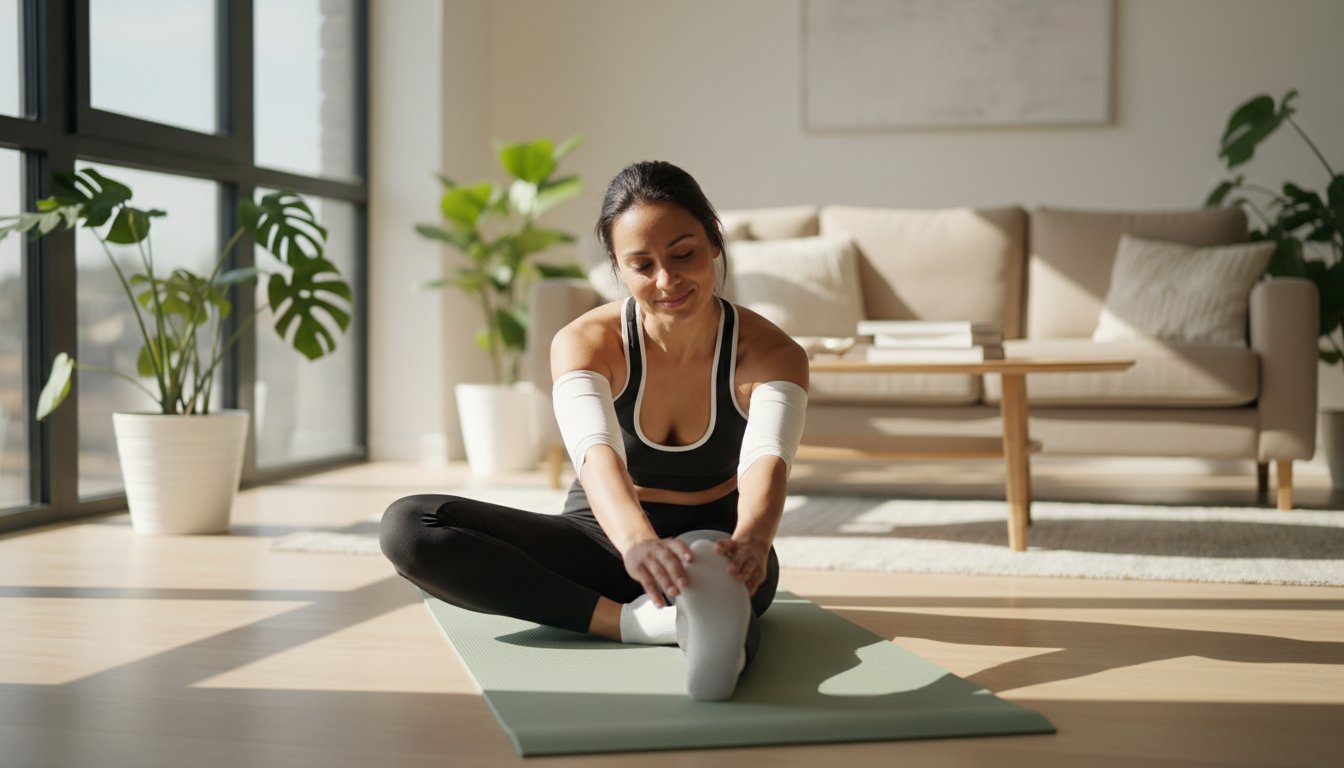
Key Takeaways
- Ditch the toxic “snap back” culture and embrace functional movement that actually helps you handle the mental load of parenting.
- Understand why high-stress workouts might be the reason you’re so tired; it’s often a cortisol spike that leaves you feeling more depleted.
- Master the “Minimum Effective Dose” for mom exercise to get real results without the pressure of an unrealistic gym routine.
- Focus on your pelvic floor and deep core first to fix physical limitations so you can feel capable in your body again.
- Learn how a non-judgmental community can stop decision fatigue and make movement feel like a relief, not a chore.
Finding time to exercise as a busy mom isn’t easy. Between caring for your family, managing your home, and handling everyday responsibilities, a long gym session may feel impossible.
The good news? You don’t need exhausting workouts to become stronger and more active.
These 10 low impact workouts for moms are designed to help you move comfortably at home, even if you’re a complete beginner. From gentle walking and chair exercises to simple strength-building movements, you’ll discover practical ways to fit exercise into your busy schedule.
Start with just 10 minutes, choose exercises that feel comfortable, and build a routine that works for your life.
Table of Contents
10 Low Impact Workouts for Moms: Beginner-Friendly Routine
You’ve got the foundation. Now let’s move!
These 10 low impact workouts for moms are designed for busy mothers who want to build strength, improve mobility, and stay active without spending hours at the gym.
Most exercises require no equipment, although you’ll need a sturdy chair, a wall, or a stable kitchen counter for a few movements. Wear comfortable, supportive footwear where appropriate, especially for walking or stair exercises.
How to get started:
Workout duration: Approximately 10–15 minutes, depending on your pace and rest breaks.
Equipment: A sturdy chair, wall, and kitchen counter.
Beginner frequency: Start with 2–3 days per week and gradually increase as comfortable.
Repetitions: Follow the instructions for each movement.
Rest: Take breaks whenever needed.
Progression: Start with one round. Add a second round when your body feels ready.
You don’t need to complete every exercise on your first day. Even five minutes of comfortable movement is a worthwhile starting point.
New to exercising after pregnancy? The Mayo Clinic’s guide to exercise after pregnancy explains how to return to physical activity gradually.
1. Abdominal Breathing for Gentle Core Activation
Abdominal breathing is a simple starting point for reconnecting with your breathing patterns and improving awareness of your deep core and pelvic floor muscles.
How to do it:
Lie on your back with your knees bent and feet flat on the floor.
Place your hands gently on your lower ribs.
Inhale slowly, allowing your ribs to expand naturally.
Exhale gently and, if comfortable, lightly engage your pelvic floor.
Release that engagement as you inhale again.
Repetitions: 5 slow breaths.
Beginner tip: You can also perform this exercise while sitting comfortably in a chair.
Why it helps: Coordinated breathing can support relaxation, core awareness, and a gradual return to exercise.
2. Pelvic Tilts for Lower Back Mobility
Pelvic tilts are a gentle exercise that helps you practice controlling your pelvis and engaging your abdominal muscles.
They’re particularly convenient for moms who spend much of the day lifting children, sitting, or carrying babies.
How to do it:
Lie on your back with your knees bent and feet flat.
Relax your shoulders and keep your arms beside you.
Exhale while gently tilting your pelvis to flatten your lower back toward the floor.
Hold briefly without straining
Inhale and return to your starting position.
Repetitions: 10 slow repetitions.
Beginner tip: Keep the movement small and comfortable. Avoid forcing your back flat.
Why it helps: This exercise gently activates your abdominal muscles while encouraging controlled movement through your lower back and pelvis.
3. Heel Slides for Gentle Core Strength
Heel slides are a beginner-friendly core exercise that challenges you to maintain pelvic stability while moving one leg.
They’re especially useful when you’re rebuilding your exercise routine gradually.
How to do it:
Lie on your back with your knees bent and feet flat.
Relax your shoulders and breathe normally.
Slowly slide one heel away from your body.
Extend your leg only as far as you can comfortably control.
Slide your heel back to the starting position.
Repeat with the opposite leg.
Repetitions: 8 repetitions per leg.
Beginner tip: Shorten the movement if your lower back arches excessively or you notice abdominal doming.
Why it helps: Heel slides challenge coordination between your abdominal muscles, pelvis, and legs without requiring jumping or heavy equipment.
If you’re experiencing abdominal separation after pregnancy, read our Safe Exercises for Diastasis Recti: A Realistic Guide for additional information about modifying core movements.
4. Glute Bridges for Stronger Hips
Glute bridges strengthen the muscles around your hips and buttocks while encouraging controlled movement through your pelvis.
These muscles play an important role in everyday activities such as standing, walking, and lifting.
How to do it:
Lie on your back with your knees bent.
Position your feet approximately hip-width apart.
Keep your arms relaxed beside your body.
Exhale and gently lift your hips off the floor.
Pause briefly when your hips are comfortably elevated.
Lower your hips slowly.
Repetitions: 10 repetitions.
Beginner tip: Start with a smaller lift if you experience discomfort in your back or pelvis.
Why it helps: Stronger glutes support everyday lower-body movements and can complement a balanced strength-training routine.
5. Chair Squats for Everyday Leg Strength
Chair squats are one of the most practical low-impact exercises for busy moms.
They strengthen the muscles used when getting up from a chair, picking things up, and moving around the house.
How to do it:
Place a sturdy chair against a wall so it cannot slide.
Stand in front of the chair with your feet approximately hip-width apart
Bend your knees and move your hips backward.
Slowly lower yourself onto the chair.
Press through your feet to return to standing.
Repeat at a comfortable pace.
Repetitions: 10 repetitions.
Beginner tip: Use the chair’s armrests or another secure support if you need assistance standing.
Why it helps: Chair squats strengthen your thighs and glutes while practicing a movement you perform throughout the day.
6. Counter Incline Push-Ups for Upper Body Strength
You don’t need traditional floor push-ups to strengthen your arms, chest, and shoulders.
Counter incline push-ups provide an accessible alternative for beginners.
How to do it:
Stand facing a stable kitchen counter.
Place your hands on the edge slightly wider than shoulder-width apart.
Step your feet backward until your body forms a comfortable incline.
Bend your elbows and slowly bring your chest toward the counter.
Press through your hands to return to the starting position.
Repetitions: 8 repetitions.
Beginner tip: Keep your feet closer to the counter to reduce the difficulty. Use a secure, non-slip surface.
Why it helps: This movement strengthens your upper body while allowing you to control how much body weight you’re supporting.
Postpartum modification: If you notice abdominal doming, pelvic pressure, discomfort, or difficulty controlling your breathing, stop and choose an easier variation.
7. Calf Raises for Lower Leg Strength
Calf raises are a simple way to strengthen your lower legs.
You can even fit them into your daily routine while waiting for the kettle to boil.
How to do it:
Stand upright beside a stable kitchen counter.
Rest your hands lightly on the counter for balance.
Slowly rise onto your toes.
Pause briefly at the top.
Lower your heels back to the floor with control.
Repetitions: 15 repetitions.
Beginner tip: Keep both hands on the counter if you need extra balance.
Why it helps: Calf raises strengthen muscles involved in walking, climbing stairs, and maintaining balance.
8. Wall Sits for Low-Impact Leg Strength
Wall sits help strengthen your thighs and glutes without requiring jumping or fast movements.
How to do it:
Stand with your back against a wall.
Walk your feet slightly forward.
Slide down into a comfortable, shallow squat.
Keep your feet flat and breathe normally.
Hold briefly before slowly returning to standing.
Duration: Start with 20 seconds. Gradually build toward 45 seconds if comfortable.
Beginner tip: You don’t need to lower into a deep squat. A shallow position is a good starting point.
Why it helps: Wall sits challenge lower-body muscle endurance while keeping movement controlled.
9. Standing Cat-Cow for Back and Shoulder Mobility
Standing cat-cow is a gentle mobility exercise that can help relieve feelings of stiffness after long periods of sitting, feeding, or carrying your baby.
How to do it:
Stand facing a sturdy kitchen counter.
Place your hands on the counter and step backward slightly.
Bend your knees softly.
Exhale while gently rounding your upper back.
Inhale and slowly move your spine in the opposite direction within a comfortable range.
Continue alternating between the two positions.
Repetitions: 5 slow rounds.
Beginner tip: Keep the movements small and avoid forcing your back into an uncomfortable arch.
Why it helps: Gentle spinal movement supports mobility and can provide a comfortable break from prolonged sitting.
10. Gentle Walking or Stair Steps for Low-Impact Cardio
Walking is one of the simplest ways to add cardiovascular activity to your day.
It’s convenient, adaptable, and easy to fit around family responsibilities.
Option A: Gentle Walking
Choose a clear, comfortable walking area.
Begin at an easy pace.
Walk for five minutes.
Maintain a pace that allows you to hold a conversation.
Slow down or rest whenever needed.
Duration: 5 minutes.
Option B: Bottom-Stair Steps
Stand facing the bottom step of a staircase.
Hold a secure handrail.
Step up with one foot.
Bring your other foot up if comfortable.
Step back down carefully.
Alternate your leading foot.
Duration: Up to 30 seconds leading with each leg, as tolerated.
Beginner tip: Choose flat-ground walking if stair exercises feel uncomfortable or affect your balance.
Why it helps: Gentle walking and stepping improve cardiovascular fitness and lower-body endurance without requiring high-impact movements.
For more ideas to increase daily activity, explore our Guide to Getting More Steps with Everyday Habits.
How to Turn These Low Impact Workouts for Moms Into a Weekly Routine
You don’t need a complicated workout calendar to make progress.
Start with exercises that feel manageable and gradually build your routine as your strength, endurance, and confidence improve.
Week 1: Build the Habit
Goal: Get comfortable with basic movements.
Complete exercises 1–5.
Perform one round.
Rest whenever needed.
Aim for approximately 5–10 minutes, depending on your pace.
Focus on learning the movements rather than completing them quickly.
Week 2: Add More Variety
Goal: Introduce additional strengthening and mobility exercises.
Try exercises 1–10.
Complete one round.
Take short breaks between exercises.
Adjust repetitions if necessary.
This gives you a balanced introduction to gentle core work, lower-body strength, upper-body movement, and light cardio.
Week 3 and Beyond: Build Consistency
Goal: Establish a sustainable exercise habit.
Complete the routine on approximately three nonconsecutive days each week, if comfortable.
Start with one round.
Gradually add a second round of selected exercises when ready.
Include comfortable walking or other enjoyable movement on additional days.
Remember that adding rounds will increase the workout duration beyond the initial 10–15 minutes.
Consistency matters more than perfection. If you miss a workout, simply return to your routine when you can. You don’t need to make up for missed sessions.
Important Postpartum Exercise Safety Tips
If you’ve recently given birth, your exercise routine should reflect your individual recovery.
The right time to resume or increase activity depends on factors including your delivery, symptoms, fitness history, and medical guidance.
Keep these precautions in mind:
Abdominal doming or coning: Reduce the difficulty and seek guidance if it persists.
Urinary leakage or pelvic heaviness: Stop the movement that triggers symptoms and consider a pelvic health physiotherapy assessment.
Pain or discomfort: Don’t push through pain.
After a C-section or complicated delivery: Follow your healthcare professional’s advice about returning to exercise.
Early postpartum recovery: Begin gradually and choose movements appropriate for your stage of recovery.
Some gentle activity may be appropriate before the traditional six-week postpartum check after an uncomplicated birth. More demanding exercise may require additional healing time or professional assessment.
The Better Health Channel’s postnatal exercise guide offers further information about returning to movement after childbirth.
If you’re looking for a recovery-focused routine, explore our Postpartum Workout Plan for Beginners.
Final Thoughts: Small Workouts Still Count
You don’t need a gym membership, an intense training program, or an uninterrupted hour to start becoming more active.
These low impact workouts for moms are intended to make movement feel achievable, even when your schedule is packed.
Start with the exercises that feel comfortable. Focus on controlled movements, take breaks, and increase the challenge gradually.
Some days, you might complete the entire routine. Other days, a few minutes of breathing, stretching, or walking might be more realistic.
Both can have a place in a sustainable fitness routine.
Your next step: Choose three exercises from this list and try them during your next available 10-minute window.
Building a lasting habit begins with making movement fit your life, not forcing your life to fit a workout plan.
Redefining Mom Exercise: Moving Beyond the Snap Back Pressure
Let’s be real: most mom exercise advice in 2026 is still stuck in the dark ages of “bouncing back.” We see the filtered photos and the “no excuses” captions, but they don’t account for the fact that you haven’t slept more than four hours straight in three weeks. Real movement shouldn’t be about shrinking your waist to fit a pre-baby aesthetic. It’s about functional strength that serves your actual life. You need to be able to carry a sleeping toddler, a heavy diaper bag, and a basket of laundry without your back giving out. (That’s the real goal).
The “snap back” culture is toxic and scientifically dishonest. According to a 2024 report, only 10% of postnatal women felt supported in their efforts to be active. We are being told to “just do it” while managing a mental load that would break a project manager. My “Lazy Fit Mom” philosophy is built on radical realism. It’s a non-judgmental approach that chooses efficiency over perfection. We prioritize your energy levels because a workout that leaves you too tired to parent isn’t a win; it’s a liability.
Clinical perspectives on postpartum recovery remind us that your body undergoes massive physiological shifts. This isn’t a time for extreme routines. It’s a time to rebuild. If 75% of women aren’t meeting activity guidelines, it’s not because they’re “lazy” in the bad way. It’s because the standards are unrealistic for a busy household.
Why the All-or-Nothing Mindset is Failing You
Many moms fall into the trap of the “perfect hour.” You think if you can’t get to the gym for 60 minutes, it doesn’t count. This mindset is why most New Year’s resolutions die by January 14. Guilt-based motivation is a short-term fuel that leads to total burnout within two weeks. Embracing realistic mom exercise requires radical realism—the deliberate choice to prioritize what is actually possible over what is theoretically perfect. If you only have ten minutes while the kids are occupied with a snack, those ten minutes are your victory. (And they’re enough).
The Power of Starting Late and Moving Slow
It doesn’t matter if you are six months or six years postpartum. The “starting over” phase is a normal part of the journey. I lost 25kg in 6 months by moving slow and staying consistent, not by doing burpees until I fainted. Sustainable movement beats fast results every single time. When you focus on small, low-impact wins, you stop being “someone who is trying to exercise” and start being “someone who moves.” These tiny shifts in identity are what make health stick long after the social media trends of 2026 have faded.
The Science of Low-Impact: Why Less is More for Mom Brain
You’ve probably heard that you need to “crush it” in the gym to see results. In reality, a sustainable realistic mom exercise routine should be doing the exact opposite. When you’re managing a household on very little sleep, an intense workout may feel like one more demand on your energy. High-intensity exercise isn’t inherently bad, but it may not always be the most comfortable or sustainable choice during periods of exhaustion or postpartum recovery.
That’s why I love low-impact movement. Walking, gentle strength exercises, and beginner-friendly routines make it easier to stay active without feeling pressured to push yourself to the limit. (Nobody needs more stress in 2026).
Low-impact movement can make exercise more approachable, especially when you’re tired, recovering from childbirth, or returning to fitness after a long break.
Activities like walking, Pilates, and gentle strength training can support physical fitness, mood, and overall well-being without requiring exhausting workouts.
According to the American College of Obstetricians and Gynecologists (ACOG), regular physical activity after pregnancy can provide benefits such as improved mood, reduced stress, and better sleep.
For busy moms, the goal isn’t to push through exhaustion. It’s to find enjoyable movement that fits your recovery, energy levels, and daily routine.
Cortisol, Stress, and the ‘Tired but Wired’ Feeling
When you’re running on very little sleep, even a short workout can sometimes feel overwhelming. And while exercise is generally beneficial, choosing an intensity that matches your energy levels and recovery needs can make it easier to stay consistent.
High-intensity workouts aren’t inherently harmful, and temporary increases in cortisol during exercise are a normal physiological response. However, consistently pushing yourself beyond your current capacity may contribute to fatigue and make recovery more difficult.
That’s where low-impact movement can help. Gentle walking, stretching, and beginner-friendly strength exercises offer practical ways to stay active without feeling completely exhausted afterward.
As a busy mom, I’ve learned that the best workout isn’t necessarily the hardest one. It’s the one you can realistically maintain while taking care of yourself and your family.
Hormonal Harmony: PCOD and Postpartum Realities
If you’re managing PCOS or insulin resistance, choosing the right exercise routine can feel overwhelming, especially when you’re already balancing motherhood and limited energy.
The good news is that regular physical activity can support metabolic health, insulin sensitivity, and overall well-being. You don’t need to rely exclusively on intense workouts to experience these benefits.
According to the 2023 International Evidence-based PCOS Guideline, there isn’t enough evidence to conclude that one type or intensity of exercise is better than another for managing PCOS.
That’s why I encourage busy moms to start with movement they genuinely enjoy and can maintain consistently. Walking, low-impact strength training, Pilates, and other comfortable activities can all be part of a balanced fitness routine.
The goal isn’t to avoid intensity forever. It’s to find an approach that works for your body, your energy levels, and your everyday life.

The Lazy Strategy: Efficiency Over Intensity
Most people think being “lazy” is a flaw. In my world, it’s a superpower. Being a “Lazy Fit Mom” means you’re too smart to waste your limited energy on things that don’t work. We don’t do hour-long commutes to a gym or high-pressure classes that make us feel inadequate. Instead, we use the Minimum Effective Dose (MED). This is the smallest amount of movement required to see a result. Finding a way to fit in realistic mom exercise without it feeling like a second job is the only way to survive the chaotic toddler years. (Trust me, I’ve tried the other way and it just ends in tears and cold coffee).
| Feature | Gym Mom | Lazy Fit Mom |
|---|---|---|
| Time Needed | 90+ minutes (with commute) | 10-20 minutes total |
| Required Gear | Membership, weights, car | Your body, a chair, pajamas |
| Stress Level | High (childcare, traffic) | Zero (done at home) |
| Long-term Result | Burnout in 3 weeks | Sustainable for years |
You don’t need a $27 monthly subscription to Obé Fitness or a $199 annual commitment to Alo Moves to feel capable in your body. Your environment is your gym. The kitchen counter is perfect for inclined pushups while the nuggets cook. The stairs are your cardio machine. By removing the friction of “getting ready” to work out, you actually end up doing it more often.
The 10-Minute Rule: Why Short Bursts Win
The science of “exercise snacking” is a game changer for the overwhelmed parent. Research shows that three 10-minute sessions spread throughout the day are just as effective for your heart health as one 30-minute block. The guidelines for postpartum exercise from the Mayo Clinic emphasize this gradual, manageable approach. You can do squats during an episode of Bluey or walking lunges while carrying the laundry basket. These bursts keep your metabolism humming without triggering a massive cortisol spike.
Habit Stacking for the Overwhelmed
The easiest way to start a mom exercise habit is to attach it to something you already do. This is called habit stacking. While your coffee is brewing, do two minutes of calf raises. During bath time, try a two-minute wall sit while you watch the kids splash. If you miss a day, don’t sweat it. Just follow the “never miss twice” rule. This keeps the momentum going without the heavy weight of perfectionist guilt. You’re building a lifestyle, not a temporary fix.
Building Your Realistic Routine: From Core to Cardio
Before you even think about cardio, we need to talk about your foundation. Most mom exercise programs skip the boring stuff, but that’s exactly why women end up with injuries or frustration. Your deep core and pelvic floor are the engine of your body. If the engine is broken, the car won’t drive far. (And we’ve got a lot of miles to cover as parents). As a busy mom of 2, I’ve learned that jumping into high-impact moves too early is a recipe for burnout and physical setbacks.
Your deep core and pelvic floor muscles play an important role in everyday movements, from lifting your baby to carrying groceries.
Pregnancy and childbirth can affect these muscles, which is why gradually rebuilding strength and coordination may be helpful during postpartum recovery.
Pelvic floor muscle training can help improve certain symptoms, including urinary leakage, but the right exercises depend on your individual needs and recovery.
If you notice abdominal doming, urinary leakage, pelvic heaviness, or pain during exercise, reduce the difficulty or stop the movement. Consider speaking with a pelvic health physiotherapist for an individual assessment.
Start gently with comfortable breathing exercises and progress to strengthening movements as your body allows.
Healing the Gap: Diastasis Recti Friendly Moves
Diastasis recti (ab separation) is common after pregnancy. You might notice a gap or bulge in the middle of your tummy, especially when moving or sitting up.
A quick finger check can give you an idea, but it won’t tell you the full story. If you’re unsure, a pelvic floor physiotherapist can help.
Gentle moves like heel slides and pelvic tilts can help rebuild core strength. Just take it slow and listen to your body.
You can also check out my diastasis recti friendly exercises for more ideas.
Strength Without the Struggle
Functional strength is about making your daily life easier. You don’t need a squat rack to build the muscle required to lift a growing toddler. Use a nursery chair to fix your form. Sit all the way down, then stand up without using your hands. This “Lazy” squat is efficient, safe, and builds the strength you actually use. You can even do a full routine without touching the floor. (Because the floor is usually covered in crumbs and toys anyway). I lost 25kg in 6 months by focusing on these high-efficiency moves that fit into the gaps of my day.
If you’re feeling overwhelmed, just pick one move from this “Lazy” menu today:
- Core: 2 minutes of Ab Breathing while the coffee brews.
- Strength: 10 chair squats while the kids are having a snack.
- Mobility: 5 standing cat-cow stretches against the kitchen counter.
Stop trying to fit into a fitness culture that wasn’t built for you. You can build a body that feels capable and strong at LazyFitMom. We focus on radical realism and results that actually last, without the gym or the guilt.
The Lazy Fit Mom Community: Why Connection is the Real Catalyst
Trying to get fit in a vacuum is exhausting. When you’re the only one in your friend group trying to prioritize mom exercise between diaper changes and school runs, it’s easy to feel like you’re failing. (You’re not, by the way). The secret to staying consistent isn’t more willpower; it’s less isolation. Moving from “doing it alone” to a shared struggle changes the entire vibe of your fitness journey. It turns a chore into a connection.
A 2024 report found that only 27% of postnatal women felt they had the opportunity to be active. That is a lonely statistic. It’s why I created a space where we don’t pretend to be perfect. When you see another mom post about her “lazy” ten-minute workout done in pajamas, it gives you permission to do the same. This sisterhood removes the pressure of the “fitness industry” and replaces it with radical realism. We aren’t here to be elite athletes; we’re here to be moms who have enough energy to enjoy our kids.
Reducing Decision Fatigue with a Plan
The biggest hurdle to mom exercise isn’t the movement itself; it’s the 15-minute “what should I do?” scroll. By the time you find a video on YouTube or Instagram, the baby is awake or the laundry is calling your name. Having a pre-set roadmap stops this decision fatigue in its tracks. You don’t have to think; you just have to show up for your “Minimum Effective Dose.”
Our community relies on a structure that meets you exactly where you are, whether you’re dealing with PCOD or just general exhaustion. You can Explore the 12-Week Home Workout Series to see how we break down strength and mobility into bite-sized, manageable pieces. This isn’t about a 30-day “shred.” It’s about a 12-week foundation that respects your time and your body’s recovery needs.
Your Next Small Step
You don’t have to change your entire life today. In fact, please don’t. Take one specific action right now: stand up and reach your arms toward the ceiling for a 30-second stretch. That’s it. You’ve officially started. These tiny wins build the momentum you need to keep going. If you’re looking for a full, high-efficiency plan that skips the gym and the extreme diets, the Lazy Fit Mom Guide is your ultimate low-pressure roadmap.
Remember, I’m a busy mom of 2 who lost 25kg in 6 months by starting late and moving slow. You are doing better than you think you are. Motherhood is a marathon, not a sprint, and your fitness should reflect that. Join our private accountability group to find the support you’ve been missing. We’re waiting for you, messy buns and all. You’ve got this.
Reclaim Your Energy on Your Own Terms
You’ve carried the weight of the world, and likely a toddler, for long enough. True realistic mom exercise isn’t about punishing your body for what it’s been through; it’s about giving it the strength to keep going. We’ve seen how lowering the intensity and focusing on radical realism leads to better results than any high-stress boot camp. (Your life is high-stress enough already). By prioritizing your core and choosing efficiency, you’re finally working with your biology instead of against it.
I’m a busy mom of 2 who lost 25kg in 6 months by ditching the gym and the extreme diets. I built this roadmap specifically for women dealing with PCOD and Diastasis Recti who are tired of being told to “just do more.” You deserve a plan that respects your time and your nervous system. Start your realistic mom exercise journey with The Lazy Fit Mom Guide to find a sustainable way to feel capable again. You are already doing an incredible job; now it’s time to feel like it, too.
Frequently Asked Questions
How soon can I start exercising after giving birth?
You can usually begin light walking within days of a vaginal delivery, but you should wait for your 6-week postnatal check-up before starting anything more intense. Only 13% of women had physical activity discussed at their 6-week check-up in 2024, so it’s helpful to consult expert resources like Pregnancy Magazine to stay informed. If you had a C-section, your recovery timeline will be longer to allow the incision to heal properly. (Always listen to your body first).
What are the best exercises to get rid of the ‘mom pooch’?
There’s no single exercise that gets rid of belly fat, especially after pregnancy. But gentle core exercises like pelvic tilts and heel slides can help you rebuild strength.
Remember, every postpartum body is different. Focus on feeling stronger rather than rushing to get your old tummy back.
Is it safe to lose weight while breastfeeding?
Yes, gradual weight loss can be possible while breastfeeding, but there’s no need to rush it.
Your body needs enough food and energy to recover and produce milk. Skip crash diets, eat balanced meals, and choose gentle movement that feels good.
If you’re unsure how much weight is safe to lose, check with your doctor or a dietitian.
How do I know if I have Diastasis Recti?
You might notice a gap or bulge down the middle of your tummy, especially when sitting up. It’s common after pregnancy.
A finger check at home isn’t a reliable diagnosis. A pelvic health physiotherapist can check your core and help you find exercises that work for you.
What if I only have 5 minutes a day to exercise?
Five minutes is more than enough to make a difference if you’re consistent. Research from 2025 shows that “exercise snacking” or short bursts of movement can significantly improve your metabolic health. Try doing two minutes of squats while the kettle boils or three minutes of stretching before bed. These tiny windows of mom exercise add up without adding to your mental load or making you feel overwhelmed.
Do I need to buy weights or a gym membership?
You don’t need a gym membership or expensive weights to see results. I lost my weight without ever stepping foot in a gym or buying fancy equipment. You can use water bottles as light weights or a sturdy nursery chair for squats and tricep dips. Many effective apps in 2026, like the Peloton app at $12.99 per month, offer bodyweight-only routines that you can do in your pajamas.
How can I stay motivated when I’m chronically sleep-deprived?
When you’re chronically sleep-deprived, keeping your exercise routine simple can make it easier to stay consistent.
Instead of forcing yourself through an intense workout, try a few minutes of gentle stretching, walking, or comfortable mobility exercises when you have the energy.
Rest and recovery matter too, especially after childbirth. If you’ve had a particularly difficult night, it’s okay to prioritize sleep or choose a lighter activity.
The goal is to build a sustainable habit that supports your well-being rather than adding another source of pressure to your day.
What is ‘ab breathing’ and why does it matter for moms?
Ab breathing is a diaphragmatic breathing technique that reconnects your breath to your deep core muscles. It matters because it’s the first step in healing your pelvic floor and core after pregnancy. By exhaling and gently lifting your pelvic floor, you create internal stability. This simple, floor-based technique is the foundation of realistic mom exercise, ensuring that you’re building strength safely without causing extra pressure or “doming” in your midsection.
Leave a Reply