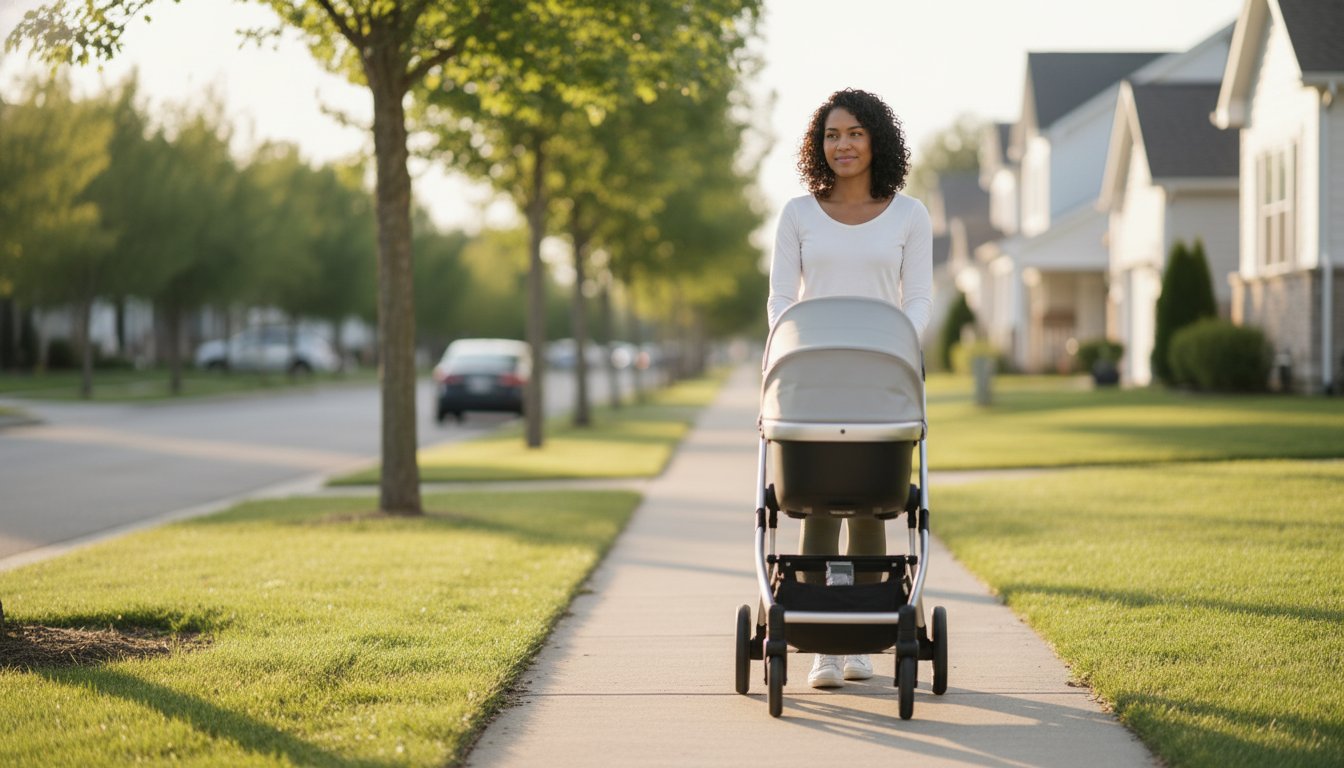
It’s not just in your head: a 2026 study in the journal Obesity found that 75% of women are actually heavier one year after giving birth than they were before pregnancy. If you’re currently staring at your reflection while holding a crying infant and wondering if you’ll ever recognize your body again, you aren’t failing. You’re just human. Between the constant exhaustion and the toxic pressure to “snap back” like a celebrity, learning how to lose baby weight safely feels like trying to solve a puzzle with half the pieces missing.
I know exactly how it feels to be the overwhelmed mom who just wants her energy back (and maybe a pair of jeans that actually zip). You deserve a plan that doesn’t involve soul-crushing gym sessions or starving yourself while nursing. I’m promising you a low-pressure, science-backed framework to reclaim your strength without the mom guilt. We will cover why the 1,800 calorie minimum is vital for your milk supply, the reality of losing a safe 1 pound per week, and a realistic routine that heals your pelvic floor while fitting into your beautiful, messy domestic life.
Key Takeaways
- Ditch the “snap back” pressure by understanding your body’s need for hormonal stabilization and rest during the first six months.
- Discover how to lose baby weight safely without crashing your milk supply by prioritizing protein and fiber over extreme calorie restriction.
- Re-engage your deep core using simple ab breathing and 8-minute micro-workouts that don’t require a gym membership or a change of clothes.
- Learn why the “B-Minus” rule is the secret to long-term success when you are too exhausted to aim for 100% perfection.
Why Losing Baby Weight Safely is Different (and Why the ‘Snap Back’ is a Lie)
Social media makes us believe we should be back in our pre-pregnancy jeans by the six-week checkup. That “snap back” narrative isn’t just annoying; it’s a physiological lie. Your body didn’t just “gain weight” over nine months. It built a functional energy reserve (basically a biological battery) designed to keep you and your baby alive during the “Fourth Trimester.” When you look for how to lose baby weight safely, you have to start by honoring that reserve instead of fighting it.
The first six months after birth are about hormonal stabilization, not just “burning fat.” Your estrogen and progesterone levels drop off a cliff after delivery, while prolactin takes over if you are breastfeeding. If you try to starve yourself or jump into high-intensity cardio too soon, you send your body into a state of metabolic panic. This chronic stress causes your cortisol levels to skyrocket. High cortisol tells your body to store fat, specifically around your midsection, which stalls your progress and leaves you feeling even more exhausted. Safe postpartum weight loss is a 12-month journey, not a 12-week sprint.
The Reality of Postpartum Fat Stores
Your body is incredibly smart. It specifically stores fat in your hips and belly to ensure you have enough energy for lactation. This isn’t a “flaw” to be fixed; it’s a survival mechanism. You also have a hormone called relaxin circulating in your system for months after birth. This makes your joints loose and prone to injury if you jump into high-impact moves too quickly. Focusing on your overall postpartum health means acknowledging that your “pooch” is a sign of a body that just performed a miracle. It deserves patience, not punishment.
The ‘Lazy Fit’ Approach to Transformation
At LazyFitMom, we reclaim the word “lazy” as a badge of honor. It really just means being efficient and sustainable. Busy moms don’t have the mental bandwidth for complex macros or two-hour gym sessions. When you set low-pressure goals, you prevent the cortisol spikes that tell your body to “hold onto the fat.” We use the “Lazy Girl” method because “Mom Brain” is real. You need simple, non-complex instructions that fit between diaper changes. Learning how to lose baby weight safely shouldn’t feel like a second job. It’s about high-efficiency habits that actually stick when life gets messy (and it always gets messy).
The Postpartum Safety Timeline: When Can You Actually Start?
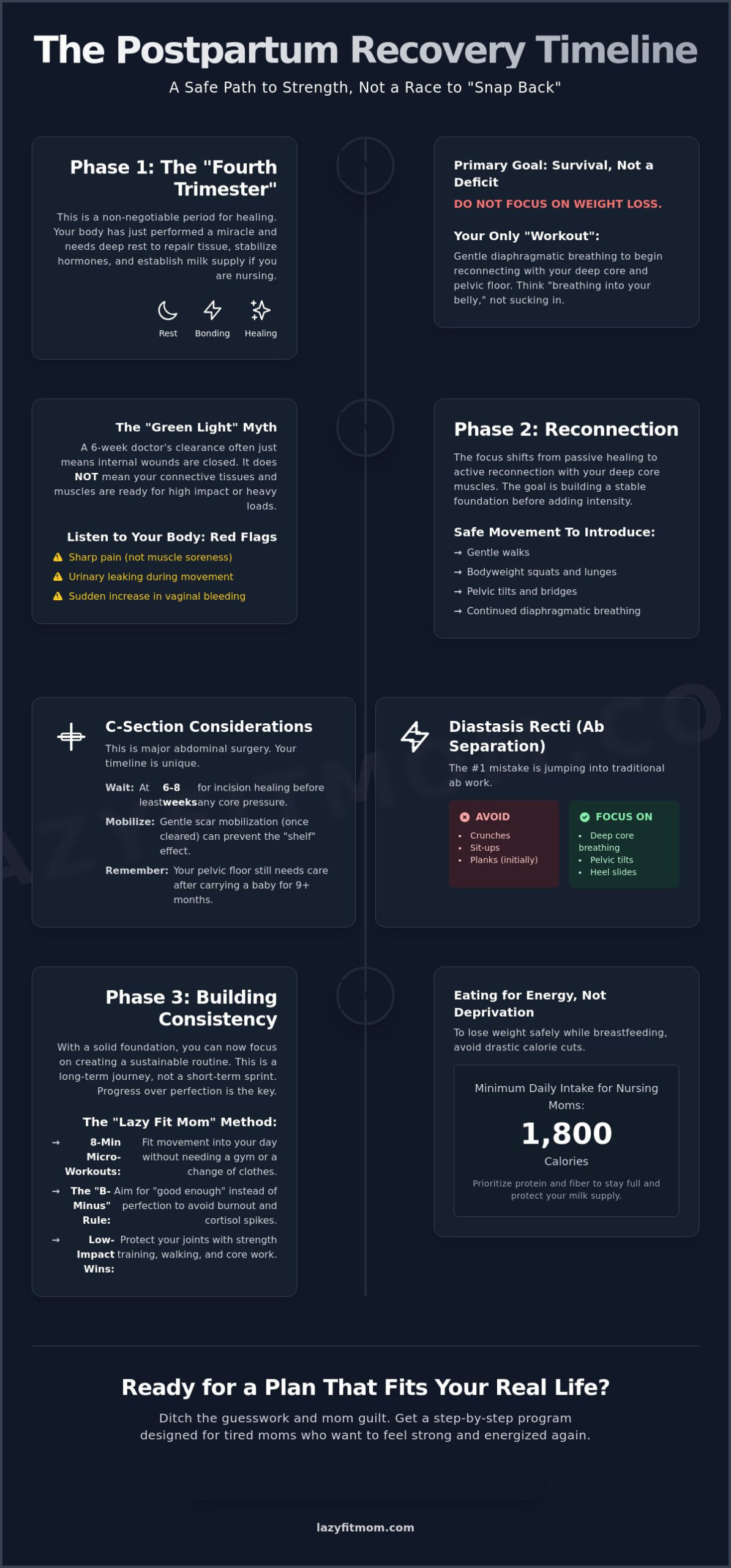
The first six weeks after birth, often called the “Fourth Trimester,” are for survival and healing. This isn’t the time to worry about the scale or your calorie deficit. Your primary focus should be on rest and fundamental diaphragmatic breathing. Many moms ask how to lose baby weight safely during this window, but the truth is that Losing weight after pregnancy starts with tissue repair. If you push too hard too soon, you risk long-term damage to your core and pelvic floor.
Even after you get that famous “six-week clearance” from your doctor, it’s not a green light to jump straight into HIIT or heavy lifting. That appointment usually just means your internal wounds have closed. It doesn’t mean your muscles and ligaments are ready for high impact. Watch out for red flags like sharp pain, urinary leaking, or a sudden increase in vaginal bleeding. If any of these happen, stop immediately. In these first three months, your goal is “tissue healing” rather than “weight loss.”
C-Section vs. Vaginal Birth Recovery
If you had a C-section, remember that you just had major abdominal surgery. You need at least 6 to 8 weeks for the incision to heal before you even think about adding core pressure. Even then, scar tissue can feel tight or numb. Gentle scar mobilization is a huge part of learning how to lose baby weight safely because it prevents the “shelf” effect over your incision. Don’t assume your pelvic floor is fine just because you didn’t have a vaginal delivery. Carrying a baby for 40 weeks puts massive pressure on those muscles, and they need specific care to recover. If you’re feeling lost, my Postpartum Recovery Program offers a step-by-step way to rebuild without the guesswork.
Checking for Diastasis Recti
Traditional crunches are the #1 mistake I see new moms make. If you have Diastasis Recti (abdominal separation), crunches actually push your organs against your weakened connective tissue, making the “pooch” worse. You can do a simple “gap test” at home. Lie on your back, knees bent, and gently lift your head while pressing your fingers just above your belly button. If you feel a gap wider than two fingers, you have separation. This core dysfunction often mimics “excess weight” because your abdominal wall can’t hold your organs in place. Healing this gap is the most “lazy” (efficient!) way to get a flatter stomach without doing a single sit-up.
Eating for Energy: How to Lose Weight Without Crashing Your Milk Supply
If you are breastfeeding, you have a biological superpower that burns an extra 330 to 500 calories every single day just by existing. This sounds like a dream for weight loss, but it comes with a catch. If you cut your intake too low, your body thinks there is a famine and tries to protect you by tanking your milk supply and your energy. Learning how to lose baby weight safely requires you to eat enough to keep the factory running. According to current 2026 guidelines, nursing mothers should consume a minimum of 1,800 calories per day to ensure they don’t interfere with lactation.
Instead of tracking every single calorie (which is the last thing a sleep-deprived mom needs), focus on “The Big Three”: Protein, Fiber, and Healthy Fats. These are the building blocks that keep you full and prevent the 4 PM sugar crash. To make this work without spending hours in the kitchen, embrace “Lazy Meal Prep.” Buy the pre-cooked rotisserie chicken, use frozen vegetable steam-bags, and grab the pre-washed salad greens. These shortcuts aren’t cheating; they are the only way to stay consistent when you’re overwhelmed. Also, keep a 32-ounce water bottle nearby. Since breastfeeding moms need at least 12 cups of water daily, that “mom thirst” often feels exactly like hunger.
The Anti-Crash Diet Philosophy
Starvation mode is a very real threat for postpartum bodies. When you drop your calories too low, your thyroid and hormones take a hit, which can actually cause your body to cling to fat stores for survival. Many moms try “low carb” to see fast results, but your brain and your milk supply need complex carbohydrates to function properly. Losing weight after pregnancy is about fueling your recovery rather than depriving your cells. Nutrient density matters more than calorie quantity in 2026.
Quick & Realistic Snack Ideas
You need snacks you can eat with one hand while holding a baby. Stock your pantry with nuts, Greek yogurt cups, and hard-boiled eggs so you aren’t reaching for a box of crackers when the exhaustion hits. One of the biggest hurdles in how to lose baby weight safely is the “toddler scrap trap.” Don’t survive on leftover crusts and half-eaten apple slices. You need real, adult meals that provide actual nutrition. If you’re struggling to find time to cook, my Lazy Fit Mom Recipe Book is packed with 15-minute meals that actually taste good and support your goals.
The Lazy Girl’s Guide to Movement: Low-Impact Wins for Tired Moms
If you’re currently so tired that the thought of putting on a sports bra makes you want to cry, you’re in the right place. Most fitness advice tells you to hit 10,000 steps a day, but a 2026 study showed that for many new moms, that goal is completely unrealistic without full-time childcare. Learning how to lose baby weight safely doesn’t mean you have to sweat for an hour. It means choosing high-efficiency moves that respect your limited energy levels.
Step one is mastering “Ab Breathing.” This isn’t just taking a deep breath; it’s about re-engaging your transverse abdominis (your deep core) while protecting your pelvic floor. Once that feels stable, you can move to 8-minute micro-workouts. You don’t need to change into gym clothes or even leave the living room. The goal is to fit movement into your day without it feeling like an extra chore on your to-do list.
Don’t even think about increasing your intensity until you’re getting at least one consistent 4-hour stretch of sleep. High-intensity exercise on zero sleep is a recipe for injury and hormone burnout. Instead, focus on “Functional Fitness.” Use baby-wearing for a little extra resistance during house chores or take a stroller walk. These small wins add up without spiking your cortisol or leaving you too exhausted to function. If you want to know exactly how to lose baby weight safely while staying in your pajamas, focus on consistency over intensity.
Floor-Based Fitness: The Secret Weapon
Horizontal exercise is a secret weapon for the overwhelmed mom brain. When you’re on the floor, your heart rate stays steady and your stress levels remain low. It’s the ultimate way to tone up without feeling like you’re “working out.” Movements like glute bridges and bird-dogs are essential for correcting “mom posture” and strengthening your back. For a complete routine you can do while the baby plays on the mat, check out The Ultimate Lazy Mom Workout Plan. It’s the most efficient way to see results without even standing up.
Walking: The Most Underrated Fat Burner
Walking is the most underrated fat burner in 2026. A 15-minute walk in actual sunlight does more for your hormones and mood than 30 minutes on a treadmill in a dark basement. Use the “stroller nap” window as your primary cardio window. Just remember to walk “correctly” by keeping your ribs stacked over your hips to protect your pelvic floor. If you’re ready for a structured plan that actually fits your life, my 12-Week Home Workout Series gives you exactly what to do each day without the gym stress.
Consistency Over Intensity: Making Your New Routine Stick
Most fitness plans fail because they demand 100% perfection. For a busy mom, perfection is an impossible standard that only leads to burnout and “mom guilt.” I want you to embrace the “B-Minus Rule.” This means aiming for 80% consistency rather than a flawless record. If you miss a workout because the baby is teething or you’re dealing with a “blowout” disaster, you haven’t failed. Learning how to lose baby weight safely is about what you do most of the time, not what you do on your hardest days. When you lower the pressure, you actually stay consistent for the long haul.
You also shouldn’t try to do this alone. Building an “Accountability Sisterhood” with other moms who understand the mental load is vital. When you have a bad day (and you will), these are the women who remind you that a 15-minute walk still counts. This shared struggle creates a safe, non-judgmental space where you can be “lazy” (efficient!) and still see results. We stop focusing on the “snap back” and start focusing on showing up for ourselves in whatever capacity we have left at the end of the day.
It’s time to stop letting the scale dictate your mood. Scale weight is a liars’ metric for postpartum moms because it doesn’t account for muscle repair, hydration, or hormonal shifts. A 2025 review highlighted that mothers who sleep five hours or less per day at six months postpartum are significantly more likely to retain at least 5 kg (11 lbs) by their baby’s first birthday. If you’re in a season of sleep deprivation, your body is biologically primed to hold onto weight. Reframe your progress by measuring your energy levels, your mood, and how your favorite pre-pregnancy jeans feel instead of chasing a specific number.
The Power of the 12-Week Horizon
I always tell my community to think in 12-week cycles. This is the realistic timeframe it takes for your metabolism to stabilize and your connective tissues to actually change. Don’t look for a “total body transformation” in fourteen days. Instead, set “Non-Scale Victories” (NSVs). Can you carry the heavy infant car seat without your lower back screaming? Can you get through the afternoon without a sugar crash? Use a simple paper habit tracker to check off your wins. Complex fitness apps often just add to your decision fatigue and mental clutter.
Join the Lazy Fit Mom Community
Decision fatigue is the silent killer of postpartum routines. When you’re exhausted, you don’t have the bandwidth to research recipes or design workouts. My digital guides are designed to remove that weight from your shoulders entirely. By following a structured, low-pressure plan, you protect your hormones and your sanity while learning how to lose baby weight safely. Our private accountability groups ensure you never feel like you’re struggling in the trenches by yourself. Ready to start? Grab the Lazy Fit Mom Guide and join our community to begin your 12-week journey today.
Take Back Your Power (Without the Pressure)
You didn’t gain your pregnancy weight overnight, and you shouldn’t feel pressured to lose it that way either. By focusing on deep core healing and maintaining that vital 1,800 calorie minimum, you’ve already mastered the hardest part of how to lose baby weight safely. Remember that your energy and mood are far better indicators of success than a flickering number on a scale. I’ve been in your shoes as a busy mom of 2, and I managed to lose 25kg in 6 months without ever stepping foot in a gym or touching an extreme diet.
If you have PCOD or you’re just tired of the “snap back” lies, you deserve a plan built for your actual life. My approach focuses on postpartum-specific recovery that respects your hormones and your sleep schedule. You don’t need unrealistic routines to feel like yourself again; you just need the right framework. Start your low-stress recovery with The Lazy Fit Mom Guide and join a sisterhood that values progress over perfection. You are doing an incredible job, and it’s okay to take this one small step for yourself today.
Frequently Asked Questions
How soon can I start trying to lose weight after giving birth?
You can start gentle movement like pelvic floor breathing and short walks within a few days of a vaginal delivery, but wait for your 6-week checkup for anything more. If you had a C-section, your recovery timeline is at least 8 weeks for foundational healing. Learning how to lose baby weight safely means focusing on tissue repair first. Don’t rush into a calorie deficit until your hormones stabilize around the three-month mark.
Will losing weight affect my milk supply?
Losing weight won’t hurt your supply if you stick to a realistic rate of about 1 pound per week. You need to consume at least 1,800 calories daily and stay hydrated with 96 ounces of water. Rapid weight loss or extreme “detoxes” are what cause the milk factory to shut down. If you prioritize protein and fiber, your body will have the energy it needs to produce milk while slowly using fat stores.
Is it safe to do intermittent fasting while breastfeeding?
Most lactation experts advise against strict intermittent fasting while nursing because long gaps without food can tank your milk supply and spike cortisol. Your body needs a steady stream of nutrients to keep up with the 500-calorie daily demand of breastfeeding. Instead of fasting, try a simple 12-hour window where you avoid late-night snacking. This gives your digestive system a break without the hormonal stress of a 16-hour fast.
How do I know if I have Diastasis Recti?
Check for abdominal separation by lying on your back with knees bent and lifting your head slightly while pressing fingers above your belly button. A gap wider than 2 centimeters (about two fingers) usually indicates Diastasis Recti. This separation makes your belly protrude and can feel like “extra weight” even when it’s actually a structural issue. If you have a gap, avoid crunches and focus on deep core engagement to heal properly.
What are the best exercises to get rid of the ‘mom pooch’ safely?
The best exercises for the “pooch” are low-impact moves that target the transverse abdominis, like diaphragmatic breathing and bird-dogs. Traditional sit-ups actually make the bulge worse by putting too much pressure on your midline. Focusing on glute bridges and pelvic tilts helps realign your pelvis and flattens the stomach area naturally. This is a key part of how to lose baby weight safely without causing long-term core dysfunction or injury.
Do I really need to count calories to lose baby weight?
No, you don’t need to count every calorie, and doing so often adds unnecessary stress to an already overwhelmed mom. Use the “Plate Method” instead: fill 50% of your plate with veggies, 25% with protein, and 25% with complex carbs. This ensures you get the nutrients you need without the mental load of a tracking app. Focusing on high-fiber foods will keep you full longer than obsessing over a specific number.
What should I do if I’m too tired to exercise?
If you’re getting less than 5 hours of sleep, prioritize rest over a workout every single time. Sleep deprivation messes with your hunger hormones, making it nearly impossible to lose weight anyway. On your most exhausted days, just focus on 5 minutes of stretching or a slow walk around the house. Movement should give you energy, not take it away. If a workout feels like a soul-crushing chore, it’s okay to skip it.
Leave a Reply