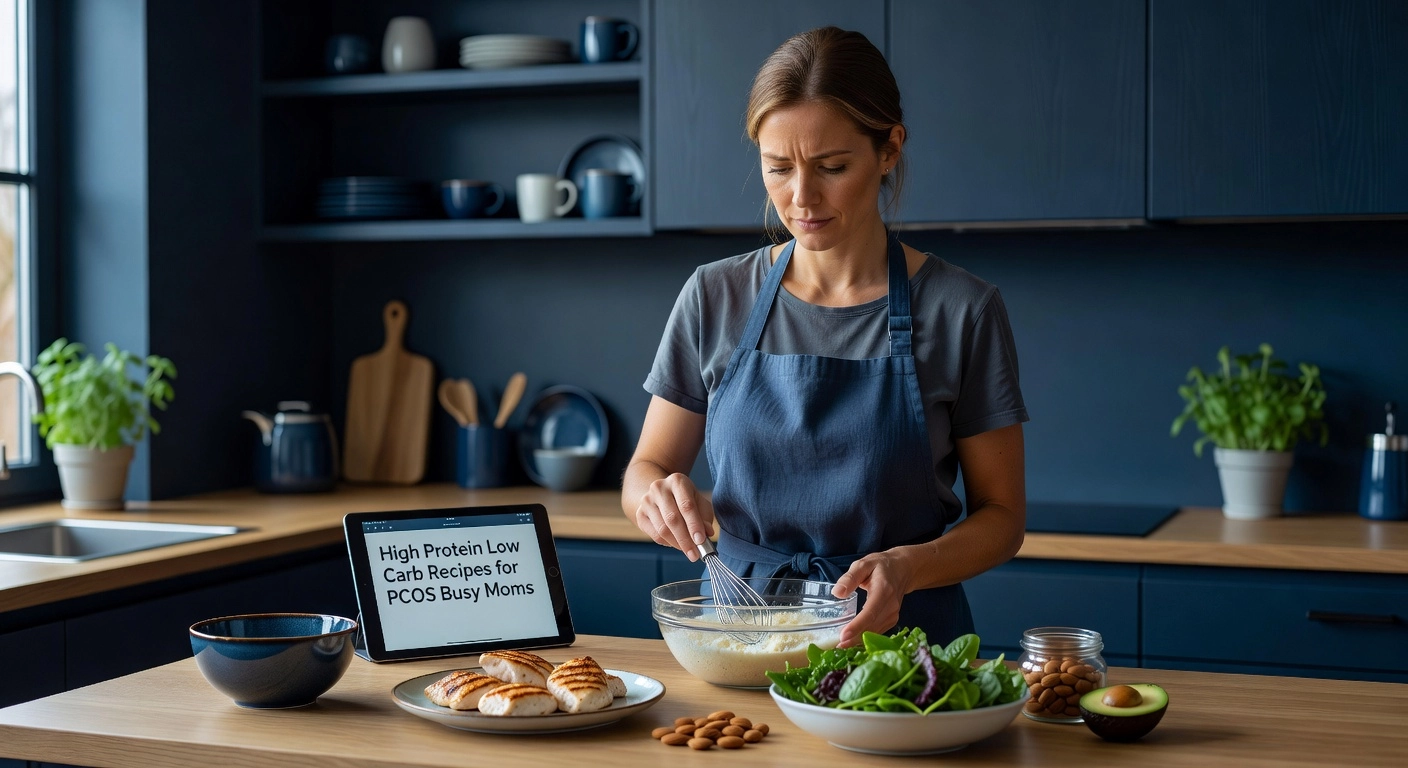
Between school drop-offs, work deadlines, and managing PCOS symptoms, finding time to eat well can feel impossible. Sound familiar? You are not alone, and the good news is that eating for your hormones does not have to be complicated or time-consuming.
If you have been told that high protein low carb recipes can help manage PCOS symptoms like insulin resistance, blood sugar spikes, and stubborn weight gain, you are absolutely right. But knowing what to cook when you are exhausted and stretched thin is a whole different challenge.
That is exactly why this list exists. We have rounded up simple, satisfying, and genuinely delicious high protein low carb recipes that are perfect for busy moms who are just getting started with PCOS-friendly eating. No fancy ingredients, no hours in the kitchen, and no nutrition degree required.
By the end of this post, you will have a solid collection of go-to meals and snacks that support your health goals without adding more stress to your already full plate. Let’s get cooking!
Table of Contents
Why High Protein Low Carb Eating Actually Helps PCOS
If you have PCOS and feel like your body is constantly fighting you when it comes to weight and cravings, there is actually a really good biological reason for that. And honestly, understanding it changed everything for me.
Here is the deal: between 50 and 80% of women with PCOS have some degree of insulin resistance. That means your cells do not respond properly to insulin, so your body pumps out more and more of it trying to do its job. All that extra insulin circulating in your system is what drives those relentless sugar cravings, the stubborn belly fat, the energy crashes at 2pm, and a whole lot of the hormonal chaos that comes with PCOS. It is not a willpower problem. It is a blood sugar problem. And food can actually help fix it.

This is exactly where high protein low carb recipes come in.
When you eat protein alongside fiber-rich, lower-carb foods, you slow down how quickly glucose hits your bloodstream. That means smaller insulin spikes, more stable energy, and far fewer moments where you are desperately hunting for something sweet. Protein also triggers satiety hormones like GLP-1, which is the same mechanism behind those big-name appetite medications, except you are getting it through your actual meals.
The research backs this up in a big way. A meta-analysis published in Nature’s nutrition journal, pulling data from 8 randomized controlled trials with 300 women who had PCOS, found that high-protein diets reduced fasting insulin by about 2.69 uIU/mL and significantly improved HOMA-IR, which is a key marker of insulin resistance. Those numbers translate to real life benefits: fewer cravings, more consistent energy, and better hormonal balance over time.
So what does this look like practically? Aim for 25 to 35 grams of protein per meal. Not just for weight loss, but to genuinely stabilize your blood sugar and support your hormones. Over the course of a day, that adds up to roughly 90 to 130 grams of total protein, which also helps preserve your muscle mass while you are losing fat. This matters a lot with PCOS because muscle tissue actually improves insulin sensitivity on its own.
One last thing worth saying clearly: low carb does not mean zero carb. Berries, non-starchy vegetables, and occasional quinoa are all fair game. These low-GI options add fiber and nutrients without spiking blood sugar, and they make this whole approach actually sustainable for a busy mom who does not have time for extreme diets.
What Actually Counts as Low Carb When You Have PCOS
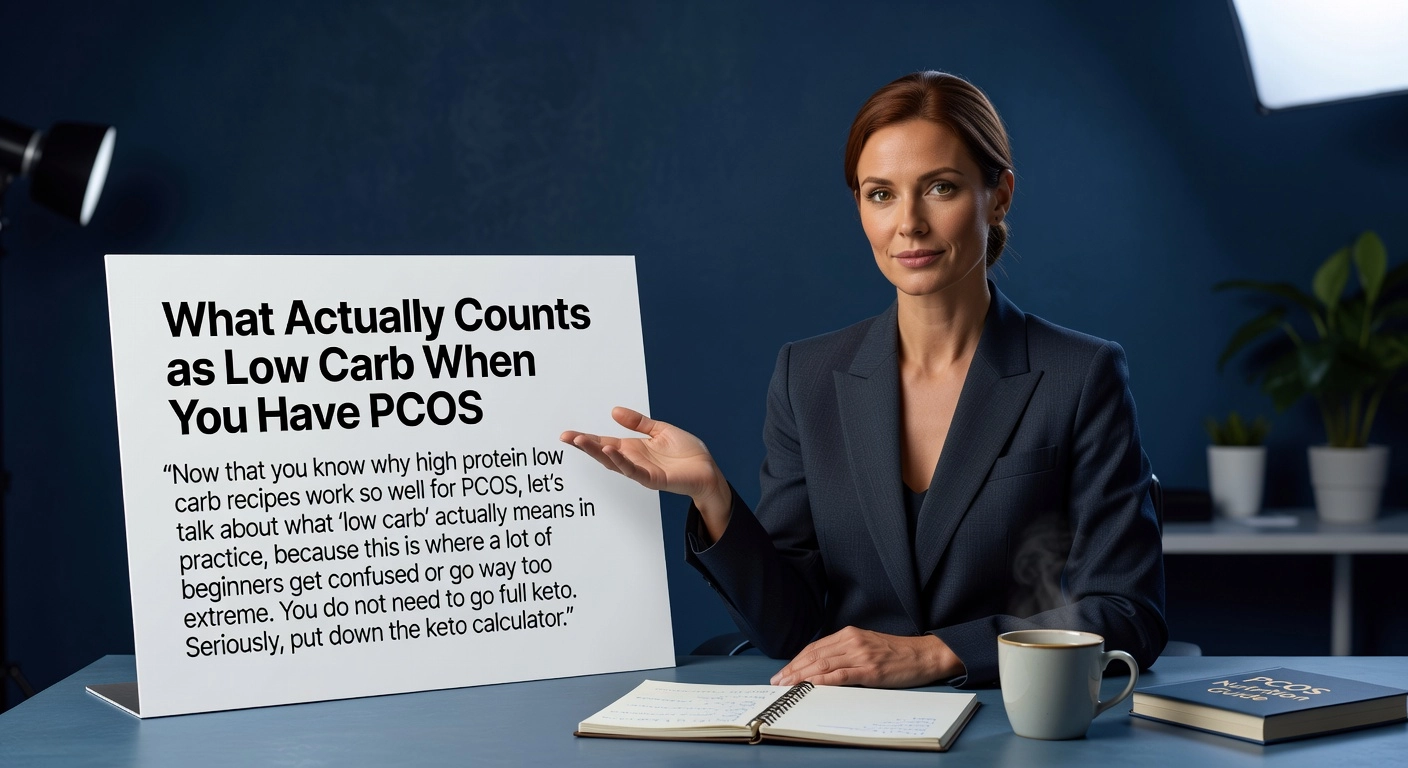
Now that you know why high protein low carb recipes work so well for PCOS, let’s talk about what “low carb” actually means in practice, because this is where a lot of beginners get confused or go way too extreme.
You do not need to go full keto. Seriously, put down the keto calculator. Research actually supports a moderate carb reduction of around 40% of calories or lower, paired with higher protein, for real PCOS benefits. One study found that simply reducing carbs to about 41% of daily calories improved hormones and metabolic markers in women with PCOS, sometimes even without significant weight loss. That is pretty powerful news for anyone who dreads the idea of giving up every carb forever.
The type of carb matters just as much as the amount. Low-GI carbohydrates like berries, leafy greens, lentils, chickpeas, and sweet potato cause a slow, steady rise in blood sugar rather than a sharp spike. Refined carbs like white bread, white rice, and sugary snacks do the opposite, triggering the insulin surge that makes PCOS symptoms worse. Swapping refined carbs for low-GI options is honestly one of the easiest wins you can make.
For beginners, use this simple plate method:
- Half your plate: non-starchy vegetables like broccoli, spinach, zucchini, or peppers
- One quarter: your protein source, whether that is eggs, chicken, fish, or legumes
- One quarter: a low-GI carb like berries, quinoa, or a small portion of sweet potato
No calorie counting required.
Understanding total carbs versus net carbs is also helpful here. Net carbs are calculated by subtracting fiber from total carbs, because fiber is not fully absorbed and does not spike blood sugar the same way. This is why fiber-rich foods are your best friend with PCOS. Most women with PCOS consume far too little fiber, often only 9 to 20 grams daily, when the recommendation is 25 grams or more. Prioritizing fiber-rich, low-GI foods according to WHO guidelines supports insulin sensitivity and keeps blood sugar stable throughout the day.
One big mistake to avoid: cutting carbs out completely. Going too low for too long can actually raise your cortisol levels, the stress hormone that can worsen PCOS symptoms like fatigue, mood swings, and hormonal imbalances. The goal is a moderate, sustainable reduction, not elimination. Pair your carbs with plenty of protein and fiber, and your blood sugar will thank you.
High Protein Low Carb Breakfasts That Take Under 10 Minutes
Mornings with PCOS are no joke. You’re tired, possibly dealing with brain fog, and the last thing you want to do is spend 30 minutes making a “healthy” breakfast. The good news? These five options are genuinely fast, genuinely high in protein, and genuinely delicious. No complicated meal plans required.
1. Greek Yogurt Bowl with Chia Seeds, Nut Butter, and Berries
This one is almost too easy. Grab a bowl of plain Greek yogurt, stir in a tablespoon of chia seeds, drizzle on some almond or peanut butter, and toss a small handful of berries on top. That’s it. You’re looking at 25 to 30 grams of protein with zero cooking, and it takes about 3 minutes to put together. The protein and fat combo here is really important for PCOS because it slows down digestion and keeps your blood sugar from spiking. Berries add antioxidants without a ton of sugar. If you want an extra protein boost, you can stir in a scoop of collagen powder and you won’t even taste it.
2. Scrambled Eggs with Spinach and Feta in One Pan
One pan, about 5 to 7 minutes, and roughly 22 grams of protein. Whisk your eggs, toss pre-washed bagged spinach directly into the pan (seriously, do not buy spinach you have to wash and chop), crumble in some feta, and scramble everything together. The feta adds a salty, tangy flavor that makes this feel way fancier than it is. Eggs are one of the best sources of complete protein you can eat, and spinach sneaks in iron and folate without adding carbs. This is a high-protein breakfast option that fits 2026 nutrition trends perfectly, focusing on real food over complicated prep.
3. Cottage Cheese Bowl with Cucumber and Everything Bagel Seasoning
If you haven’t tried savory cottage cheese yet, this is your sign. Spoon a generous cup into a bowl, layer on some cucumber slices, and shake everything bagel seasoning over the top. No heat, no cooking, and you get a serious amount of protein that helps stabilize blood sugar. For PCOS specifically, this matters because up to 80% of women with PCOS deal with insulin resistance, and starting your day with high protein instead of carbs makes a real difference in how you feel all morning. Add a drizzle of olive oil if you want to make it feel extra satisfying.
4. Overnight Protein Oats in a Mason Jar
Five minutes of work the night before means zero work in the morning. Combine rolled oats, a scoop of your favorite protein powder, and almond milk in a mason jar, give it a stir, and put it in the fridge. In the morning, you just grab it and go. Depending on your protein powder, you can hit 30 to 35 grams of protein easily. You can also add a spoonful of Greek yogurt or chia seeds to boost the fiber content. This is perfect for the mornings when you are running out the door and need something that travels well.
5. Mini Egg Muffins Baked on Sunday
This is the ultimate lazy breakfast hack. On Sunday, whisk a dozen eggs with whatever you have around, things like spinach, feta, diced peppers, or crumbled sausage, pour the mixture into a greased muffin tin, and bake. In about 25 minutes, you have 12 little protein-packed muffins that stay fresh in the fridge for up to 5 days. Reheat two or three in the microwave for about a minute, and breakfast is done. Protein and fiber together are leading nutrition priorities right now because they genuinely keep you full and support steady energy, which is exactly what you need when you have PCOS and a full schedule.
Pick one of these to start with this week and see how different your mornings feel when breakfast actually works for you instead of against you.
Easy High Protein Low Carb Lunches You Can Make at Naptime
Naptime is sacred. You’ve got maybe 45 minutes if you’re lucky, and the last thing you want to spend it on is a complicated lunch. These five high protein low carb recipes are genuinely fast, require almost zero cooking skill, and will actually keep you full instead of sending you straight to the snack cabinet an hour later.
1. Rotisserie Chicken and Bagged Salad with Olive Oil and Lemon
This one is almost embarrassingly easy, and that is exactly why it works. Grab some shredded rotisserie chicken, toss it into a bagged salad mix, drizzle with olive oil and a squeeze of lemon, and you are done in under four minutes flat. You are hitting 30 grams of protein or more without turning on a single burner. The viral rotisserie chicken bag salad has been all over meal prep content for good reason because it is genuinely that simple and satisfying. For PCOS specifically, the combination of lean protein and fiber-rich greens helps blunt blood sugar spikes, which means fewer energy crashes and fewer cravings later in the afternoon.
2. Tuna Salad Stuffed in Avocado Halves
No bread, no cooking, no problem. Mix a can of tuna with a spoonful of Greek yogurt or mayo, a little lemon juice, salt, and whatever herbs you have on hand. Then just scoop it right into halved avocados and eat it straight from the skin. The healthy fats in avocado actually slow down glucose absorption, which is a huge deal when you have PCOS and insulin resistance is part of your daily reality. This combo also supports hormone health because your body literally needs dietary fat to produce and regulate hormones. It takes about three minutes and delivers sustained energy that carries you well past naptime.
3. Turkey and Cheese Roll-Ups with Cucumber and Hummus
Skip the wrap entirely. Seriously, you do not need it. Layer deli turkey slices with cheese, roll them around cucumber sticks, and dip everything in hummus. You save the carbs, you still get something crunchy and satisfying, and you are getting around 20 to 30 grams of protein, depending on how many rolls you make. This is also a lunch your kids will actually eat, which means you are not making two separate meals. That alone makes it a winner in this house.
4. Leftover Salmon Flaked Over Greens with Tahini
If you made salmon for dinner the night before, this is a two-minute lunch. Flake it over a handful of greens, thin out some tahini with lemon juice and a splash of water, drizzle it over the top, and you are done. Salmon is one of the most PCOS-friendly foods you can eat because the omega-3 fatty acids directly support hormone balance and help reduce the chronic inflammation that makes PCOS symptoms worse. According to research on PCOS-friendly dietary patterns, anti-inflammatory fats like those found in fatty fish can meaningfully improve insulin sensitivity over time.
5. Ground Turkey Taco Bowl Over Cauliflower Rice
This is your one hot lunch option, and it still only takes about 15 minutes. Brown ground turkey in a skillet, toss in a taco seasoning packet, and serve it over microwaved frozen cauliflower rice. Top with shredded cheese, salsa, and sliced avocado. It is filling, it is genuinely delicious, and because cauliflower rice replaces regular rice, you are keeping carbs low while still getting that satisfying taco bowl feeling. This one also works perfectly for the rest of the family, and kids can customize their own toppings, making it one of those rare meals that serves everyone without extra effort.
The theme across all five of these lunches is the same: protein first, healthy fats to support your hormones, and smart swaps that cut carbs without making you feel deprived. Coming up next, we are tackling dinners that are just as easy.
High Protein Low Carb Dinners the Whole Family Will Actually Eat
Dinner is honestly the hardest meal to figure out when you have PCOS, because you’re exhausted, everyone is hungry and slightly cranky, and you still need something that works for your blood sugar AND doesn’t make your kids stage a revolt. The good news is that all six of these dinners are genuinely simple, high in protein, and family-approved without requiring two separate meals.
1. Sheet Pan Lemon Garlic Chicken Thighs with Broccoli and Zucchini
This one is a weeknight lifesaver. Toss chicken thighs, broccoli florets, and sliced zucchini in a single pan with olive oil, lemon juice, garlic, and whatever seasoning you like. Roast everything at 400°F for about 25 minutes, and you’re done. No babysitting the stove, no pile of dishes, and the chicken thighs stay juicy because dark meat is much more forgiving than chicken breast when you’re distracted by a toddler.
2. Air Fryer Salmon with Asparagus
If you aren’t using your air fryer for salmon yet, this is your sign. Season the fillets with lemon, garlic, and a little dill, add asparagus spears to the basket, and it’s ready in about 10 minutes flat. No oil splatter, no standing over the stove, and salmon is loaded with omega-3 fatty acids that actively help with the chronic inflammation that PCOS causes. Research consistently points to fatty fish as one of the most beneficial foods for hormonal balance, so this one is genuinely working double duty for you.
3. Taco-Seasoned Ground Beef Lettuce Wraps
This is the dinner where everyone wins. Brown ground beef with taco seasoning, set out shredded cheese, avocado, and salsa, and let the kids build their own wraps using whatever they want. You use large butter lettuce leaves instead of tortillas, which keeps your meal low carb while the kids can use tortillas or chips if they need to. The build-your-own format means less complaining and zero extra cooking on your part.
4. One-Pot Turkey Chili
Batch cooking is genuinely one of the best tools you have as a busy mom with PCOS, and this turkey chili is the perfect example of why. Brown ground turkey, dump in canned tomatoes, black beans, peppers, onions, and chili spices, let it simmer for about 30 minutes, and you have four to five meals ready to go. It freezes beautifully, reheats in minutes, and the lean ground turkey keeps the protein high without a lot of added fat. If you want to cut the carbs even further, you can reduce the beans and add extra peppers or zucchini instead.
5. Zucchini Noodles with Turkey Meatballs and Marinara
This one feels indulgent, but it’s actually one of the most PCOS-friendly swaps you can make. Spiralized zucchini (sold pre-spiralized at most grocery stores, by the way) replaces regular pasta without dramatically changing the flavor when it’s covered in marinara and meatballs. Buy store-bought turkey meatballs to save serious time, warm them up with your favorite jarred marinara, and pile them over the zucchini noodles. Kids rarely notice the swap when there’s enough sauce and cheese involved.
6. Baked Cod with Roasted Cauliflower
If your family includes picky eaters, cod is your best friend. It’s a mild, flaky white fish that doesn’t taste “fishy,” and it bakes quickly at around 400°F in about 15 minutes. Pair it with cauliflower florets tossed in olive oil and garlic on the same sheet pan, and you have a complete meal with minimal effort. Cod is a lean, high-protein option that fits perfectly into a high-protein, low-carb approach that the latest dietary guidelines increasingly support for overall health and weight management.
These dinners all share the same core qualities: high protein, minimal carbs, fast prep, and realistic enough to actually make on a Tuesday night when you have nothing left in the tank.
High Protein Low Carb Snacks to Crush PCOS Cravings
Snack time is where a lot of PCOS progress gets quietly derailed. You’re hungry, you’re tired, and the easiest option is usually something sweet or crunchy and full of carbs. These five high protein low carb snacks are designed for exactly those moments, and the best part is that none of them require real cooking.
1. Hard-Boiled Eggs (Batch Prepped on Sunday)
Spend 15 minutes on Sunday boiling a dozen eggs, and you’ve basically solved your snack problem for the entire week. Each egg has about 6g of protein, zero carbs, and keeps you full without any blood sugar drama. When hunger hits mid-morning or late afternoon, you just grab one or two from the fridge. That’s it. No prep, no thinking, no decisions.
2. String Cheese and a Handful of Almonds
This combo is genuinely underrated for PCOS cravings. You get protein from the cheese, healthy fats, and a little fiber from the almonds, and the whole thing takes about 30 seconds to put together. It hits that salty, satisfying craving without sending your blood sugar on a rollercoaster. One stick of string cheese plus a small handful of almonds is a perfectly balanced snack that keeps insulin steady.
3. Cottage Cheese with Cinnamon and Blueberries
If you’re craving something sweet, this is your go-to. Cottage cheese packs 15 to 20g of protein per serving, and cinnamon actually helps with blood sugar control, which matters a lot when you have insulin resistance from PCOS. A small handful of blueberries adds antioxidants and just enough natural sweetness to feel like a treat.
4. Celery and Almond Butter
Crunchy, creamy, salty, and ready in under 90 seconds. Celery keeps carbs basically nonexistent, while almond butter brings in healthy fats to slow digestion and prevent that energy crash PCOS loves to trigger.
5. Greek Yogurt with a Spoonful of Peanut Butter
Plain full-fat Greek yogurt gives you 15 to 20g of protein with minimal sugar, and adding a spoonful of natural peanut butter makes it feel genuinely indulgent. It tastes like dessert but works completely in your favor. Skip the flavored varieties since they’re usually loaded with added sugar.
The pattern across all five of these snacks is simple: protein plus fat equals stable blood sugar and fewer cravings. Keep these stocked, and you’ll have an easy answer every time hunger shows up unexpectedly.
The Lazy Meal Prep Strategy That Makes This All Doable
All those recipes we just covered? They only work consistently if you have a simple system behind them. Here is the truth: you do not need to spend your whole Sunday in the kitchen. You just need one focused hour and three core tasks.
The One-Hour Sunday Method
Cook one big batch of protein, roast one sheet pan of veggies, and hard-boil a dozen eggs. That is it. Pick up a rotisserie chicken on your way home from errands (already cooked, already done), brown a pound or two of ground turkey while you scroll your phone, and toss broccoli or zucchini on a sheet pan at 400°F for 25 minutes. Hard-boil your eggs in the background. These three things will cover the majority of your breakfasts, lunches, and dinners for the week without you having to think about it every single day.
The Mix-and-Match System That Prevents Boredom
Here is where the magic happens. The same prepped chicken or turkey tastes completely different depending on what you do with it. Monday, it goes into egg muffins with a little cheese for breakfast. Tuesday, it becomes a taco bowl with salsa and a handful of greens for lunch. On Wednesday, it shows up in a quick stir-fry with your roasted veggies and some sesame sauce for dinner. Change the seasoning, change the format, and suddenly you are not eating the same thing twice even though your prep was identical.
The Rotisserie Chicken Hack
Rotisserie chicken is genuinely the laziest PCOS-friendly hack out there. It costs around five to eight dollars, it is already cooked, and shredding it takes maybe five minutes while it is still warm. Store it in a container in the fridge and pull from it all week for salads, egg muffins, taco bowls, and lettuce wraps.
Stock Your Freezer for Exhausted Weeks
Turkey chili and egg muffins both freeze beautifully. When you make them, double the batch and portion extras into freezer containers. On the weeks where everything falls apart, you will thank yourself.
Simplify Your Grocery List
Keep a rotating list of five to six staple proteins, including eggs, ground turkey, rotisserie chicken, Greek yogurt, cottage cheese, and tuna packets, plus four to five low-carb vegetables that you swap out weekly. Broccoli one week, zucchini the next, bell peppers after that. With a list this focused, grocery shopping takes about 20 minutes and decision fatigue nearly disappears. This kind of structure is exactly why high-protein approaches have become one of the most popular eating strategies for busy people who want real results without the overwhelm. Simple, repeatable, and sustainable beats perfect every single time.
Your Questions About High Protein Low Carb Eating for PCOS Answered
Got some questions? Good. Let’s clear them up so you can stop second-guessing yourself and just get started.
How much protein should I eat per meal with PCOS? The sweet spot backed by current research is 25 to 35 grams of protein per meal, which adds up to roughly 90 to 130 grams per day total. That probably sounds like a lot if you’re used to grabbing a piece of toast and calling it breakfast, but it’s actually pretty doable once you build the habit. Think two to three eggs plus Greek yogurt, or a big salmon fillet with a side salad. Hitting that range helps keep your blood sugar stable, supports muscle while you’re losing fat, and keeps you fuller for longer between meals.
Is low carb the same as keto for PCOS? Nope, and this is a really important distinction. You do not need to go full keto to see real benefits. Moderate low-carb eating, where roughly 40% or fewer of your calories come from lower-GI carbs, is backed by solid research and a lot more sustainable for real life. Keto can work short-term for some women with PCOS, but the research shows that carb quality matters just as much as quantity. Swapping refined carbs for fiber-rich options gets you most of the benefit without the extreme restriction.
Can high protein low carb eating actually help PCOS cravings? Yes, genuinely. Because up to 80% of women with PCOS have some degree of insulin resistance, blood sugar swings are a huge driver of those intense cravings you feel. Protein and fiber slow down glucose absorption, which smooths out those spikes and crashes. Fewer crashes means fewer moments where you’re desperately reaching for something sweet at 3 pm.
What are the easiest options for busy moms? Rotisserie chicken salads, batch-prepped egg muffins, and air fryer salmon are your three best friends. Minimal prep, high protein, zero fuss.
Do you have to give up carbs forever? Absolutely not. The goal is simply crowding out refined carbs like white bread, pasta, and sugar with lower-GI swaps like berries, leafy greens, and legumes in reasonable portions. This is a sustainable lifestyle shift, not a punishment.
Start Small and Make It Work for Your Real Life
Here is the truth about making this work long-term: you do not need to do everything at once. Pick just two or three recipes from this entire list and focus on those this week. That is it. Trying to overhaul every single meal all at once is exactly how good intentions turn into burnout by Thursday.
If you only take one habit from this entire post, make it the lazy prep Sunday method. One hour of batch cooking a protein or two genuinely changes how your entire week feels. It removes the daily “what am I even eating” panic and makes high protein low carb eating something that actually happens instead of something you planned to do.
Consistency with boring, simple recipes will always beat perfection with complicated ones. Always. Rotating the same handful of meals you actually enjoy is a strategy, not a failure.
Most importantly, this is not a restrictive diet. High-protein, low-carb eating is a sustainable way to support your PCOS, stabilize your blood sugar, and manage cravings without completely overhauling your life.
For your next steps on managing PCOS holistically, including how to control cravings and tackle weight loss as a busy mom, check out the related posts right here on lazyfitmom.com. You have everything you need to start today.
Conclusion
Managing PCOS does not have to mean spending hours in the kitchen or feeling overwhelmed at every meal. Here is what to remember as you move forward:
- High protein, low carb eating genuinely supports hormone balance and insulin regulation
- Simple meals with whole ingredients are just as effective as complicated ones
- Small, consistent changes add up to real, lasting results
- You deserve to feel good in your body, even on your busiest days
Now it is your turn to take action. Pick one or two recipes from this list and add them to your meal plan this week. Save this post, share it with a fellow mom who needs it, and come back whenever you need fresh ideas.
You are already doing something powerful by prioritizing your health. One nourishing meal at a time, you are working toward feeling your absolute best.
⚡ Simplify Your Healthy Mom Kitchen
Eating low-carb and high-protein shouldn’t mean spending your entire evening cooking separate meals for yourself and the kids. Keep your momentum going with our other realistic, mom-tested recipes and easy lifestyle hacks:
📚 More Easy Recipe & Meal Prep Guides
- The Meal Prep Formula: Take the stress out of your Sundays with our Easy Low Calorie High Protein Meal Prep guide.
- Quick Daily Wins: Keep things simple on busy weeknights with these Easy Low Calorie High Protein Meals.
- Smart Carbs: Wondering how to balance your breakfasts? Read our deep dive: Are Oats Good for PCOS?
- The Main Blueprint: See how all of this fits together into a realistic PCOS Diet Plan for Weight Loss.
🛠️ Grab Your Lazy Fat Loss Shortcuts & Toolkits
Take the guesswork out of your routine, grocery shopping, and meal planning with these ready-to-use digital resources:
- 🎁 Free Download: Start resetting your daily habits with our completely free 3-Day PCOS Fat Loss Kickstart.
- 🍳 Clean Up Your Kitchen: Ready to organize your meals without losing your mind? Grab The LazyFitMom PCOS Kitchen Reset System to streamline your grocery list and cooking routine.
- 🔄 The Complete Routine Blueprint: Stop spinning your wheels and follow a daily roadmap with the 30-Day PCOS Fatloss Routine For Busy Moms.
- ⏱️ The Quick Lifestyle Shift: Short on time? Reset your habits in just one week with the 7-Day Lazy Fat Loss Reset for PCOS Moms.
Leave a Reply